Achieve Cozy Neutral Bedroom Style with Layered Textures
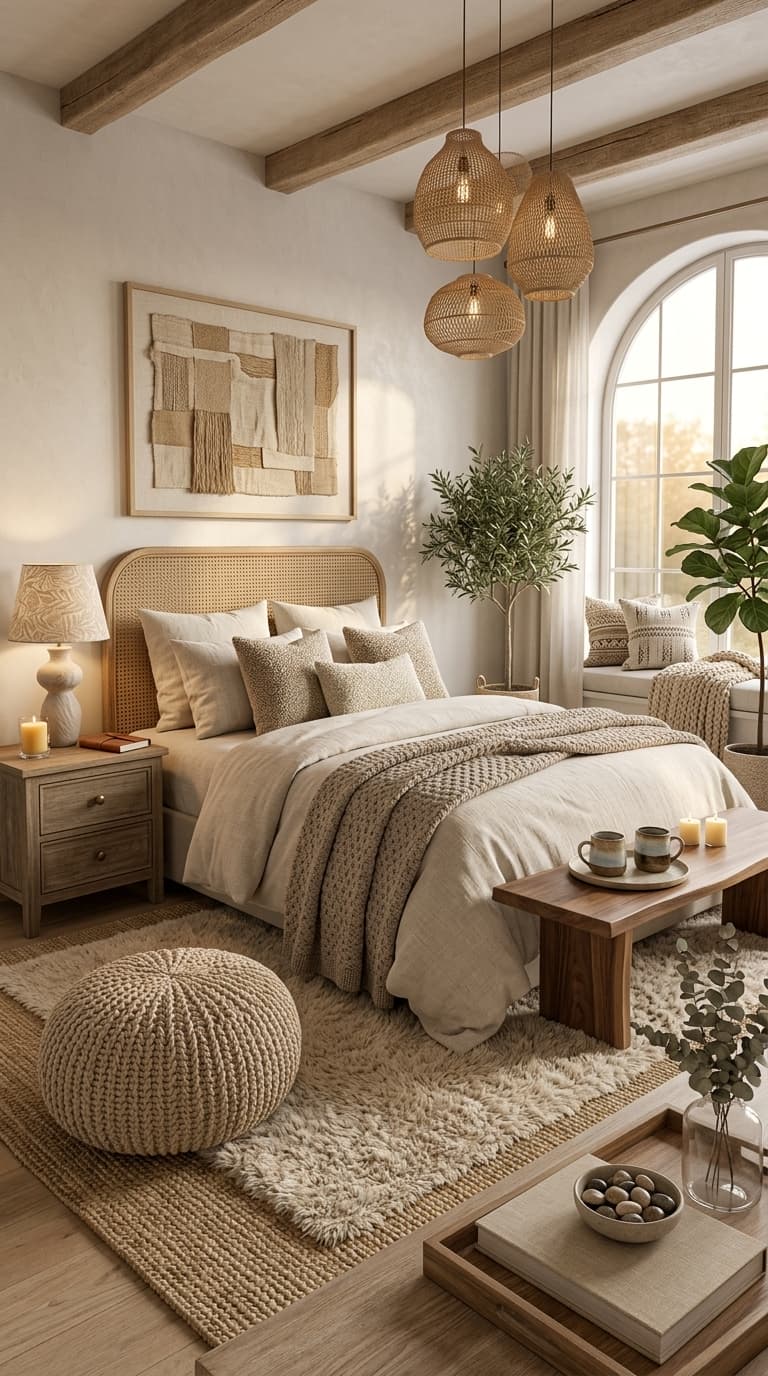
Creating a serene and inviting bedroom space often starts with a neutral color palette, but true coziness comes from the thoughtful layering of textures. This bedroom showcases how to achieve a deeply comfortable and visually appealing atmosphere by combining various natural materials. From the woven rattan headboard and pendant lights to the chunky knit throw and plush rugs, each element contributes to a tactile and warm environment.
The appeal of a neutral bedroom lies in its timeless quality and its ability to serve as a tranquil sanctuary. However, without careful consideration of texture, such a space can easily feel unfinished or lacking in personality. This image offers a masterclass in building a rich, tactile experience within a monochromatic scheme. Notice how the different weaves and fibers – the smooth wood of the nightstand, the rougher weave of the jute rug, the soft pile of the sheepskin rug, and the.
1. The Power of Natural Headboards
The headboard is a focal point in any bedroom, and opting for a natural material like rattan, as seen here, immediately introduces warmth and organic texture. Rattan's woven structure adds visual interest without overwhelming the space, and its natural color complements a neutral palette beautifully. When choosing a headboard, consider its scale relative to your bed and room size. A solid wood headboard can offer a more substantial feel, while a woven design like this one provides a lighter, airier presence.
Beyond aesthetics, the choice of headboard material can influence the room's overall ambiance. Rattan, cane, and other woven materials inherently bring a sense of casual elegance and a connection to nature, which is perfect for creating a cozy retreat. When integrating such a headboard, ensure it doesn't clash with other wood tones in the room; aim for complementary or similar finishes. If your bed frame is already substantial, a lighter rattan headboard can prevent the space from feeling too heavy.
2. Layering Textiles for Ultimate Comfort
The bed itself is a canvas for comfort, and this bedroom demonstrates the art of layering textiles to create an inviting and luxurious feel. The foundation is a set of soft, neutral-toned linens, likely in cotton or linen blends, providing a smooth base. Over this, a chunky knit throw is draped casually, adding significant visual and tactile warmth. The arrangement of pillows – a mix of standard sleeping pillows and decorative accent pillows with varied textures and subtle patterns – adds depth.
The strategic placement of throws and cushions is crucial for maximizing comfort and visual appeal. A generously sized throw, like the one seen here, can be folded or draped to create inviting nooks and add a sense of abundance. The variety in pillow textures, from smooth to nubby, prevents the bedding from appearing monotonous. Consider the practicalities: ensure throws are easily accessible for chilly evenings and that decorative pillows can be neatly stacked or removed to make space for sleeping.
3. The Impact of Woven Pendant Lights
Lighting plays a pivotal role in setting the mood, and the choice of fixtures can significantly enhance a room's style. In this bedroom, the cluster of three woven pendant lights suspended above the bedside area provides both ambient and task lighting while acting as a strong decorative element. Their natural, basket-like texture echoes the rattan headboard and adds a warm, diffused glow. When selecting pendant lights, consider the material and style to ensure they align with your overall decor.
The placement of these pendant lights is also key. Hanging them at varying heights creates a dynamic visual composition and ensures light is distributed effectively. This arrangement draws the eye upward, adding vertical interest to the room. When incorporating similar lighting, think about the height at which they should hang – typically, pendants over a bedside table should be low enough to provide reading light but high enough not to obstruct movement or views.
4. Grounding the Space with Layered Rugs
Rugs are essential for defining zones, adding warmth, and introducing texture underfoot. This bedroom masterfully employs layered rugs to create a rich, inviting floor space. A large, natural jute or sisal rug forms the base, providing a durable and textured foundation that grounds the entire arrangement. Overlaid on this is a smaller, plush rug, likely a sheepskin or a high-pile shag, placed strategically near the bed. This layering technique adds significant softness, visual depth, and a touch of luxury.
The combination of a coarse jute rug with a soft, fluffy rug offers a delightful contrast in textures that enhances the room's tactile appeal. The jute provides an earthy, grounded feel, while the plush rug invites bare feet and adds a sense of indulgence. This approach is particularly effective in bedrooms where comfort is paramount. When selecting your rugs, consider the overall color palette and the desired mood.
5. Incorporating Natural Elements and Accents
Beyond textiles and lighting, the inclusion of natural elements like plants and wooden accents further enhances the cozy, organic feel of this bedroom. The potted olive tree and the larger floor plant introduce life and color, breaking up the neutral tones and adding a sense of freshness. Wooden furniture, such as the nightstand and the low coffee table, provides a warm, natural counterpoint to softer materials.
The artwork above the bed is another key element, featuring a textured textile collage in neutral tones. This piece adds artistic interest and reinforces the emphasis on natural materials and craftsmanship. Its abstract, layered composition complements the room's overall textural theme without introducing competing colors or patterns. When selecting artwork for a neutral bedroom, consider pieces that offer subtle visual intrigue through texture, line, or monochromatic variations.
6. Creating Cozy Nooks and Seating
Even in a bedroom, creating small, inviting nooks can enhance its functionality and charm. The window seat, adorned with cushions and a throw, offers a perfect spot for quiet contemplation or enjoying the view. This dedicated seating area adds another layer of comfort and visual interest to the room, making it feel more lived-in and welcoming. When designing your own bedroom, consider any architectural features like window alcoves or unused corners that could be transformed into cozy seating areas.
The inclusion of a floor pouf, as seen here, provides flexible seating and an additional textural element. Its knitted construction adds a soft, casual touch that complements the layered rugs and bedding. Poufs are versatile pieces that can be used as extra seating, a footrest, or even a makeshift side table. Their compact size makes them ideal for smaller spaces or for adding a pop of texture without committing to larger furniture.
- Assess your current bedding and consider adding a textured throw blanket.
- Explore options for a natural material headboard or a large woven wall hanging.
- Introduce layered rugs by placing a smaller, plush rug over a larger natural fiber rug.
- Select woven pendant lights or lamps with natural material shades to enhance ambiance.
- Incorporate live plants or natural decorative elements like wooden trays and stone accents.
- Identify potential areas for a cozy nook, such as a window seat or a corner for a pouf or armchair.