Create Your Own Balcony Oasis: Transform Your Small Space into an Outdoor Retreat
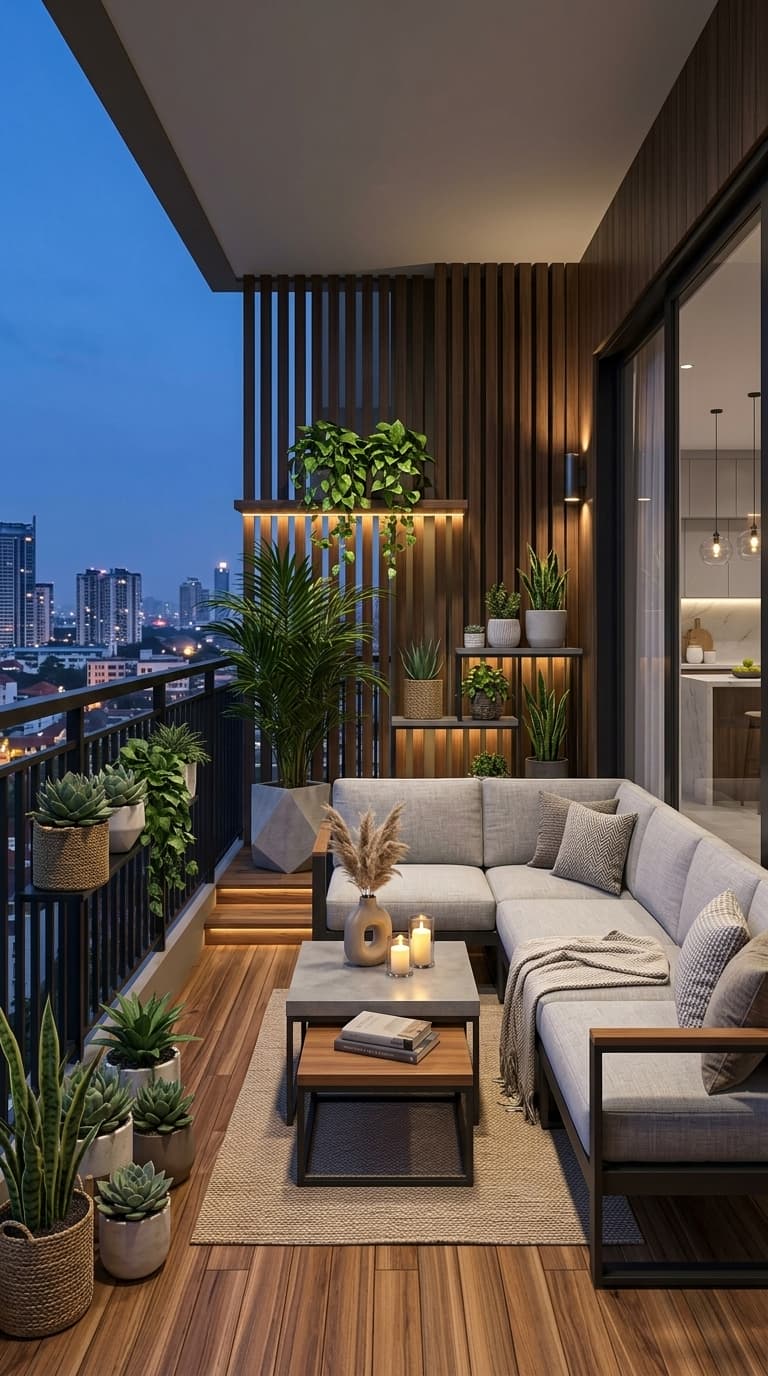
Transforming a small balcony into a functional and inviting outdoor living space can feel like a challenge, but it's entirely achievable with thoughtful planning and design. This urban sanctuary, bathed in the soft glow of twilight, showcases how to blend comfort, style, and nature to create an oasis amidst the city bustle. The key lies in selecting versatile furniture, incorporating ample greenery, and utilizing vertical space effectively.
This particular balcony design masterfully balances a modern aesthetic with a cozy, natural feel. The choice of a neutral-toned sectional sofa provides ample seating without overwhelming the space, while the nesting coffee tables offer flexibility for drinks, snacks, or decorative items. The rich wooden flooring and slatted wood accent wall add warmth and texture, creating a sophisticated backdrop. Most importantly, the abundant plant life, strategically placed on shelves, the floor, and the railing, injects life and color, blurring the lines between.
1. Selecting the Right Seating for Your Balcony
The foundation of any comfortable outdoor space is its seating, and for a balcony, this means choosing pieces that are both appropriately scaled and highly functional. The sectional sofa in the image is a prime example of maximizing seating capacity in a compact area. Its L-shape tucks neatly into a corner, providing a generous amount of space for lounging without protruding too far into the walkway.
Beyond the primary seating, consider how to add secondary seating or surfaces. The nesting coffee tables shown here are a smart solution, offering a large surface when needed and a smaller footprint when tucked away. This versatility is crucial for small spaces where every inch counts. Think about whether you need a dedicated dining area or more of a lounge setup. Small bistro sets, foldable chairs, or even floor cushions can be excellent alternatives depending on your intended use.
2. The Power of Plants: Bringing Nature In
Greenery is essential for transforming a balcony into an inviting oasis, and the image demonstrates this beautifully. The strategic placement of various plants, from tall floor-standing varieties to trailing vines and succulents on shelves, creates a lush, layered effect. When choosing plants, consider your local climate and the amount of sunlight your balcony receives. Succulents and snake plants, for instance, are relatively low-maintenance and thrive in various conditions, making them ideal for beginners.
Maximizing vertical space with plants is a game-changer for small balconies. The use of tiered shelves and wall-mounted planters allows you to create a living wall effect, drawing the eye upward and making the space feel larger. Trailing plants, like the ivy cascading from the upper shelf, soften the edges of the structure and add a sense of abundance. When planning your plant arrangement, group plants with similar watering and light needs together to simplify care.
3. Flooring and Wall Treatments for Warmth and Style
The flooring and wall treatments play a significant role in defining the character of your balcony. The rich, warm tones of the wooden deck in the image instantly elevate the space, making it feel more like an extension of an indoor room rather than just an outdoor slab. If a full wooden deck isn't feasible, consider interlocking deck tiles or outdoor rugs that can mimic the look and feel of wood or other natural materials.
The vertical wood-slat accent wall behind the sofa adds depth, texture, and a modern architectural element to the balcony. This feature not only enhances the visual appeal but also provides a backdrop for lighting and shelving. When considering wall treatments for your balcony, think about durability and weather resistance. Options like outdoor-rated wood panels, composite materials, or even decorative screens can add significant style. If you opt for a slatted design, consider the spacing to allow for light and air circulation.
4. Lighting: Setting the Mood and Extending Usability
Effective lighting is crucial for making a balcony a usable and inviting space, especially during the evening hours. The image showcases a layered lighting approach, combining ambient light from the wall sconces with accent lighting under the shelves. This combination creates a warm, inviting glow that enhances the atmosphere and highlights the architectural features and plant life. When planning your balcony lighting, consider the different zones and activities you envision.
The placement of lighting is just as important as the type. The wall-mounted sconces provide a soft, diffused light that illuminates the seating area without being harsh. The integrated LED strips under the shelves serve a dual purpose: they provide subtle illumination for the plants and create a beautiful visual effect, drawing attention to the greenery. When choosing outdoor lighting, always opt for fixtures specifically designed for exterior use to ensure they are weather-resistant and safe.
5. Coffee Tables and Accessories for Functionality
The right coffee table or side tables can significantly enhance the functionality of your balcony seating area. The nesting coffee tables in the image are a smart choice for small spaces, offering flexibility and adaptability. The larger table provides a stable surface for drinks and decor, while the smaller one can be pulled out for additional space or tucked underneath to save room. When selecting tables, consider materials that are durable and easy to clean, such as metal, treated wood, or.
Accessorizing your balcony is where you can inject personality and comfort. The throw blanket draped over the sofa adds a touch of coziness, inviting you to relax. Decorative pillows in complementary colors and textures enhance the comfort and style of the seating. On the coffee table, a simple vase with dried grasses and candles adds a natural, calming element. When choosing accessories, keep the scale of your balcony in mind to avoid clutter.
6. Maximizing Space with Vertical Solutions
For any small outdoor area, especially a balcony, thinking vertically is key to maximizing usable space. The image demonstrates this principle effectively with the use of shelves mounted on the slatted wood wall. These shelves provide ample room for displaying plants and decorative items without taking up valuable floor space. When planning your vertical storage or display solutions, consider the weight capacity of the shelves and the wall structure.
Beyond shelves, consider other vertical elements that can enhance both form and function. A tall, slender plant can draw the eye upward, making the space feel larger. Decorative screens or trellises can be used to add privacy, support climbing plants, or simply serve as a visual element. Even the railing itself can be utilized for hanging planters or small shelves, provided they are securely attached. The goal is to utilize every available dimension, from floor to ceiling, to create a layered.
- Measure your balcony dimensions carefully before purchasing any furniture or decor.
- Choose weather-resistant materials for all outdoor furniture and accessories.
- Select plants suited to your balcony's light conditions and your climate.
- Incorporate vertical elements like shelves or railing planters to maximize space.
- Plan your lighting to create ambiance and extend the usability of your balcony.
- Add soft furnishings like cushions and throws for comfort and style.