How to Choose the Perfect Area Rug to Anchor Your Bedroom Decor
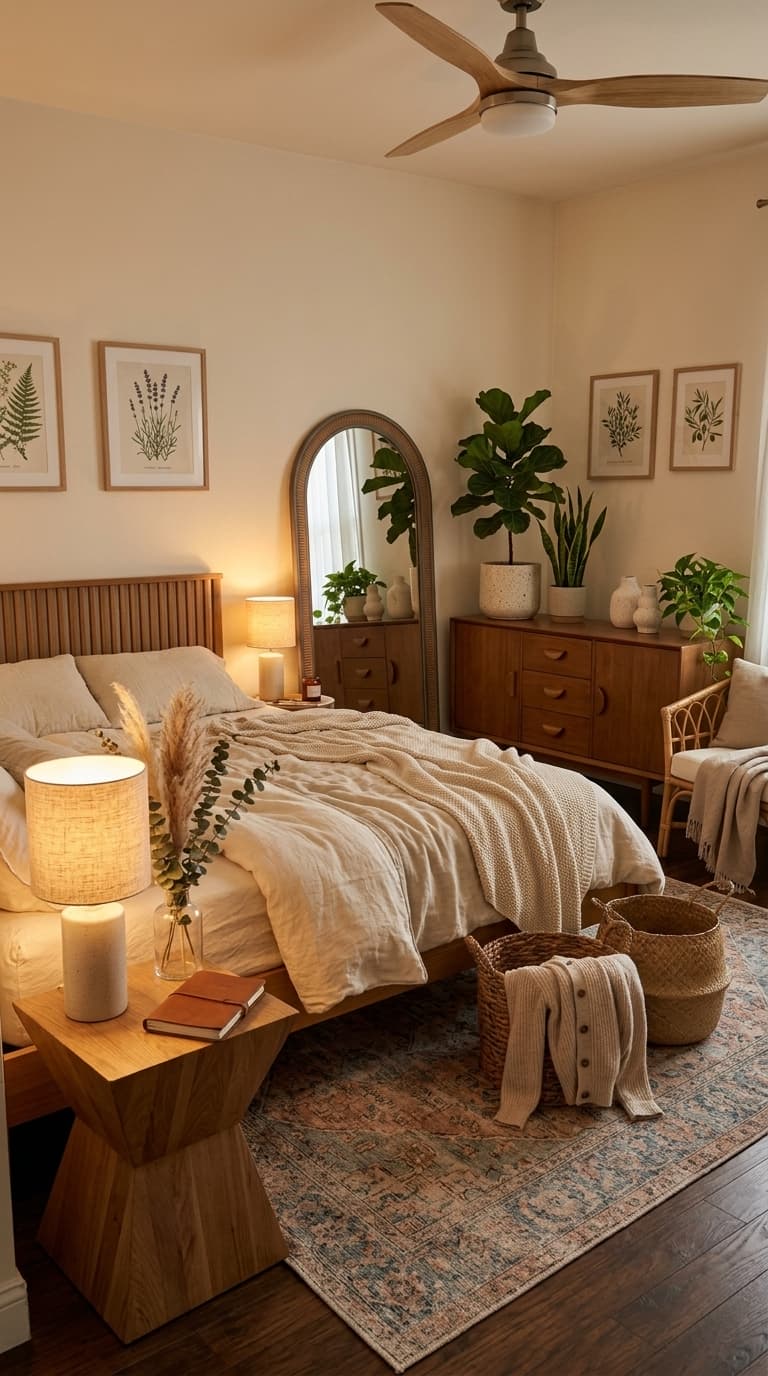
Selecting the right area rug can dramatically transform your bedroom, grounding the furniture and adding warmth, texture, and color. In this serene bedroom, a richly patterned rug with muted tones of rust, blue, and cream anchors the wooden bed frame and nightstand, creating a cohesive and inviting space. The rug's intricate design adds a layer of visual interest without overwhelming the room's neutral palette. When choosing a rug, consider the overall style you want to achieve.
The interplay of textures and colors in this bedroom highlights the importance of rug selection. The soft, natural fibers of the bedding and throws contrast beautifully with the detailed pattern of the rug and the warmth of the wooden furniture. This layering creates a sense of depth and comfort, making the room feel more lived-in and luxurious. Beyond aesthetics, a rug also offers practical benefits, such as muffling sound, providing a soft surface underfoot, and defining different.
1. Sizing Your Bedroom Rug for Impact
The size of your area rug is paramount to its success in a bedroom. A rug that is too small can make the room feel disjointed and the furniture appear to be floating. Conversely, a rug that is too large might overwhelm the space. For most bedrooms, the ideal scenario is a rug that extends at least 18-24 inches beyond the sides of your bed and the foot of the bed.
If a single large rug isn't feasible or desired, consider alternative layouts. For instance, you could use two smaller rugs placed on either side of the bed, extending from the nightstand to the edge of the bed. Another option is to place a runner on each side of the bed. When measuring, use painter's tape to outline potential rug sizes on your floor.
2. Selecting a Style and Pattern That Complements Your Decor
The style and pattern of your rug should harmonize with your existing bedroom decor. In this bedroom, the vintage-inspired, subtly distressed pattern of the rug complements the natural wood tones and botanical artwork, creating a relaxed yet sophisticated atmosphere. The muted color palette of the rug, featuring soft blues, creams, and earthy rusts, prevents it from competing with other elements in the room and instead acts as a unifying force.
When choosing a pattern, think about the overall mood you want to evoke. Traditional patterns can add a sense of timeless elegance, while geometric designs offer a modern edge. Abstract or distressed patterns, like the one seen here, can lend a bohemian or vintage feel and are forgiving with spills and wear. If you have children or pets, a pattern can be more practical than a solid color, as it tends to hide minor imperfections.
3. Material Matters: Durability and Comfort Underfoot
The material of your bedroom rug significantly impacts its feel, durability, and maintenance. Natural fibers like wool are known for their softness, resilience, and natural stain resistance, making them a luxurious choice for bedrooms. Cotton rugs are often softer and more affordable but may be less durable and prone to fading. Synthetic materials such as polypropylene are highly durable, stain-resistant, and budget-friendly, making them a practical option for high-traffic areas or households with pets and children.
When evaluating materials, think about the pile height. A low-pile rug is easier to clean and vacuum, and furniture sits more stably on it, which is beneficial for defining a seating area or placing items on top. A high-pile or shag rug offers maximum softness and comfort underfoot, creating a plush, inviting feel, but can be more challenging to clean and may show wear more quickly.
4. Color Palette Harmony: Integrating Your Rug with the Room
The color of your rug plays a crucial role in setting the mood and tying together the room's elements. In this bedroom, the rug's color palette, featuring muted blues, creams, and hints of rust, acts as a sophisticated foundation that complements the warm wood tones and neutral bedding. If your bedding is a solid color, a patterned rug can introduce visual interest.
When selecting colors, think about the desired atmosphere. Lighter, cooler tones can make a room feel more spacious and airy, while darker, warmer tones can create a cozy and intimate feel. The rug in the image uses a blend of colors that feels both grounding and visually appealing, enhancing the overall tranquility of the space. If you're unsure, start by pulling colors from your existing decor – perhaps from artwork, throw pillows, or even a favorite piece.
5. Layering Textures for Added Depth and Comfort
Texture is a vital design element that adds depth, warmth, and visual interest to any room, and a rug is a prime opportunity to introduce it. In this bedroom, the contrast between the soft, woven texture of the bedding, the natural fibers of the baskets, and the intricate pattern of the rug creates a rich tactile experience. The rug itself likely has a certain pile height and weave that contributes to its overall feel.
Don't limit texture to just the rug itself. Think about layering other textural elements on or around the rug. For example, the woven baskets holding blankets and the chunky knit throw draped over the bed in the image add further layers of texture, enhancing the room's cozy and inviting appeal. You can also introduce texture through decorative pillows, throws, and even wall hangings. When choosing a rug, consider its feel underfoot.
6. Practical Considerations: Maintenance and Longevity
Beyond aesthetics, the practicality of a rug is crucial for a bedroom. Consider the ease of cleaning and maintenance based on the material and your lifestyle. If you have pets or children, or if your bedroom is a high-traffic area, opt for durable, stain-resistant materials like polypropylene or a tightly woven wool blend. The rug in the image, with its intricate pattern, is likely forgiving of minor spills and dirt, making it a practical choice.
Think about the rug's backing as well. A rug pad is highly recommended for most rugs, especially those placed on hard floors. A rug pad not only prevents the rug from slipping, which is a safety hazard, but also adds an extra layer of cushioning, extends the rug's life by reducing friction, and can help protect your floors. Ensure the rug pad is the correct size for your rug, typically trimmed slightly smaller than the rug itself.
- Measure your bedroom and the space around your bed to determine the ideal rug size.
- Identify your bedroom's dominant colors and styles to select a rug that complements them.
- Consider the material based on your desired comfort level, durability needs, and ease of cleaning.
- Test out rug samples in your room to see how colors and patterns look in your lighting.
- Purchase a rug pad to protect your floors and prevent the rug from slipping.
- Plan for regular vacuuming and spot cleaning according to the rug's material and care instructions.