Maximize Your Corner with Smart Shelving and Lighting
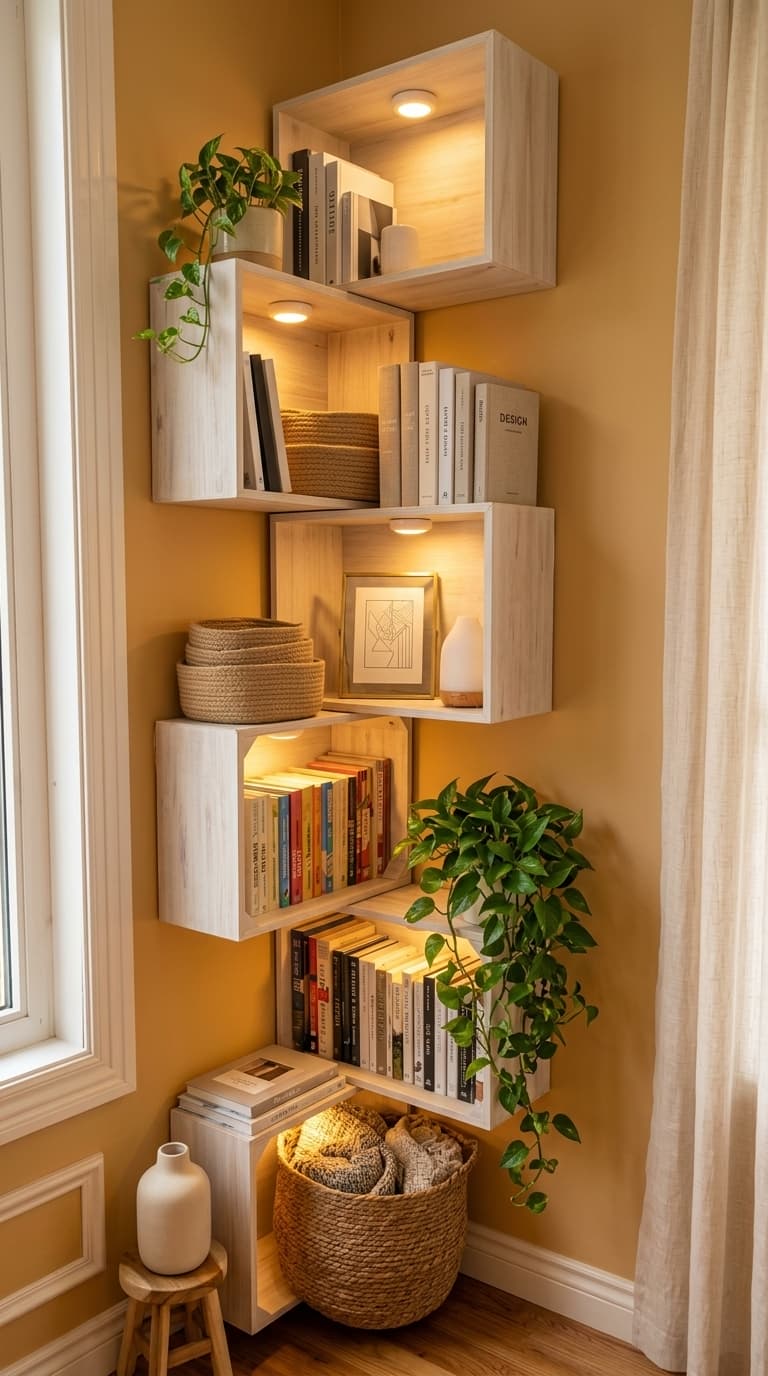
Many homes have awkward corners that feel underutilized or cluttered, especially in smaller rooms where floor space is limited. These spaces often become dumping grounds for boxes or forgotten items, creating visual noise instead of a design feature.
The key to transforming a corner is thoughtful vertical storage that combines function with style, using lighting to draw the eye upward and create warmth. A well-planned shelving system can turn a dead zone into a curated focal point without overwhelming the room.
1. Assess Your Corner's Dimensions and Light Needs
Before installing any shelves, measure the height, width, and depth of your corner to determine how many tiers you can fit without obstructing windows, doors, or foot traffic. A common mistake is stacking shelves too high, which can make the space feel cramped and block natural light from a nearby window.
Check the wall's structural integrity and locate studs or use appropriate anchors for heavier items like books or baskets. Also, observe how light falls in the corner throughout the day—natural light from a window can highlight the top shelves, while darker areas may need supplemental lighting for functionality.
2. Choose the Right Shelf Style for Your Space
Floating cube shelves offer a modern, modular look that can be arranged in a staggered or linear pattern to fit irregular corners. They are ideal for small spaces because they don't require bulky frames and allow for flexible styling. However, avoid overloading them with too many items, as this creates visual clutter rather than a curated display.
Consider the wall color and shelf material to ensure cohesion. Light-colored wood shelves, like those in the image, work well against warm-toned walls, creating a soft, inviting aesthetic. Matching the shelf finish to other wood elements in the room, such as flooring or furniture, helps unify the space.
3. Integrate Lighting for Ambiance and Functionality
Built-in LED lights within the shelves are a game-changer for highlighting decor and making books easier to read in dim corners. These lights are energy-efficient and can be installed with minimal wiring, often using plug-in options that avoid complex electrical work. The warm glow in the image adds depth and draws attention to the displayed items.
Position lights to illuminate the back of the shelves rather than shining directly on items, which can cause glare. This technique creates a soft, ambient effect that enhances the room's mood while making the space feel larger and more intentional.
4. Style with Purpose to Avoid Clutter
Group items by category—books, plants, and baskets—to create visual balance and prevent the shelves from looking chaotic. For example, stack woven baskets on one shelf and place books on another, using the vertical space efficiently. Always leave breathing room between items to maintain a clean, organized look.
Rotate decor seasonally to keep the display fresh without adding new items. A trailing plant, like the one cascading down the side in the image, adds movement and softens the hard lines of the shelves, making the corner feel more dynamic and lived-in.
5. Combine Shelving with Floor Storage for Balance
Pair wall-mounted shelves with a floor basket or ottoman to ground the space and provide additional storage without taking up wall space. This combination is especially useful in small rooms where every inch counts. The basket in the image holds blankets or throws, offering practical storage while contributing to the room's texture and warmth.
Avoid placing large items on the floor directly in front of the shelves, as this can block the view and make the corner feel inaccessible. Instead, use a small stool or side table nearby for frequently used items, keeping the area functional and uncluttered.
- Measure the corner's height, width, and depth to plan shelf placement and avoid overcrowding.
- Use wall anchors or studs to securely mount shelves and prevent accidents with heavy items.
- Install plug-in LED lights inside shelves to highlight decor and improve readability without complex wiring.
- Group items by category and leave space between them to maintain a clean, organized look.
- Add a trailing plant to soften the shelves and create visual interest without taking up floor space.
- Use a floor basket for storage to balance wall shelves and keep the corner functional and tidy.
- Rotate decor seasonally to refresh the display without adding clutter or new purchases.