Create a Cozy Living Room: Styling Tips for Warmth and Comfort
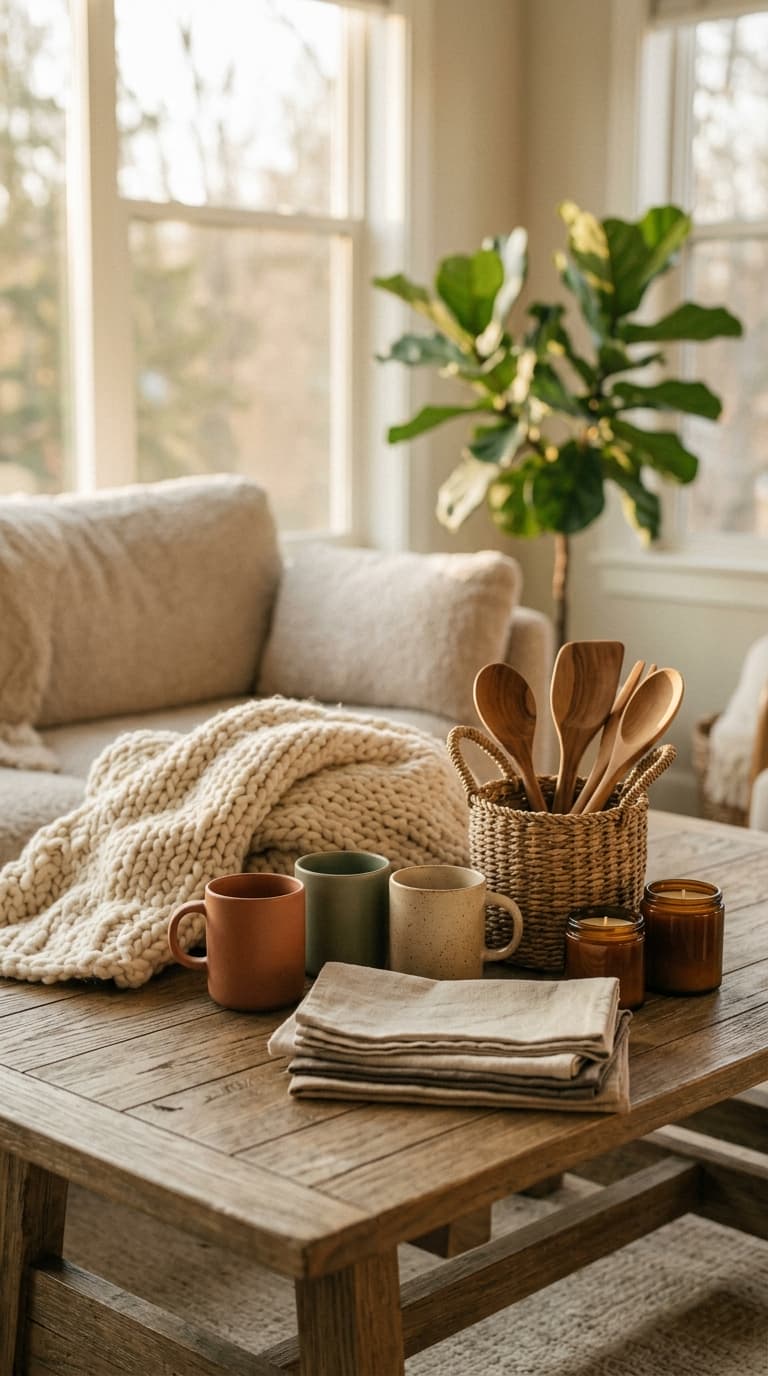
Transforming your living room into a sanctuary of warmth and comfort is an achievable goal with thoughtful styling. The image before us showcases a perfect example of how to achieve this inviting atmosphere, blending natural elements with soft textures. A large, plush sofa draped with a chunky knit blanket immediately signals comfort, inviting relaxation. The wooden coffee table, with its rustic charm, grounds the space and provides a surface for curated decorative items.
Achieving a cozy living room isn't about following fleeting trends; it's about creating a feeling. This involves a deliberate selection of elements that appeal to the senses, promoting relaxation and a sense of well-being. Consider the interplay of textures: the softness of the throw blanket against the upholstery of the sofa, the smooth grain of the wooden table, and the natural fibers of the napkins. Color palettes also play a crucial role, with warm, earthy tones often contributing to a sense of coziness.
1. Mastering the Art of Texture Play
Texture is paramount in creating a cozy atmosphere, and the image provides excellent inspiration. The prominent chunky knit blanket on the sofa is a prime example of how to introduce tactile interest. Its thick, interwoven strands create visual depth and promise a soft, comforting embrace. When selecting throws and cushions, consider a variety of materials like wool, faux fur, chenille, or even boucle. Mixing these textures prevents a room from feeling flat and adds layers of visual appeal.
Beyond the sofa, consider how texture can be incorporated throughout the living room. The wooden coffee table, with its visible grain and slightly rough finish, adds an organic, grounding element. This can be complemented by woven baskets, like the one holding the wooden utensils, which introduce natural fibers and a handcrafted feel. Even small details, such as the speckled finish on the mugs or the subtle weave of the napkins, contribute to the overall textural richness.
2. Curating a Welcoming Coffee Table Display
The coffee table is often the focal point of a living room, and its styling can significantly impact the room's overall ambiance. In this image, the coffee table is styled with intention, showcasing a thoughtful arrangement of functional and decorative items. The stack of neutral-toned napkins suggests readiness for entertaining or a simple moment of refreshment. The collection of mugs, in varying earthy hues, hints at shared conversations over warm beverages.
When curating your coffee table display, think about how the items interact with each other and the surrounding space. The natural wood tones of the table are echoed in the wooden utensils, creating a cohesive look. The warm colors of the mugs complement the earthy tones of the napkins and the overall neutral palette of the room. The basket provides a contained element, preventing the utensils from scattering and adding a vertical dimension to the arrangement.
3. The Power of Natural Light and Greenery
Natural light is a powerful tool for creating a welcoming and airy living room, and the large windows in the background are key to this space's appeal. Maximizing natural light can make a room feel larger, more inviting, and more connected to the outdoors. Keep window treatments simple and light-filtering, or opt for no treatments at all if privacy is not a concern. The soft, diffused light in the image creates a serene atmosphere, highlighting the textures and colors of the decor.
Introducing greenery, such as the fiddle leaf fig plant, brings life and a touch of nature indoors, significantly contributing to a cozy and calming environment. Plants add color, improve air quality, and create a sense of organic beauty that complements natural materials like wood and woven textures. When choosing plants, consider their light requirements and the amount of space available. For smaller tables or shelves, succulents or small potted herbs can be effective.
4. Embracing Warm, Earthy Color Palettes
The color palette plays a crucial role in establishing a cozy and inviting atmosphere. The living room depicted utilizes a predominantly neutral and earthy scheme, which inherently promotes a sense of calm and warmth. The sofa, blanket, and napkins all fall within a spectrum of creams, beiges, and light browns, creating a harmonious and soothing visual experience. These colors are reminiscent of natural elements like sand, wood, and stone, grounding the space and making it feel more connected to nature.
The subtle variations in tone and shade within the neutral palette add interest and prevent the room from feeling monotonous. For instance, the different shades of the mugs—a warm rust, a muted green, and a speckled cream—provide small pops of color and visual intrigue. This approach to color layering is key to creating a sophisticated yet comfortable space. Avoid stark whites or overly bright, cool colors if your primary goal is coziness.
5. Strategic Placement for Comfort and Flow
The arrangement of furniture and decor significantly impacts how a living room feels and functions. In this scene, the sofa is positioned to take advantage of the natural light from the windows, suggesting a space designed for relaxation and enjoyment of the surroundings. The coffee table is placed at an accessible distance from the sofa, making it practical for use. When arranging your own living room, consider the primary activities that will take place there.
Beyond the main furniture, consider the placement of smaller decorative items to enhance comfort and flow. The items on the coffee table are grouped thoughtfully, creating a visually pleasing vignette without obstructing movement. The basket of utensils is placed centrally, acting as a functional yet decorative anchor. When adding decorative elements, think about balance and scale. Avoid placing too many items in one area, which can lead to clutter.
6. The Role of Ambient Lighting
While natural light is essential, ambient lighting plays a crucial role in setting the mood, especially during evenings or on overcast days. The image hints at this with the presence of candles, which provide a soft, warm glow. Layering lighting sources is key to creating a cozy atmosphere. This includes overhead lighting, task lighting (like floor or table lamps), and accent lighting (such as candles or string lights).
Candles, as seen in the image, are a simple yet effective way to add warmth and a cozy ambiance. Their flickering flames create a dynamic and inviting light. When using candles, consider their placement for both safety and aesthetic appeal. Grouping them together, as shown, can create a stronger visual impact and a more concentrated source of warm light. Ensure they are placed on stable surfaces away from flammable materials.
- Introduce a variety of textures through throws, cushions, and rugs.
- Style your coffee table with a curated selection of functional and decorative items.
- Maximize natural light and incorporate indoor plants for a touch of nature.
- Choose a warm, earthy color palette for walls, furniture, and accessories.
- Arrange furniture to promote comfortable conversation and easy flow.
- Layer ambient lighting with lamps and candles to create a warm glow.