Transform Your Patio into a Cozy Outdoor Oasis with String Lights
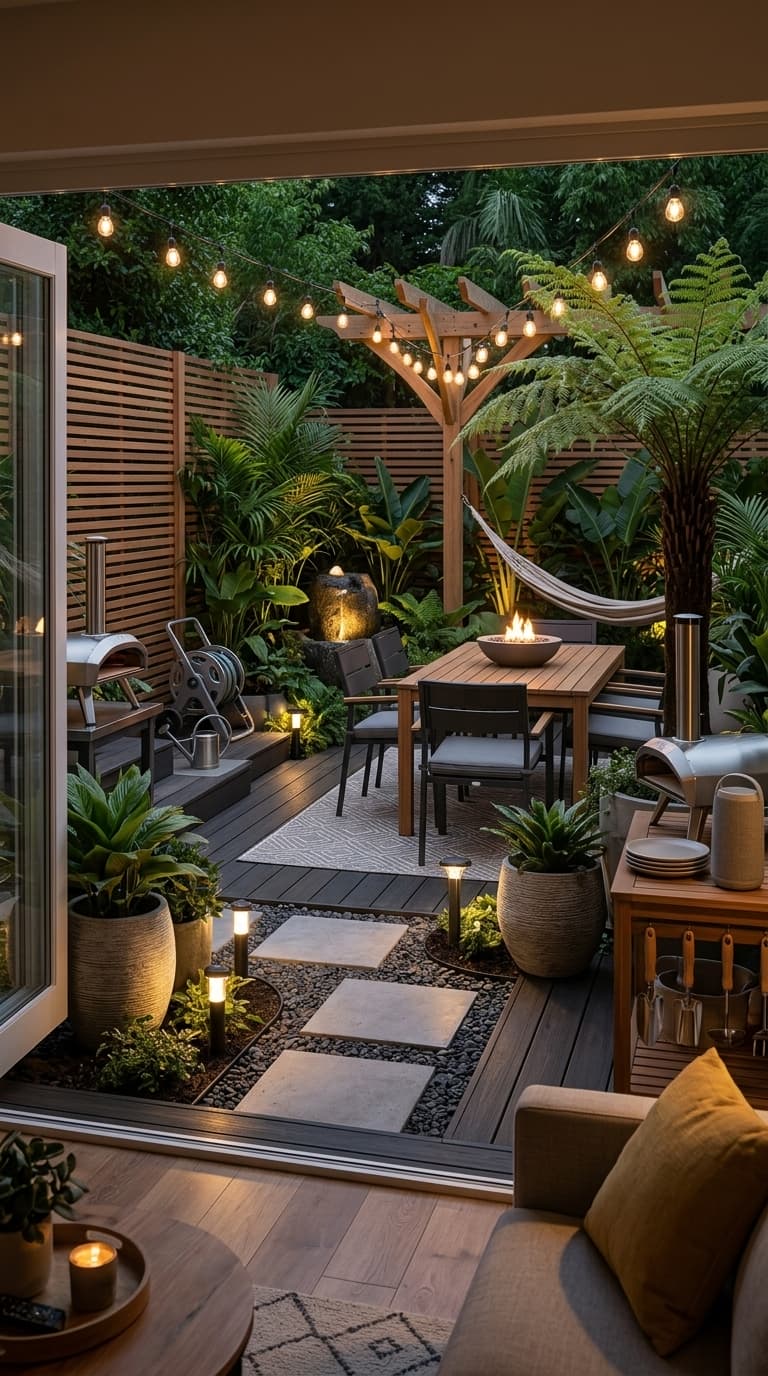
Creating an inviting outdoor space for relaxation and entertainment is a common desire for homeowners. The image showcases a patio that has been transformed into a cozy oasis, largely due to the strategic use of lighting and lush landscaping. The warm glow of string lights draped across the pergola and fence instantly elevates the ambiance, making the area feel intimate and welcoming, even after sunset. This type of lighting is not just functional; it's a key design element that can dramatically change.
Beyond the ambiance, the practical aspects of outdoor living are well-represented, with a dining set, a fire pit, and even grilling equipment suggesting a space designed for enjoyment. However, the true magic lies in how these elements are unified by thoughtful lighting and a rich, green environment. The string lights, in particular, offer a versatile and relatively simple way to achieve a similar effect in your own backyard.
1. Choosing the Right String Lights for Your Space
The variety of string lights available can be overwhelming, but understanding your needs will simplify the selection process. For an outdoor oasis like the one pictured, consider the type of bulb. Edison-style bulbs with exposed filaments offer a vintage charm that complements natural wood and greenery, as seen in the image. These bulbs emit a warm, soft light that is ideal for creating a cozy atmosphere. When choosing, look for lights specifically designed for outdoor use, ensuring they are weather-resistant and durable.
Another important consideration is the power source. Many outdoor string lights are plug-in, requiring access to an outdoor outlet. If outlets are limited, solar-powered options have improved significantly and can be a great eco-friendly choice, though their brightness might be less consistent. For a more permanent installation, consider hardwired options, which offer the cleanest look but require professional installation. The material of the wire itself can also impact durability and aesthetics; look for thicker, weather-proof cords that can withstand the elements.
2. Strategic Placement for Maximum Ambiance
The way string lights are hung dramatically influences the mood and functionality of an outdoor space. In the example, lights are strung along the pergola, creating a beautiful overhead canopy that defines the dining area and adds a sense of enclosure. They are also extended along the fence line, further defining the perimeter and adding depth. When planning your own layout, consider the primary use of the space.
Think about layering your lighting. While string lights provide ambient illumination, consider adding task lighting for specific areas, like a grill station or a pathway, as seen with the ground-level lights in the image. This layered approach ensures the space is both visually appealing and practical. When attaching lights, use appropriate hardware like hooks, zip ties, or specialized clips to secure them firmly. Ensure cords are routed safely, away from foot traffic and potential hazards.
3. Integrating Lights with Landscaping and Furniture
The image demonstrates a masterful integration of lighting with lush greenery and comfortable furnishings. The string lights cast a warm glow on the surrounding plants, highlighting their textures and forms, and making the foliage appear even more vibrant. This interplay between light and nature is key to creating an oasis-like feel. When placing your lights, consider how they will interact with your plants. You can use spotlights to illuminate specific trees or large plants from below, or drape lights through branches to.
The furniture itself plays a role in how the lighting is perceived. The dining set is positioned directly under the canopy of lights, making it the focal point of the illuminated area. Consider how your furniture arrangement can be enhanced by the lighting. For instance, if you have a cozy seating area, string lights can be draped above or around it to create a more intimate setting.
4. Maintaining Your Outdoor Lighting for Longevity
Outdoor string lights, while designed for durability, still require some maintenance to ensure they function optimally and last for years. Regularly inspect the bulbs and sockets for any signs of damage, corrosion, or loose connections. If you notice any issues, address them promptly to prevent further problems or safety hazards. Cleaning the bulbs periodically can also help maintain their brightness and prevent a dull appearance, especially if they are exposed to dust, pollen, or water spots.
Before storing lights at the end of the season, ensure they are completely dry and clean. Carefully wind them onto a spool or into their original packaging to prevent tangling and damage. Store them in a cool, dry place, protected from extreme temperatures and moisture. When reconnecting them for the next season, do a thorough check of all connections and wiring. For solar-powered lights, ensure the solar panels are clean and unobstructed to maximize charging efficiency.
5. Avoiding Common Mistakes with Outdoor Lighting
One common mistake is using indoor-rated lights outdoors, which can be a safety hazard and lead to premature failure due to exposure to the elements. Always opt for lights specifically designed for outdoor use, with appropriate weatherproofing. Another pitfall is over-lighting or under-lighting a space. Too many lights can create a harsh, carnival-like atmosphere, while too few can leave the area feeling dim and uninviting. The goal is to achieve a balanced, ambient glow that enhances the space without overwhelming it.
Improper installation is another frequent error. Hanging lights too loosely can cause them to sag or fall, while using inappropriate fasteners can damage structures. Ensure lights are securely attached and that cords are managed safely to prevent tripping hazards. Finally, neglecting to consider the overall design aesthetic can lead to a disjointed look. The string lights should complement the style of your home and outdoor furnishings, rather than clashing with them.
6. Expanding Your Outdoor Lighting Strategy
While string lights are a fantastic starting point, consider how they can be part of a broader outdoor lighting strategy. The image shows ground-level path lights that illuminate walkways and highlight landscaping, adding another layer of functionality and visual interest. These smaller lights can guide guests safely through your yard and create a sense of depth. Think about incorporating uplighting for trees or architectural features to add drama and highlight specific elements.
Beyond illumination, consider the color temperature of your lights. Warm white light, typically around 2700K, is ideal for creating a cozy and inviting atmosphere, similar to the incandescent bulbs seen in the example. Cooler white lights might be better suited for task lighting or security. Smart lighting options are also becoming increasingly popular, allowing you to control brightness, color, and schedules via a smartphone app, offering unparalleled flexibility.
- Measure your outdoor space to determine the appropriate length and number of string lights needed.
- Choose outdoor-rated string lights with a warm color temperature for a cozy ambiance.
- Plan the placement of lights to define seating or dining areas and highlight landscaping.
- Securely attach lights using appropriate hardware, ensuring cords are safely routed.
- Inspect lights regularly for damage and clean them periodically for optimal performance.
- Consider adding other types of outdoor lighting, such as path lights or uplighting, to create a layered effect.