Create a Mediterranean Patio Oasis: Your Guide to an Enchanting Outdoor Space
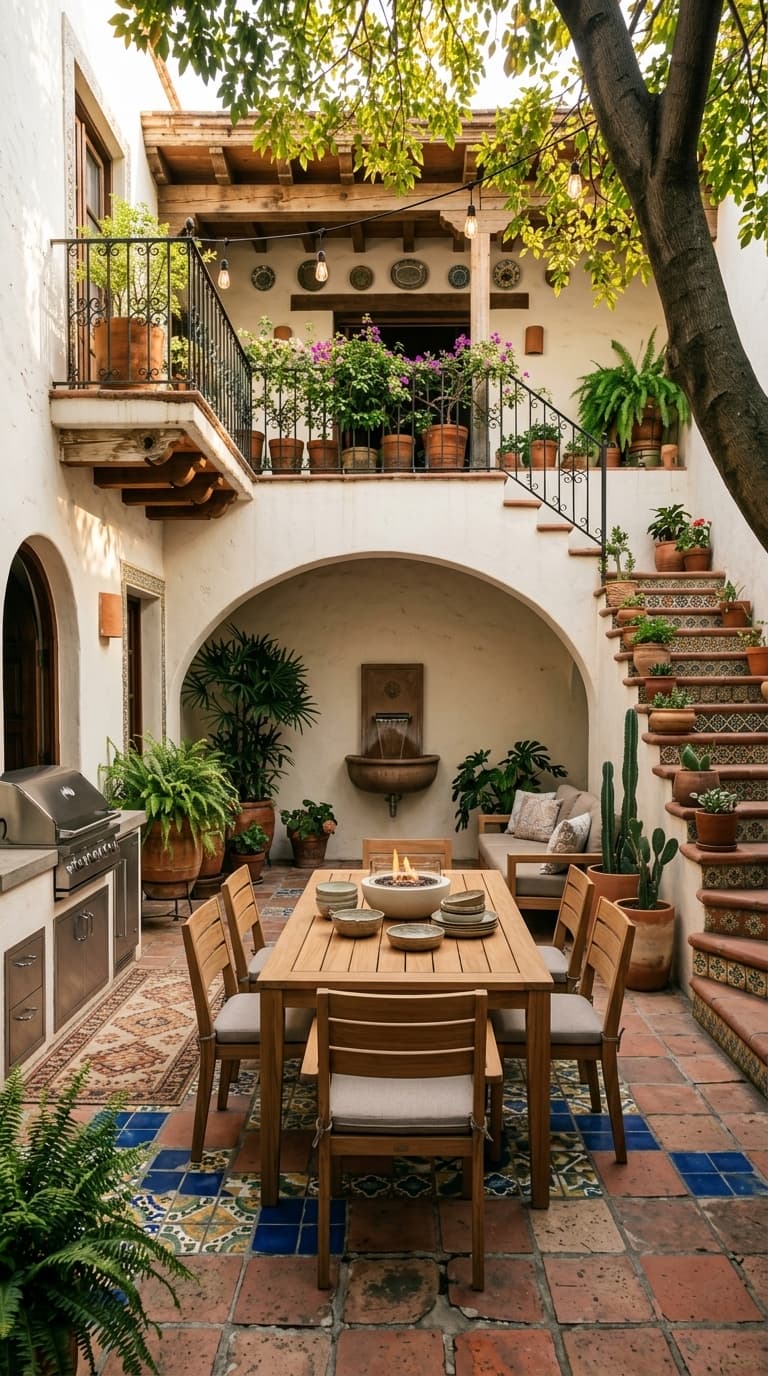
Imagine stepping out into your own private courtyard, a sun-drenched haven reminiscent of Mediterranean villas. This image captures the essence of such a retreat, blending functional outdoor living with lush greenery and architectural charm. The space is designed for both relaxation and entertainment, with a dedicated dining area, a built-in grill, and a soothing water feature. The vibrant, patterned tiles underfoot and the terracotta pots overflowing with plants create an inviting, earthy ambiance.
Creating a Mediterranean-inspired patio is more than just placing furniture outdoors; it's about curating an atmosphere that evokes warmth, tranquility, and a connection to nature. This particular design showcases how to effectively utilize vertical space with tiered planting along the stairs and balcony, drawing the eye upward and adding depth. The combination of rustic terracotta, cool tile accents, and the natural textures of wood and stone creates a rich, layered aesthetic.
1. Laying the Foundation: Tiling and Flooring
The foundation of this Mediterranean patio is its striking tiled floor, a crucial element that defines the space's character. Notice the interplay between large, rustic terracotta tiles and smaller, intricately patterned ceramic tiles in shades of blue, yellow, and green. This layered approach to flooring adds visual interest and a sense of history. When planning your own patio, consider a similar combination. Large format tiles can cover the main areas for a sense of spaciousness, while accent tiles can.
Beyond aesthetics, the practicalities of outdoor tiling are paramount. The existing terracotta tiles appear to be somewhat aged, suggesting a preference for a rustic, lived-in feel. If you're aiming for a similar look, consider materials that naturally weather well or embrace imperfections. For new installations, proper subfloor preparation is essential to prevent cracking and shifting due to temperature changes and moisture. Think about drainage; the tiles should be laid with a slight slope away from structures to prevent water.
2. Vertical Gardens and Lush Greenery
The abundance of plants is a defining feature of this Mediterranean patio, transforming it into a verdant oasis. Potted plants are strategically placed on the balcony, lining the stairs, and in large containers on the ground level, creating a sense of lushness and privacy. The variety of plants, from delicate flowering vines and ferns to architectural cacti, adds texture and color. When selecting plants for your own patio, consider the climate and sunlight exposure.
Maximizing vertical space with greenery is a key strategy employed here. The staircase becomes a living display, with pots nestled on each step, creating a natural cascade of foliage. This approach not only adds beauty but also softens the hard architectural lines of the stairs. Consider incorporating hanging planters or wall-mounted shelves for smaller plants to further enhance the vertical dimension. For larger plants, choose sturdy, weather-resistant pots that can withstand the elements.
3. Creating Zones: Dining and Lounging
This patio is thoughtfully divided into distinct functional zones, enhancing its usability and appeal. A central dining area, complete with a wooden table and chairs, is set up for al fresco meals. The presence of a fire pit in the center of the table adds warmth and a focal point for evening gatherings. Adjacent to the dining area, a comfortable outdoor sofa provides a more relaxed lounging space, suggesting a desire for both active entertaining and quiet relaxation.
The arrangement of furniture within these zones is crucial for creating an inviting atmosphere. The wooden dining set appears sturdy and practical, with comfortable cushions on the chairs for extended seating. The sofa offers a more casual seating option, perfect for enjoying a drink or conversation. The inclusion of decorative pillows on the sofa adds a touch of comfort and style. When selecting outdoor furniture, prioritize durability and weather resistance.
4. Architectural Details and Ambiance
The architectural elements of this patio contribute significantly to its Mediterranean charm. The arched entryway, the textured white stucco walls, and the wooden beams supporting the upper level all evoke a sense of traditional European design. The decorative wrought iron railing on the balcony adds an elegant touch, while the patterned tiles on the stairs provide intricate detail. Even the simple outdoor lighting, with exposed bulbs strung overhead, contributes to the warm, inviting ambiance.
The water feature, a small wall-mounted fountain, adds a soothing auditory element to the space, enhancing the sense of tranquility. The gentle sound of trickling water is a hallmark of many Mediterranean gardens and courtyards, promoting relaxation and a connection to nature. Consider incorporating a similar water feature, even a small tabletop fountain, to bring this calming element to your patio. The placement of decorative items, such as the plates displayed on the wall above the archway, further personalizes.
5. Outdoor Kitchen Essentials
The integrated outdoor kitchen, featuring a built-in grill and cabinetry, signifies a commitment to outdoor entertaining. This setup allows for seamless meal preparation and serving without constant trips back into the house. The stainless steel grill suggests durability and ease of cleaning, essential for an outdoor cooking appliance. When planning your own outdoor kitchen, consider the essential components you'll need based on your cooking habits.
The placement of the outdoor kitchen in this design is practical, situated adjacent to the dining area, facilitating easy serving. The countertop space around the grill provides ample room for food preparation and plating. It's important to consider the proximity of the kitchen to the main house for access to utilities like gas and water, as well as for convenience. When designing the layout, ensure there is adequate ventilation for the grill and that the area is safe from.
6. Accessorizing for Comfort and Style
The finishing touches in this patio design are what truly elevate it from functional to fabulous. The outdoor rug beneath the dining table anchors the space and adds a layer of texture and color, defining the dining zone. The cushions on the chairs and sofa provide comfort and a soft contrast to the wooden furniture. Even the stack of plates and bowls on the table suggests readiness for a meal, adding to the inviting scene.
The string lights overhead are a simple yet impactful accessory that transforms the patio into a magical space after dark. They cast a warm, inviting glow, perfect for evening ambiance and extending the usability of the area into the night. When choosing outdoor lighting, consider different types, such as string lights, wall sconces, or pathway lights, to create layers of illumination. The selection of plants in various terracotta pots, from large statement ferns to smaller succulents, also acts as.
- Assess your patio's sun exposure and choose plants accordingly, prioritizing drought-tolerant varieties for sunny spots.
- Measure your dining and lounging areas to select furniture that fits comfortably without overcrowding.
- Select outdoor-rated tiles that offer both durability and slip resistance, considering patterned accents for visual interest.
- Plan for adequate drainage when installing any new flooring or hardscaping.
- Incorporate vertical planting by using tiered planters or wall-mounted options to add lushness.
- Consider adding ambient lighting, such as string lights or lanterns, to enhance evening enjoyment.