Transform Your Patio into a Modern Oasis with Strategic Lighting and Water Features
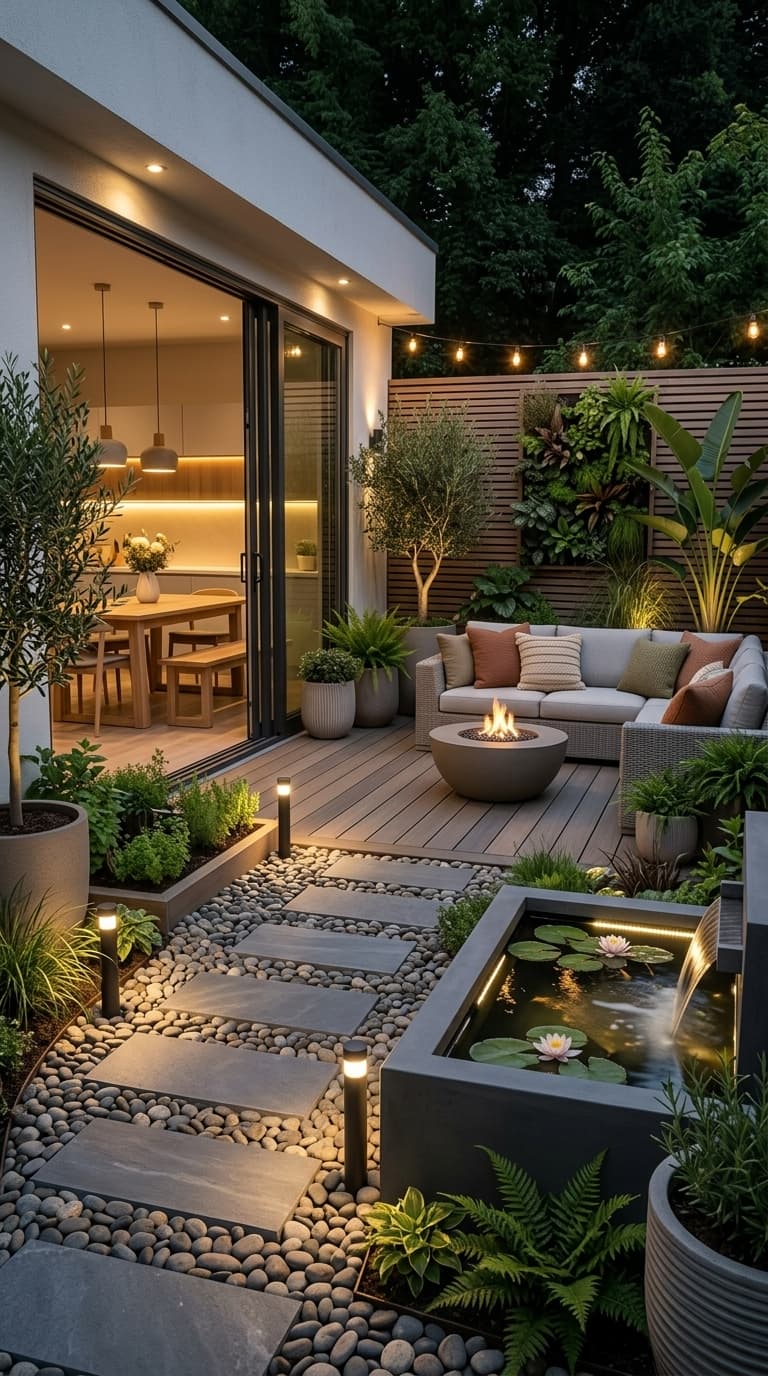
Creating an inviting outdoor living space is about more than just furniture; it's about crafting an atmosphere. This modern patio design masterfully blends comfort, style, and sensory appeal, transforming an ordinary deck into a tranquil oasis. The key elements at play here are the strategic use of ambient and task lighting, the soothing presence of a water feature, and the thoughtful selection of natural materials and lush greenery.
The transition from indoor to outdoor living is seamless in this design, thanks to the large sliding glass doors that connect the interior dining area to the patio. This visual and physical connection emphasizes the importance of cohesive design between your home's interior and exterior spaces. The choice of materials, such as the composite decking and stone pathway, grounds the design and provides a durable, low-maintenance foundation.
1. Illuminating Your Outdoor Space for Ambiance and Function
Lighting is paramount in defining the mood and usability of an outdoor area, especially as daylight fades. This patio utilizes a layered lighting approach, combining ambient, task, and accent lighting to create depth and visual interest. String lights overhead provide a warm, festive glow, perfect for evening gatherings, while recessed deck lights offer subtle illumination for safe navigation. Integrated lighting within the vertical garden and around the water feature adds a touch of drama and highlights key design elements.
Beyond aesthetics, outdoor lighting serves a crucial practical purpose. Pathway lights, like the sleek bollards seen here, guide guests safely through the space, preventing trips and falls on uneven surfaces or steps. Uplighting plants or architectural features can add a dramatic flair and deter potential intruders by eliminating dark corners. When selecting fixtures, consider their durability and resistance to weather elements. Materials like stainless steel, aluminum, or weather-resistant plastics are good choices.
2. The Soothing Power of Water Features
Water features introduce a dynamic sensory element to an outdoor space, offering a calming auditory experience and a visually captivating focal point. The modern, geometric pond in this design, complete with water lilies, adds a touch of tranquility and natural beauty. The gentle sound of cascading water from the integrated waterfall creates a peaceful ambiance, masking less desirable background noises and promoting relaxation. When choosing a water feature, consider its size relative to your space and the maintenance required.
Beyond the soothing sounds, water features can also enhance the visual appeal of your garden. The reflection of light on the water's surface adds a shimmering quality, especially at night when illuminated. The inclusion of aquatic plants, such as the water lilies, further integrates the feature into the surrounding landscape, creating a miniature ecosystem. If you're concerned about maintenance, consider self-contained units or those with built-in filtration systems.
3. Creating Zones with Decking and Pathways
The effective use of different ground materials can define distinct areas within your outdoor space, enhancing both functionality and visual appeal. Here, composite decking provides a warm, inviting surface for the main seating and dining areas, seamlessly connecting to the interior. Adjacent to this, a pathway composed of large, flat stepping stones interspersed with smooth river pebbles creates a natural transition to other parts of the garden.
The strategic placement of stepping stones and pebbles not only guides movement but also adds a tactile and visual dimension to the landscape. The dark, smooth pebbles create a soft, natural border around the planting beds and pathway, contrasting beautifully with the grey stone slabs. This combination of hardscaping elements provides a sense of order while maintaining an organic feel. When selecting materials, think about durability, maintenance, and how they will weather over time.
4. Vertical Gardens and Lush Plantings
Incorporating vertical elements and diverse plant life is essential for adding layers of texture, color, and life to an outdoor space. The striking vertical garden mounted on the slatted wooden fence serves as a living piece of art, bringing a vibrant burst of green against the more structured elements of the patio. This approach is particularly effective in maximizing greenery in smaller areas or where ground space is limited.
The thoughtful arrangement of plants contributes significantly to the overall atmosphere of an outdoor oasis. The mix of lush ferns, architectural plants like the bird of paradise, and the more delicate greenery in the ground-level beds creates a rich tapestry of textures and shades of green. This variety prevents the space from feeling monotonous and adds a natural, organic feel. Consider grouping plants with similar care needs together to simplify maintenance.
5. Comfortable and Stylish Outdoor Seating
The selection of outdoor furniture is crucial for creating a functional and inviting seating area that encourages relaxation and social interaction. The modern, L-shaped sectional sofa provides ample comfortable seating, arranged around a central fire pit, which serves as a natural gathering point. The neutral tones of the sofa are enhanced by a collection of throw pillows in warm, earthy hues, adding pops of color and texture.
The arrangement of furniture plays a key role in defining the flow and purpose of your outdoor living area. Placing the sofa to face the fire pit and the view creates a cozy, conversational setting. The low-profile coffee table, in this case a modern fire pit, is perfectly positioned for easy access from the seating. When planning your layout, ensure there is enough space to move around comfortably between pieces.
6. Integrating Fire Features for Warmth and Ambiance
A fire feature, such as the modern bowl-style fire pit shown, is an excellent addition to an outdoor living space, providing both warmth and a captivating focal point. It extends the usability of the patio into cooler evenings and creates a cozy, inviting atmosphere for gatherings. When selecting a fire pit, consider the fuel source – propane, natural gas, or wood-burning – each with its own advantages and maintenance requirements.
The placement of a fire pit is as important as its style. Centered within the seating area, as seen here, it naturally draws people together, fostering conversation and a sense of community. The visual appeal of the flickering flames adds a dynamic element to the evening ambiance, creating a warm glow that complements the surrounding lighting. When using a fire pit, always follow safety guidelines, including never leaving it unattended and ensuring it is fully extinguished before leaving the area.
- Assess your outdoor space to determine the best locations for lighting and water features.
- Choose lighting fixtures that offer a warm color temperature to create a relaxing ambiance.
- Select a water feature that suits your space and maintenance preferences, considering sound and visual impact.
- Plan pathways and seating areas, ensuring adequate space for movement and comfort.
- Incorporate a variety of plants with different textures and heights for visual interest.
- Ensure any fire feature is placed safely away from flammable materials and has proper ventilation.