Create an Inviting Outdoor Living Space with Cozy Seating and Ambient Lighting
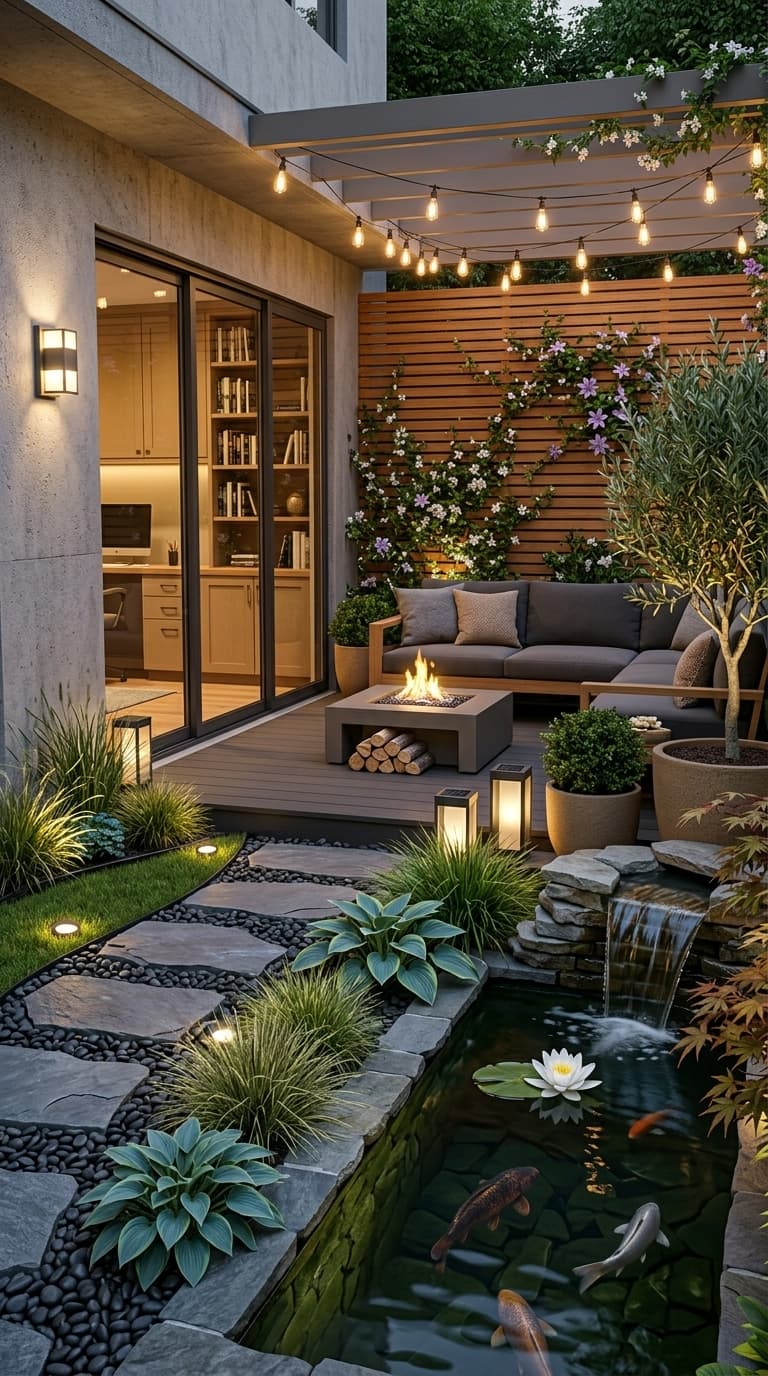
Creating an inviting outdoor living space is about extending your home's comfort and style beyond its walls. This image showcases a beautifully designed patio that seamlessly blends relaxation and ambiance. The key elements here are the comfortable, modular seating arrangement, the warmth of a central fire pit, and the magical glow of overhead string lights. These components work together to create a welcoming atmosphere perfect for evening gatherings or quiet contemplation.
The success of this outdoor space lies in its thoughtful layering of comfort, light, and natural elements. The dark, modern sectional sofa provides ample seating, while the low-profile fire pit serves as both a focal point and a source of warmth, encouraging guests to linger. The strategic placement of accent lighting, from the wall sconces to the charming string lights overhead, creates a soft, inviting glow as dusk settles.
1. Designing Your Outdoor Seating Area
The foundation of any inviting outdoor living space is comfortable and functional seating. In this example, a deep, modular sectional sofa in a neutral, dark tone anchors the patio. Its configuration allows for flexible arrangement, accommodating multiple people and facilitating conversation. When selecting your own outdoor furniture, prioritize comfort and durability. Consider the size of your space and how you intend to use it – will it be for intimate dinners, large gatherings, or simply lounging?
Beyond the main seating, consider adding accent pieces like ottomans or individual chairs to complete the arrangement. These can provide extra seating when needed or serve as convenient surfaces for drinks and snacks. The placement is crucial; arrange furniture to create distinct zones within your outdoor area, perhaps a lounging area around the fire pit and a separate dining space if room allows. Ensure there's enough clearance for easy movement, avoiding a cluttered feel.
2. The Ambiance of Outdoor Lighting
Lighting is paramount in transforming an outdoor space from functional to magical, especially as the sun sets. This patio utilizes a layered lighting approach. Wall-mounted fixtures provide essential ambient light near the entrance, while the star of the show is the string of Edison-style bulbs draped across the pergola. These lights cast a warm, inviting glow, creating a festive yet intimate atmosphere. When choosing outdoor lighting, consider different types: task lighting for specific areas like grilling or reading, accent lighting to highlight features.
The placement of your lights can significantly impact the mood. String lights are best hung overhead, perhaps along a fence, pergola, or between trees, to create a canopy of light. Ensure they are securely fastened and consider using a dimmer switch to adjust the intensity for different occasions. Ground-level pathway lights, like the small uplights and lanterns shown, are excellent for guiding guests safely and adding subtle visual interest to landscaping.
3. Incorporating a Fire Feature
A fire pit or fireplace is a natural focal point for any outdoor living area, offering warmth, light, and a sense of gathering. This design features a modern, square fire pit with a gas insert, surrounded by decorative logs for aesthetic appeal. The flames provide a mesmerizing visual element and a comforting heat source, making the space usable on cooler evenings. When considering a fire feature, think about safety first.
The size and style of your fire feature should complement your overall decor. A sleek, modern pit like the one pictured works well with contemporary outdoor furniture, while a more rustic stone fireplace might suit a traditional setting. Consider built-in options for a seamless look or portable fire pits for flexibility. The area around the fire pit should be comfortable and accessible, with seating arranged to allow everyone to enjoy its warmth and ambiance.
4. Integrating Natural Elements and Water Features
Bringing the outdoors in, and vice versa, is key to creating a harmonious living space. This patio excels at this by incorporating lush greenery and a tranquil water feature. Potted plants, including an olive tree and various shrubs, add texture, color, and life to the space. The pathway is softened by ornamental grasses and hostas, creating a natural transition from the deck to the garden. When selecting plants for your outdoor area, consider your climate, the amount of sunlight the space receives, and.
The small, multi-tiered waterfall and koi pond add a serene, sensory dimension to the patio. The gentle sound of running water is incredibly calming and can help mask ambient noise, creating a peaceful retreat. Even a small water feature can make a significant impact. Options range from tabletop fountains to larger pond installations. If a full pond isn't feasible, consider a wall-mounted waterfall or a self-contained fountain. Maintaining a water feature involves regular cleaning, water checks, and ensuring proper filtration to keep the.
5. Material Choices for Durability and Style
The choice of materials significantly impacts the look, feel, and longevity of your outdoor space. The deck in this image appears to be made of composite decking, known for its durability, resistance to rot and insects, and low maintenance. The stone pathway and pond edging add natural texture and visual contrast. When selecting materials for your patio or deck, consider factors like weather resistance, slip-resistance (especially for flooring), and ease of cleaning.
Complementary materials for furniture and accessories are also important. The dark, woven fabric of the sectional sofa suggests weather-resistant upholstery, essential for outdoor use. The concrete or stone-like material of the fire pit adds a modern, grounded feel. When choosing outdoor furniture, look for materials like powder-coated aluminum, teak, wicker (made from synthetic materials for durability), or treated woods. These materials are designed to withstand the elements. Consider how different textures and finishes will interact – for instance, smooth metal furniture might contrast.
6. Creating Flow and Defining Zones
Effective use of space involves creating a sense of flow and clearly defining different functional zones. This patio achieves this by using the deck as the primary living area, with the fire pit and seating arranged centrally. The stone pathway, bordered by plants and leading towards the pond, acts as a secondary, more tranquil zone. When planning your outdoor layout, think about how you move through the space.
Defining zones can be done through various means, including furniture arrangement, changes in flooring material, or the use of planters and screens. For example, placing a large outdoor rug under your seating area clearly delineates it as a living space. Using different types of paving – like the deck versus the stone path – also helps to visually separate areas. Even the strategic placement of potted plants can create subtle divisions, guiding the eye and creating intimate nooks.
- Assess your outdoor space's primary use: relaxation, dining, or entertaining.
- Measure your available area to determine the appropriate size for furniture and features.
- Select weather-resistant furniture materials and fabrics suitable for your climate.
- Plan your lighting scheme, considering ambient, task, and accent lighting needs.
- Choose a focal point, such as a fire pit, water feature, or outdoor fireplace.
- Incorporate plants and natural elements to enhance the atmosphere and visual appeal.