Create Magical Outdoor Ambiance with String Lights: A Practical Guide
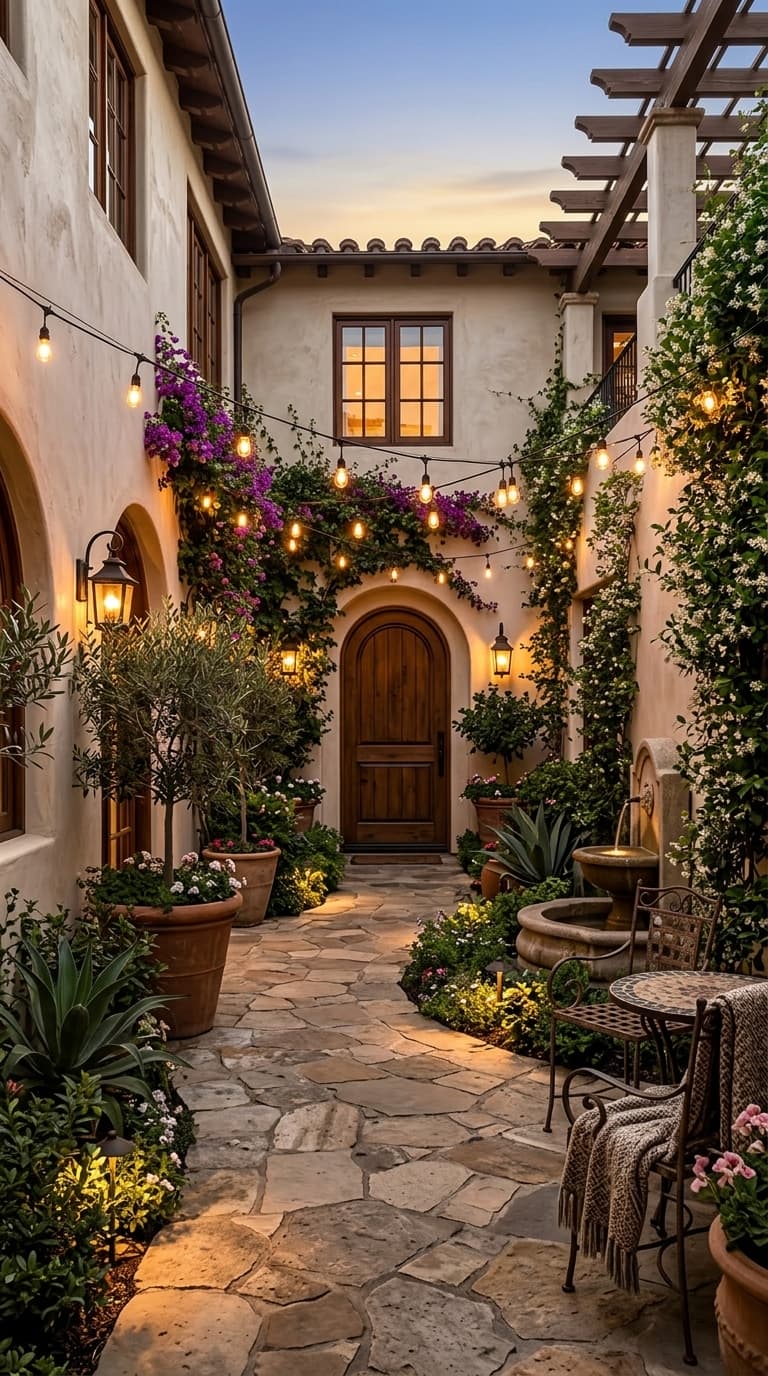
Transforming an outdoor space into a magical retreat doesn't require a complete overhaul. Often, the right lighting can dramatically alter the mood and usability of a patio, courtyard, or garden, especially as dusk settles. The image showcases a beautiful example of how string lights, combined with strategic planting and architectural elements, can create an inviting and enchanting atmosphere. This approach is particularly effective for areas that are used for evening relaxation or entertaining.
Achieving this level of ambiance involves more than just hanging a few bulbs. It's about layering light, integrating it with the natural elements of your space, and ensuring functionality without sacrificing aesthetics. Think about how the light spills onto pathways, highlights architectural features like pergolas or archways, and casts a warm glow on seating areas. The interplay of light and shadow, coupled with the soft illumination from plants and water features, creates a dynamic and captivating environment.
1. Choosing the Right String Lights for Your Space
The visual appeal of the courtyard hinges significantly on the type of string lights used. The image features classic Edison-style bulbs with a warm, incandescent glow, strung along a wire that appears to be a standard outdoor-rated cord. For a similar effect, consider LED versions that mimic this warm hue, offering energy efficiency and longevity. When selecting lights, think about the scale of your space. For smaller patios, delicate fairy lights or globe lights might be more appropriate, while larger areas.
Beyond the bulb style, consider the cord color and length. Black or dark green cords can blend more seamlessly with foliage and darker architectural elements, while white cords might stand out more against lighter backgrounds. Measure the areas where you plan to hang lights to determine the necessary length, and ensure there are accessible power outlets. If outlets are scarce, solar-powered or battery-operated string lights are viable alternatives, though their brightness and duration may vary.
2. Strategic Placement for Maximum Impact
The placement of string lights in the image is key to its enchanting effect. They are draped across the courtyard, connecting different architectural elements and illuminating the pathway. Notice how the lights are strung at varying heights, creating a sense of depth and movement. They are also positioned to highlight the lush greenery, making the plants appear to glow from within. When planning your own layout, consider the primary function of the area.
The image also demonstrates how string lights can be used to accentuate architectural features. They are woven through the vines climbing the walls and draped along the pergola structure, drawing attention to these elements. When deciding on placement, look for natural anchor points like trees, posts, or eaves. If you don't have these, consider using shepherd's hooks or mounting brackets. For pathways, aim to line the edges with lights, either by attaching them to low planters or using ground-level stake lights.
3. Integrating Lights with Greenery and Hardscaping
The successful ambiance in the photo is a testament to the harmonious blend of lighting and abundant plant life. The string lights are artfully woven through flowering vines and around potted trees, making the greenery appear to shimmer. This integration softens the light and adds a natural, organic feel. When planning your own setup, consider plants that have a good structure or cascading habit, such as ivy, jasmine, or wisteria, which can beautifully frame and support the lights.
The stone pathway and terracotta pots in the image provide a rustic, earthy backdrop that enhances the warm glow of the lights. The lights are strategically placed to illuminate the path, making it safe and inviting. Consider how your hardscaping elements can work with your lighting. For instance, if you have a brick patio, string lights can soften the geometric patterns. If you have a wooden deck, lights can add a cozy glow.
4. Layering Light for Depth and Mood
The courtyard in the image employs a sophisticated layering of light sources to create its enchanting atmosphere. Beyond the prominent string lights, there are wall-mounted lanterns casting a warm, downward glow, and subtle ground lights illuminating the plants. This multi-layered approach prevents the space from feeling flat or one-dimensional. When designing your outdoor lighting scheme, think about different types of fixtures that can serve various purposes.
The interplay between the warm, diffused light from the string bulbs and the more focused beams from the lanterns and ground lights is what gives the scene its depth. The string lights provide a general ambient glow, while the other fixtures add points of interest and definition. Consider using dimmers on your various light sources to control the intensity and mood. For example, you might want brighter light for entertaining and a softer, more subdued glow for a quiet evening.
5. Practical Considerations and Maintenance
While the aesthetic is paramount, practical considerations are essential for a functional and safe outdoor lighting setup. The image suggests durable materials and secure wiring. When installing string lights, ensure they are properly secured to prevent them from falling, especially in windy conditions. Use weather-resistant cords and fixtures, and consider the placement of electrical connections to protect them from moisture. If you're not comfortable with electrical work, it's always best to consult a professional.
Regular maintenance will keep your outdoor lighting looking its best and functioning safely. Periodically check the bulbs for any signs of damage or corrosion, and replace any that are not working. Clean the bulbs and fixtures to remove dirt and debris that can dim the light. For plants that are intertwined with lights, trim back any overgrowth that might obscure the bulbs or pose a fire hazard.
6. Avoiding Common Lighting Mistakes
One common mistake is using lights that are too harsh or too bright, which can detract from the cozy ambiance. The warm, diffused glow in the image is key to its success. Avoid cool-toned or overly intense lights that can feel clinical rather than inviting. Another pitfall is inadequate coverage; a few scattered lights won't create a cohesive atmosphere. Ensure your lighting plan addresses the entire space, from pathways to seating areas.
Another mistake is neglecting to consider the scale of the lights relative to the space. Tiny lights in a vast yard can get lost, while oversized fixtures can overwhelm a small patio. The image demonstrates a good balance, with lights that are noticeable but not overpowering. Finally, failing to plan for power sources can lead to unsightly extension cords snaking across the area. Think ahead about outlet locations or consider solar or battery-powered options to minimize visible wiring.
- Measure your outdoor space to determine the appropriate length of string lights needed.
- Choose warm-toned LED string lights for energy efficiency and a cozy glow.
- Identify secure anchor points like trees, posts, or pergolas for hanging lights.
- Consider layering with lanterns or ground lights to add depth and highlight features.
- Ensure all lights and cords are rated for outdoor use and properly secured.
- Plan for power sources, opting for solar or battery-powered options if outlets are scarce.