Create Your Dream Outdoor Living Space: A Guide to Comfortable Patios
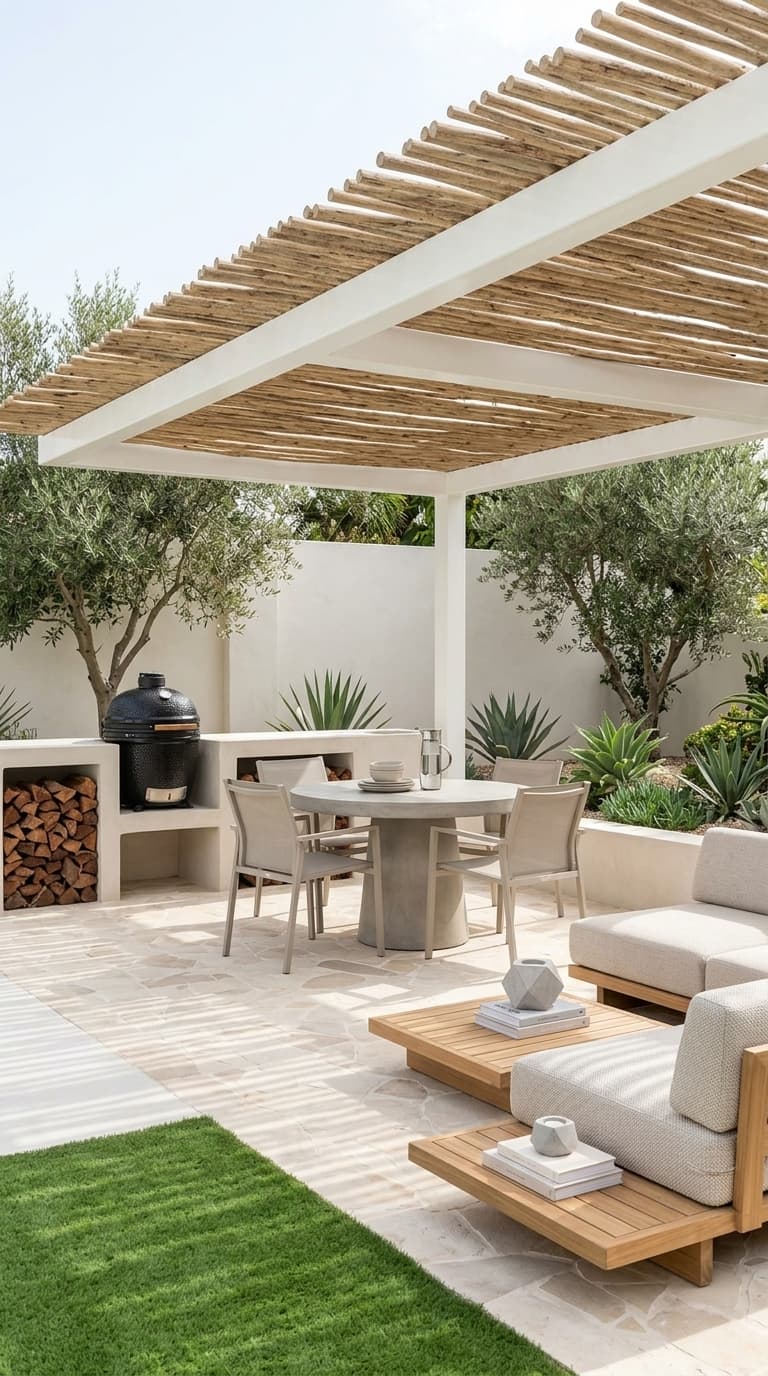
Imagine stepping out into your backyard and being greeted by an extension of your home's comfort and style. This outdoor patio, with its inviting pergola, comfortable seating, and dedicated dining area, exemplifies how to create a truly functional and aesthetically pleasing outdoor living space. The key to such a transformation lies in thoughtful planning, selecting the right furniture, and incorporating elements that enhance both usability and ambiance.
Designing an outdoor living space is about more than just placing furniture outside; it's about creating zones for different activities and ensuring a seamless flow between your indoor and outdoor environments. The image showcases a well-defined dining area with a concrete table and chairs, a relaxed lounge space with modular seating, and a functional cooking station. This deliberate arrangement maximizes the utility of the space, making it perfect for entertaining or quiet relaxation.
1. Choosing the Right Outdoor Furniture
Selecting outdoor furniture requires careful consideration of both style and durability. The patio in the image features a mix of materials, including what appears to be concrete for the dining table and chairs, and a natural wood and upholstered fabric for the lounge seating. When choosing your own furniture, think about the climate in your area. Materials like teak, aluminum, and high-quality synthetic wicker are often excellent choices for their weather resistance.
Beyond material and size, comfort is paramount. Ensure that chairs have adequate back support and that lounge seating is plush enough for extended relaxation. If you opt for cushions, check that they are removable for easy cleaning and storage during inclement weather. The low-profile wooden coffee tables in the image are practical for holding drinks and snacks without obstructing views or movement. When planning your furniture layout, leave ample space for walkways between pieces and seating areas.
2. Creating Shade and Shelter
The pergola in the image is a crucial element, providing essential shade and defining the outdoor living area. Its slatted bamboo-like roof offers dappled sunlight, creating a pleasant ambiance without completely blocking the sky. When planning your own shade solution, consider options like pergolas, awnings, umbrellas, or shade sails. A pergola can be a permanent structure, offering a robust framework for climbing plants or additional lighting.
The choice of shade structure should complement your home's architecture and your personal style. The natural materials used in the pergola's roof add a touch of organic texture that contrasts beautifully with the clean lines of the patio. Think about how the shade will affect the temperature and light in your space. A fully covered patio can become quite warm, while a partially shaded area might offer a better balance.
3. Defining Outdoor Zones
Effectively dividing your outdoor space into distinct zones enhances its functionality and makes it feel more organized and intentional. The image clearly delineates an area for dining, complete with a table and chairs, and a separate area for lounging, featuring comfortable sofas and coffee tables. This separation allows for different activities to occur simultaneously without feeling crowded. You can create these zones using various methods, such as strategically placed rugs, changes in flooring materials, or the arrangement of furniture.
When planning your zones, consider the primary uses of your patio. If you love to entertain, a spacious dining area and a comfortable conversation pit might be priorities. If relaxation is key, focus on creating a serene lounge area with ample seating and perhaps a fire pit. The built-in counter and grill area in the image serves as a dedicated outdoor kitchen, further enhancing the space's utility. Ensure that there is clear, unobstructed passage between zones to avoid a cluttered feel.
4. Incorporating Greenery and Natural Elements
The lush planting surrounding the patio in the image adds a vital layer of natural beauty and softness, creating a more immersive and inviting atmosphere. The architectural succulents and mature olive trees provide texture, color, and a sense of established tranquility. When selecting plants for your outdoor space, consider their mature size, water needs, and suitability for your climate. Drought-tolerant plants, like those shown, are excellent choices for low-maintenance patios, especially in warmer regions.
Beyond potted plants, consider integrating landscaping elements directly into your patio design. Raised garden beds or built-in planters, as seen in the image, can soften hardscaping and bring greenery closer to your seating areas. The stacked firewood next to the grill also serves as a rustic decorative element, blending function with form. Think about how plants can enhance privacy, screen undesirable views, or simply add a splash of color.
5. Lighting for Ambiance and Functionality
Outdoor lighting is essential for extending the usability of your patio into the evening hours and creating a warm, inviting atmosphere. While not explicitly detailed in the image, the presence of a pergola suggests potential for overhead string lights or pendant fixtures. Consider layering your lighting: ambient lighting for overall illumination, task lighting for areas like the grill or dining table, and accent lighting to highlight architectural features or plants.
When planning your outdoor lighting, think about the mood you want to create. Soft, warm-toned lights are generally more conducive to relaxation than harsh, bright lights. Consider the placement of fixtures to avoid glare and ensure that they illuminate the intended areas effectively. Solar-powered lights are an eco-friendly and easy-to-install option for pathways and accent lighting. If you have a built-in grill area, task lighting directly above it is crucial for safe and efficient cooking after dark.
6. Practical Considerations and Maintenance
Beyond aesthetics, practical considerations are vital for a successful outdoor living space. The stone-like paving in the image provides a durable and attractive surface that can withstand foot traffic and weather. When choosing your patio material, consider factors like slip resistance, ease of cleaning, and how well it retains or reflects heat. The built-in counter and storage for firewood demonstrate smart integration of functional elements. Think about drainage to prevent water pooling and consider how you will manage outdoor storage for.
Regular maintenance is key to preserving the beauty and longevity of your outdoor oasis. This includes cleaning furniture, sweeping or power washing the patio surface, and tending to your plants. If you have upholstered furniture, ensure cushions are stored properly during off-seasons or periods of heavy rain to prevent mold and mildew. The natural materials used in the pergola and furniture require specific care; for instance, wooden furniture may need occasional sealing or oiling to maintain its appearance.
- Assess your patio size and shape to determine the best furniture layout and zone placement.
- Select outdoor furniture materials that are durable, weather-resistant, and suit your climate.
- Choose a shade solution, such as a pergola, umbrella, or awning, that complements your style and provides adequate coverage.
- Plan your outdoor lighting to create ambiance and ensure functionality for evening use.
- Incorporate plants and greenery to add life, color, and texture to your space.
- Develop a regular maintenance schedule for your furniture, patio surface, and plants.