Create a Cozy Ambiance: Layering Lighting for a Welcoming Living Room
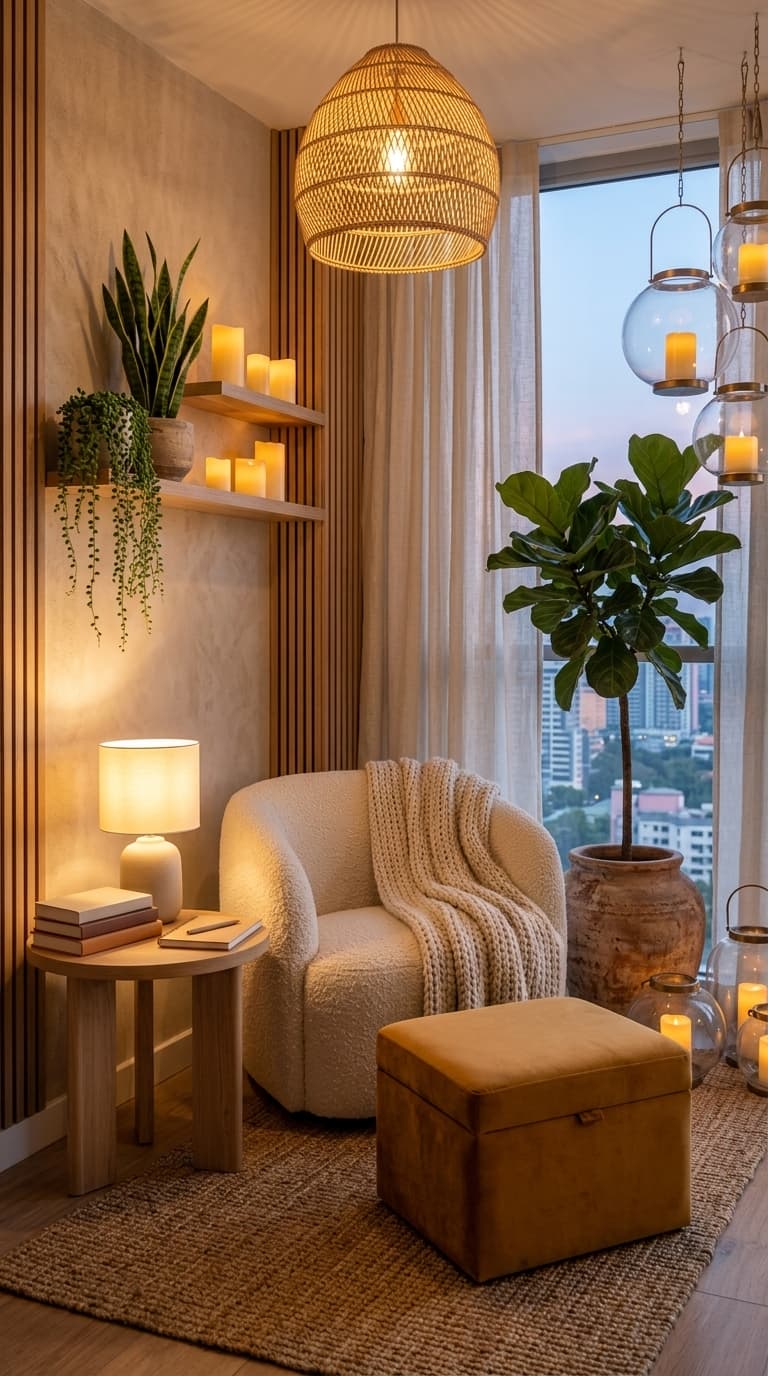
Achieving a truly cozy and inviting atmosphere in your living room often hinges on the thoughtful use of lighting. Instead of relying on a single overhead fixture, layering different light sources can transform a space, adding depth, warmth, and functionality. This approach allows you to tailor the mood for various activities, from reading a book in a soft glow to entertaining guests with a brighter, more ambient setting.
The art of layered lighting involves combining ambient, task, and accent lighting to create a dynamic and functional illumination scheme. Ambient lighting provides the general illumination for a room, setting the overall mood. Task lighting is focused and brighter, designed for specific activities like reading or working. Accent lighting highlights particular features, such as artwork or architectural details, adding visual interest. In this serene corner, the large rattan pendant light serves as a primary ambient source, while the table lamp offers focused light.
1. The Power of Ambient Lighting
Ambient lighting forms the foundation of your living room's illumination, providing the overall brightness and setting the mood. In the featured image, the large, woven pendant light suspended from the ceiling is a prime example of ambient lighting that also doubles as a statement piece. Its natural material and diffused glow create a soft, warm light that permeates the space. When selecting ambient lighting, consider the size of your room and the desired atmosphere.
Beyond overhead fixtures, ambient light can be achieved through various sources. Wall sconces can provide a gentle upward or downward glow, adding architectural interest and softening the overall light. Floor lamps strategically placed in corners can also contribute to ambient illumination, especially those with shades that diffuse light. When layering ambient sources, ensure they complement each other. For instance, if you have a strong overhead light, you might opt for softer floor lamps to fill in any darker areas.
2. Illuminating Activities with Task Lighting
Task lighting is crucial for functional living rooms, enabling specific activities to be performed comfortably and safely. The image clearly demonstrates this with a small table lamp placed on a wooden side table next to a plush armchair. This lamp provides a focused pool of light, perfect for reading, knitting, or any other close-up work. When choosing task lighting, consider its placement relative to the activity it will serve.
The type of bulb used in task lighting is also a key consideration. Brighter, cooler bulbs might be suitable for a home office desk, but for a living room reading nook, a warmer bulb (around 2700K-3000K) is generally more appropriate to maintain the cozy ambiance. The style of the task lamp should also complement your decor. The simple, modern design of the lamp in the image blends seamlessly with the room's aesthetic.
3. Adding Depth with Accent Lighting
Accent lighting is used to draw attention to specific features, adding visual interest and depth to your living room. In the image, the decorative lanterns placed on the floor and potentially on shelves serve as accent lighting, casting a warm, inviting glow. These lanterns, filled with flameless LED candles, create a soft, ambient effect that highlights the textures of the rug and the surrounding decor. Accent lighting can also be used to showcase artwork, plants, or architectural elements.
The use of flameless LED candles in lanterns is a smart and safe way to achieve the warm, flickering ambiance of real candles. This type of accent lighting is particularly effective in creating a cozy atmosphere, especially in the evening. When planning your accent lighting, think about what you want to emphasize in your room. Do you have a striking piece of art? A beautiful plant? Or perhaps a textured wall?
4. Choosing the Right Fixtures and Materials
The choice of lighting fixtures significantly impacts the overall aesthetic and mood of your living room. The prominent woven pendant light in the image is a perfect example of how a fixture can be both functional and decorative. Its natural rattan material adds texture and a bohemian-inspired touch, complementing the earthy tones of the rug and the wooden side table. When selecting fixtures, consider how their materials and designs will integrate with your existing decor.
Beyond the main fixtures, the smaller elements like lampshades and lantern materials also play a role. The simple, fabric lampshade on the table lamp diffuses light softly, preventing harshness. The glass globes of the hanging lanterns allow the warm glow of the LED candles to shine through, creating a beautiful visual effect. When choosing lampshades, opt for materials that allow light to pass through gently, such as linen, parchment, or frosted glass.
5. Balancing Light and Shadow for Mood
Creating a cozy atmosphere is not just about brightness; it's also about the interplay of light and shadow. Strategic use of lighting can create pockets of warmth and intimacy, while allowing other areas to recede into softer shadows. The image demonstrates this beautifully; the armchair area is well-lit by the table lamp and the ambient glow from the pendant, inviting you to sit and relax. Meanwhile, the corners of the room might be slightly dimmer, creating a sense of depth and coziness.
The placement of light sources is key to controlling the balance of light and shadow. Placing a floor lamp behind a sofa can create a soft halo of light, while a table lamp on a side table can illuminate a reading nook. The decorative lanterns in the image add pools of warm light that break up larger, potentially darker areas. Consider the natural light in your room as well.
6. Practical Tips for Implementing Layered Lighting
Implementing layered lighting in your living room doesn't have to be complicated. Start by assessing your current lighting setup and identifying any gaps. Do you have enough general ambient light? Is there a specific area where you need more focused task lighting? Once you understand your needs, you can begin to add layers. Consider incorporating floor lamps or table lamps to supplement your main overhead fixture. Smart plugs can also be a game-changer, allowing you to control lamps remotely or set schedules, adding.
Don't forget about the power of decorative lighting elements like string lights or accent lamps. These can be used to add a touch of personality and warmth. For example, placing a small accent lamp on a bookshelf or draping fairy lights around a mirror can create a magical glow. When arranging your lighting, think about traffic flow and furniture placement. Ensure that lamps are not placed in high-traffic areas where they could be easily knocked over.
- Assess your living room's current lighting and identify areas needing improvement.
- Add a floor lamp or table lamp to create a dedicated reading nook.
- Incorporate decorative lanterns with flameless LED candles for ambient glow.
- Ensure all bulbs have a consistent warm white color temperature (around 2700K).
- Use dimmers on overhead fixtures or lamps for adjustable mood lighting.
- Strategically place lights to balance illumination and create cozy shadows.