Design Your Dream Outdoor Kitchen: Layout Tips for Function and Flow
Transforming your backyard into an extension of your home with a well-designed outdoor kitchen can elevate your entertaining and everyday living. Imagine the convenience of preparing meals al fresco, the joy of hosting gatherings without constantly running inside, and the simple pleasure of enjoying a sunset dinner prepared right where you are. This isn't just about adding a grill; it's about creating a cohesive, functional space that mirrors the comfort and utility of your indoor kitchen.
The success of an outdoor kitchen hinges on thoughtful design and strategic placement of its core components. Think about how you move through your indoor kitchen: the path from refrigerator to prep area, to cooking surface, and finally to a dining spot. Replicating this logical flow outdoors is key. Factors like proximity to the house, access to utilities (water, gas, electricity), and protection from the elements all influence the layout.
1. Defining Your Outdoor Kitchen Zones
A well-organized outdoor kitchen functions much like its indoor counterpart, with distinct zones designed for specific tasks. The primary zones typically include a cooking area, a prep zone, a cleaning station, and a serving or dining area. The cooking zone, housing your grill or other cooking appliances, should be easily accessible but also positioned to allow for safe ventilation and to minimize smoke drift towards seating areas.
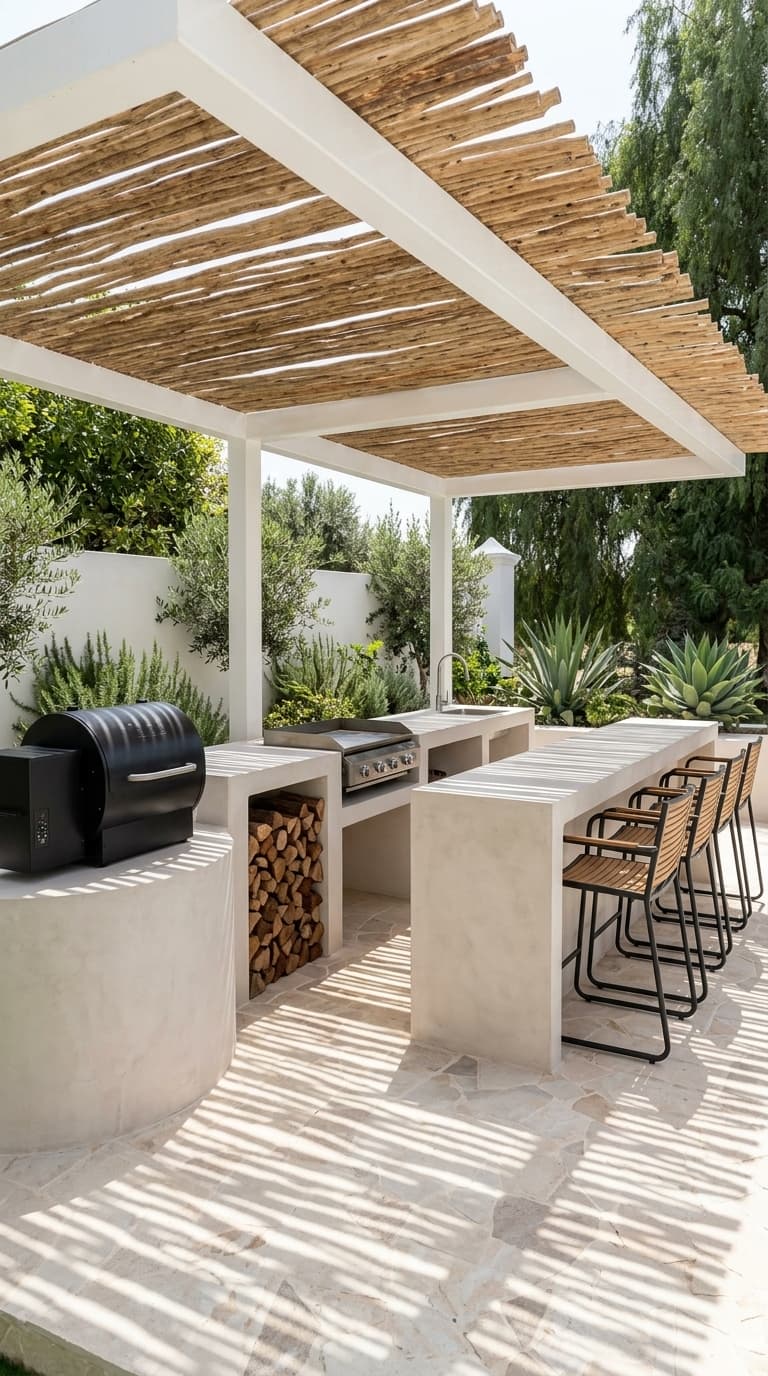
The serving and dining zones are where guests and family will gather. A bar or counter area, as seen with the integrated seating in the image, provides a casual spot for drinks and appetizers while cooking is underway. For more formal dining, a separate table and chairs can be placed nearby. When planning these zones, think about traffic flow. Ensure there are clear pathways between each area, avoiding bottlenecks, especially during parties.
2. The Importance of Appliance Placement
The selection and placement of appliances are critical to the functionality of your outdoor kitchen. The grill is often the centerpiece, and its size and type should match your cooking habits. Consider built-in versus freestanding options, and ensure it's installed according to manufacturer guidelines for safety and performance. Refrigeration, whether a full-size outdoor-rated refrigerator or a smaller beverage cooler, should be placed within easy reach of the prep and serving areas.
Beyond the main cooking appliances, consider secondary elements that enhance convenience. A warming drawer can keep food at the perfect temperature, and a side burner is useful for simmering sauces or boiling corn. When planning the layout, group appliances logically. For instance, place the sink and prep counter near the refrigerator, and position the grill and any warming elements together. Ensure adequate clearance around all appliances for safety and ease of use.
3. Countertop and Storage Solutions
Countertops are the workhorses of any kitchen, and outdoor kitchens are no exception. The image showcases a smooth, concrete-like countertop that offers a sleek, modern look and ample space for food preparation and serving. When selecting outdoor countertops, durability and resistance to the elements are key. Materials like granite, concrete, tile, or quartz are excellent choices, offering longevity and ease of maintenance. Consider the height of your countertops; a standard counter height is around 36 inches, while bar-height counters, like the one.
Effective storage is crucial for keeping your outdoor kitchen tidy and functional. Built-in cabinets, drawers, and open shelving can house everything from grilling tools and serving dishes to cleaning supplies. The image demonstrates practical open shelving integrated into the counter structure, perfect for storing firewood, which adds a rustic charm and keeps fuel readily accessible. Consider weather-resistant materials for any cabinetry to protect your stored items. Think about what you'll need to store and where it makes the most sense to keep.
4. Flooring and Structural Considerations
The foundation of your outdoor kitchen, including the flooring and any overhead structures, plays a significant role in both aesthetics and practicality. The image features a beautiful, irregular stone paver flooring that complements the natural, organic feel of the space. Outdoor flooring needs to be durable, slip-resistant, and able to withstand varying weather conditions. Options like pavers, concrete, natural stone, or even outdoor-rated tile are popular choices.
Overhead structures, such as the pergola shown in the image, provide essential shade and define the outdoor kitchen area. The slatted wood design offers dappled sunlight, creating a pleasant atmosphere without completely blocking the sky. When designing a pergola or other overhead structure, consider its height and width to ensure it provides adequate coverage for your cooking and dining areas. It can also be a place to hang lighting fixtures or even fans for added comfort.
5. Lighting and Ambiance
Effective lighting is essential for extending the usability of your outdoor kitchen into the evening hours and for creating a welcoming ambiance. The slatted pergola in the image casts beautiful, patterned shadows, adding a unique visual element during the day. For nighttime use, consider a layered lighting approach. Task lighting, such as under-counter lights or spotlights directed at the grill and prep areas, is crucial for safety and functionality.
Beyond functional lighting, decorative elements can significantly enhance the ambiance of your outdoor kitchen. The natural materials used in the pergola and the surrounding landscaping contribute to a relaxed, Mediterranean-inspired feel. Consider adding outdoor-rated rugs, comfortable seating with cushions, and decorative planters to further personalize the space. The sound of a water feature or the scent of nearby herbs can also add to the sensory experience. When planning your outdoor kitchen, think about how you want the space to feel and what.
6. Maintenance and Longevity
To ensure your outdoor kitchen remains a beautiful and functional space for years to come, regular maintenance is key. The concrete-like finish of the countertops and structure in the image suggests a material that is relatively easy to clean, but it's important to follow specific care instructions for your chosen materials. Regularly clean grills and cooking surfaces to prevent grease buildup and ensure optimal performance. Inspect plumbing and gas lines periodically for any signs of wear or leaks.
Storage solutions play a vital role in the longevity of your outdoor kitchen by protecting items from the elements. Ensure that any stored firewood, like that shown in the image, is kept dry and well-ventilated to prevent mold or rot. If you have outdoor cushions or upholstery, store them in a dry place when not in use, or opt for weather-resistant fabrics. Consider covering your grill and other appliances during harsh weather or when not in use to prolong their lifespan.
- Measure your available outdoor space to determine the ideal size and layout for your kitchen.
- Identify the primary zones needed: cooking, prep, cleaning, and serving/dining.
- Select durable, weather-resistant materials for countertops and flooring.
- Choose appliances that fit your cooking style and budget, ensuring proper ventilation.
- Plan for adequate task and ambient lighting for evening use.
- Incorporate sufficient storage solutions to keep the space organized and clutter-free.