Create a Timeless Home Office: Mastering Traditional Decor
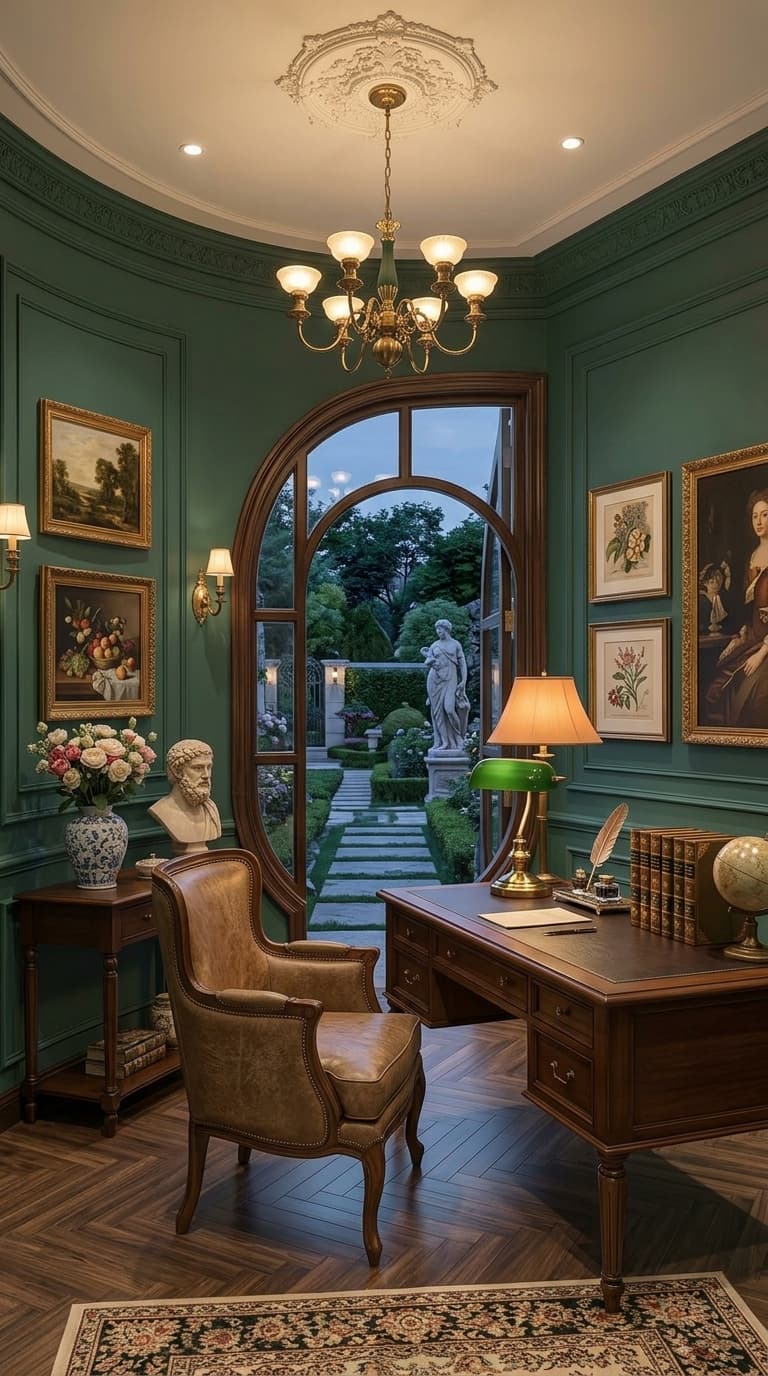
Transforming a home office into a space that inspires productivity and reflects a sense of enduring style is achievable with a focus on traditional decor. This aesthetic, characterized by rich materials, classic silhouettes, and a curated selection of decorative elements, offers a sophisticated and comfortable environment for work or study. The image showcases a room that masterfully blends functionality with timeless design, featuring deep green walls that create a sense of depth and enclosure, complemented by ornate architectural details like the.
Achieving a similar look involves understanding the core principles of traditional interior design and applying them to a home office setting. It's about creating a harmonious balance between comfort, elegance, and practicality. The selection of furniture, such as the plush leather armchair and the substantial wooden desk, speaks to the durability and classic appeal of traditional pieces. Artwork and decorative accents, like the framed paintings and the bust, add personality and a sense of history to the room.
1. The Foundation: Wall Color and Architectural Details
The deep, rich green walls in the featured office serve as a powerful backdrop, evoking a sense of calm and sophistication often associated with traditional interiors. This color choice is not only visually appealing but also creates an intimate atmosphere conducive to focus. When selecting a wall color for your own traditional office, consider other deep jewel tones like navy blue, burgundy, or even a warm charcoal gray.
Beyond paint colors, the architectural elements play a crucial role in establishing a traditional ambiance. The ornate plaster medallion surrounding the chandelier is a hallmark of classic design, drawing the eye upward and adding a touch of grandeur. If your ceiling lacks such features, consider adding a simpler, yet elegant, ceiling medallion to enhance the overall look. The arched window frame is another significant detail, providing a unique architectural statement and framing the garden view beautifully.
2. Furniture Selection: Comfort Meets Classic Style
The choice of furniture is paramount in defining a traditional home office. The image displays a substantial, dark wood executive desk with classic detailing, suggesting durability and a timeless design. This piece serves as the functional heart of the room, providing ample workspace and storage. When selecting a desk, look for solid wood construction, traditional hardware like brass or antique bronze pulls, and a generous surface area.
When choosing seating, prioritize both comfort and style. A leather armchair, whether new or vintage-inspired, offers a classic look that ages beautifully. If leather isn't your preference, consider upholstered armchairs in rich fabrics like velvet, brocade, or a classic damask pattern. Ensure the chair provides adequate support and is comfortable for extended periods. Beyond the desk and main chair, consider adding a smaller accent chair or a small side table, as seen in the image.
3. Lighting: Layering for Ambiance and Task Efficiency
Effective lighting is essential for both functionality and ambiance in a home office. The image demonstrates a layered lighting approach, starting with a grand, multi-arm chandelier as the primary overhead light source. This fixture, with its warm, diffused glow, provides general illumination while also serving as a decorative element. The style of the chandelier, with its classic brass finish and frosted glass shades, contributes significantly to the room's traditional character.
Task lighting is equally important, especially for a workspace. The desk lamp in the image, with its green glass shade and brass base, is a classic example of functional yet stylish task lighting. This type of lamp provides focused light directly onto the work surface, reducing eye strain. Consider placing a desk lamp strategically on your desk, ensuring it doesn't create glare on your computer screen.
4. Artwork and Decorative Accents: Adding Personality
The walls in this traditional home office are adorned with framed artwork, adding character and a sense of history to the space. The selection includes still-life paintings and portraits, common motifs in traditional decor. When choosing artwork for your office, consider pieces that resonate with you and contribute to the desired mood. Landscapes, botanical prints, or classical portraits can all work well. The key is to select pieces that complement the wall color and furniture.
Beyond artwork, decorative accents play a vital role in completing the traditional look. The bust of a classical figure, the vase of flowers, the stack of leather-bound books, and the globe all contribute to the room's curated feel. These items add personality and a sense of lived-in elegance. When selecting decorative items, think about pieces that have a story or a timeless quality. Antiques, vintage finds, or items that evoke a sense of history can be excellent choices.
5. Flooring and Rugs: Grounding the Space
The flooring in the image is a beautiful herringbone pattern in a rich, dark wood tone. This type of flooring is classic and adds significant visual interest and warmth to the room. Herringbone, along with other parquet patterns, has a long history in traditional interior design and lends an air of sophistication. If installing a new wood floor isn't an option, consider high-quality laminate or vinyl flooring that mimics the look of real wood.
When selecting an area rug for a traditional home office, consider patterns like Persian, Oriental, or classic geometric designs. The color palette of the rug should complement the wall color and furniture, either by providing a contrasting element or by harmonizing with the existing tones. The size of the rug is also important; it should be large enough to anchor the main furniture pieces, such as the desk and chair, without overwhelming the room.
6. Window Treatments and Views: Connecting Indoors and Outdoors
The large, arched window is a dominant feature, offering a breathtaking view of a meticulously maintained garden. This connection to the outdoors is a key element of traditional design, bringing natural beauty and a sense of tranquility into the workspace. While the window itself is a statement, consider how you might enhance or complement such a view. If you have a beautiful view, opt for window treatments that are minimal and do not obstruct the scenery.
For windows that don't offer a garden vista, consider how window treatments can contribute to the traditional aesthetic. Heavy, floor-to-ceiling drapes in rich fabrics like velvet, silk, or linen, paired with ornate tie-backs, can add a sense of luxury and formality. Valances or cornices can also be used to frame the top of the window, adding architectural detail. When selecting window treatments, consider the amount of light you want to control and the overall style of the room.
- Assess your room's existing architectural features and consider adding molding or a ceiling medallion.
- Choose a dark, rich wall color or a classic neutral that complements traditional decor.
- Select a solid wood desk and a comfortable, high-backed armchair for your primary seating.
- Layer lighting with a chandelier, desk lamp, and possibly wall sconces for ambiance and task efficiency.
- Curate artwork and decorative accents that reflect your personal style and add a sense of history.
- Select an area rug with a traditional pattern to ground your furniture and add warmth.