Create a Vibrant Mediterranean Patio: A Guide to Color, Texture, and Comfort
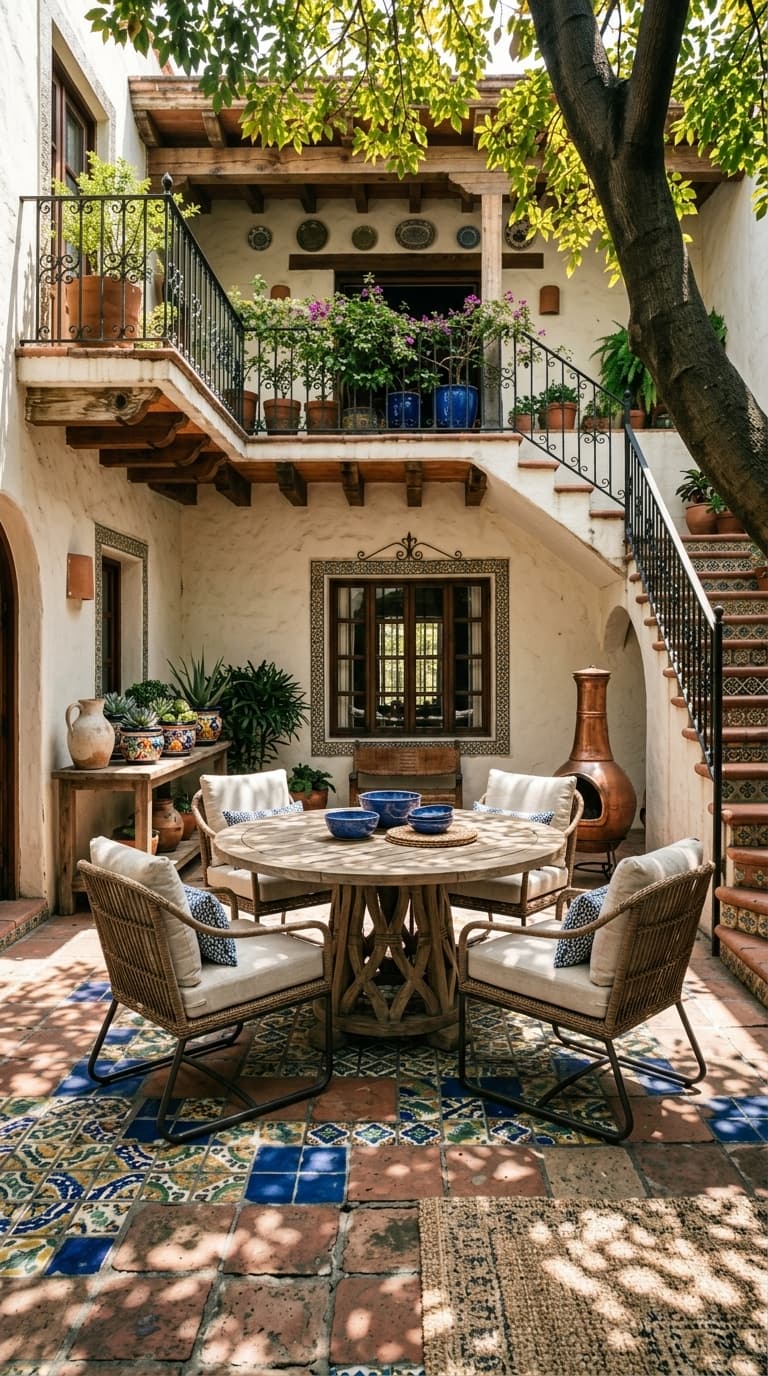
Imagine stepping into a sun-drenched courtyard, the air alive with the scent of blooming jasmine and the gentle murmur of conversation. This is the essence of Mediterranean patio design, a style that effortlessly blends vibrant colors, natural textures, and inviting comfort. The image before us showcases a stunning example, featuring a captivating mosaic of patterned tiles underfoot, a sturdy wooden dining set, and an abundance of lush greenery cascading from balconies and pots.
Achieving a Mediterranean patio look involves more than just placing a few potted plants. It's a holistic approach that considers the interplay of architectural elements, material choices, and decorative accents. The rich, earthy tones of the terracotta tiles, the intricate patterns of the ceramic accents, and the weathered charm of wooden furniture all contribute to a sense of timeless beauty. The strategic placement of greenery, from climbing vines to potted succulents, adds life and a touch of wildness, softening the hardscaping and bringing.
1. The Foundation: Vibrant Tiled Flooring
The floor in the image is a masterclass in Mediterranean design, featuring a dynamic mix of terracotta tiles and intricate, colorful ceramic patterns. This patchwork approach creates a visually rich and engaging surface that grounds the entire space. When selecting tiles for your patio, consider a combination of rustic, unglazed terracotta for its earthy warmth and hand-painted ceramic tiles for pops of color and pattern. Think about geometric motifs, floral designs, or even abstract swirls in blues, greens, yellows, and reds.
Before committing to a tile pattern, it's crucial to measure your patio area accurately and consider the scale of the patterns in relation to the overall space. For smaller patios, overly busy or large-scale patterns might feel overwhelming. Conversely, a large area can handle more complex designs. Think about the flow of traffic and how the tiles will be laid. Will you be using a rug, as suggested by the woven mat in the image?
2. Comfortable and Stylish Seating
The dining set in the image, with its round wooden table and woven chairs, embodies the relaxed yet elegant spirit of Mediterranean outdoor living. The chairs, featuring natural woven textures and comfortable cushions, invite lingering conversations and leisurely meals. When choosing seating, opt for materials that are durable and weather-resistant, such as rattan, wicker, or treated wood. The cushions should be made from outdoor-grade fabric that can withstand sun exposure and moisture, ideally in neutral tones or subtle patterns that complement the vibrant.
Beyond the main dining set, think about creating additional cozy nooks. The image hints at this with the presence of stairs and balconies, suggesting potential for smaller seating areas. Perhaps a pair of comfortable armchairs on a balcony or a bench nestled in a corner could offer private retreats. When selecting cushions, consider removable covers for easy cleaning and storage during off-seasons. Adding outdoor throws or accent pillows in complementary colors can enhance comfort and visual appeal.
3. Lush Greenery and Potted Plants
Greenery is the lifeblood of any Mediterranean-inspired space, and the image showcases this beautifully with an abundance of potted plants. From the overflowing balcony planters to the arrangements on the console table, plants bring life, color, and a sense of natural beauty. Consider a mix of plant types: tall, architectural succulents for a modern touch, trailing vines to soften edges and add vertical interest, and flowering plants for bursts of color.
When arranging your plants, think about creating different levels and focal points. Place taller plants towards the back or in corners to create a sense of enclosure and privacy. Trailing plants can be placed on ledges or in hanging baskets to cascade down walls or railings. The console table in the image is artfully styled with a collection of plants and decorative pottery, demonstrating how to create a charming vignette.
4. Architectural Details and Accents
The architectural elements in the image, such as the textured stucco walls, the wooden beams supporting the upper level, and the ornate wrought-iron railings, contribute significantly to the Mediterranean charm. These details add depth, character, and a sense of history to the space. If you're looking to enhance your patio's architecture, consider adding decorative tile accents around windows or doorways, similar to the intricate border seen around the central window.
Beyond structural elements, decorative accents play a vital role in bringing the Mediterranean vibe to life. The copper chiminea is a striking focal point, offering both warmth and a sculptural element. Consider adding outdoor-friendly lanterns or string lights to create a magical ambiance in the evening. Decorative pottery, like the large jug on the console table, adds an artisanal touch. Colorful ceramic bowls on the dining table serve as both functional tableware and decorative pieces.
5. Creating Ambiance with Lighting and Shade
While the image primarily showcases daytime beauty, effective lighting is crucial for extending the use and enjoyment of your patio into the evening. The presence of a chiminea suggests a desire for warmth and ambiance, which can be amplified with strategic lighting. Consider a mix of ambient, task, and accent lighting. Lanterns, whether hanging or freestanding, provide a soft, diffused glow. String lights draped across the space can create a festive and magical atmosphere.
Shade is equally important for daytime comfort, especially in sunny Mediterranean climates. The tree in the image provides natural dappling, creating a pleasant microclimate. If you don't have mature trees, consider adding shade structures like pergolas, awnings, or large umbrellas. These not only provide relief from the sun but also add architectural interest and define the outdoor living space. The balconies in the image also offer a degree of natural shade to the area below.
6. Practical Considerations and Maintenance
Creating a beautiful Mediterranean patio is one thing, but ensuring its longevity and ease of maintenance is another. Regularly sweep or hose down your tiled surfaces to prevent dirt and grime buildup, especially in grout lines. Seal terracotta tiles periodically to protect them from stains and moisture. For outdoor furniture, choose materials that are easy to clean and resistant to the elements. Cushions should be stored indoors or covered during inclement weather to prolong their life and prevent mildew.
When planning your patio, think about drainage. Ensure water can effectively run off the surface to prevent pooling, which can damage tiles and attract insects. Consider the placement of furniture to avoid obstructing pathways or creating tripping hazards. If you have a chiminea or outdoor fireplace, follow safety guidelines for its use and ensure it's placed on a non-combustible surface. Regularly inspect railings and stairs for stability and safety.
- Assess your patio's sunlight and weather conditions to choose appropriate plants and materials.
- Measure your space accurately to select the right size dining table and seating arrangement.
- Select a combination of rustic and patterned tiles, considering color, scale, and slip resistance.
- Choose weather-resistant furniture and outdoor-grade cushion fabrics in complementary colors.
- Plan for both natural and artificial lighting to create ambiance and ensure functionality.
- Develop a regular maintenance schedule for tiles, furniture, and plants to ensure longevity.