Transform Your Space with Slatted Room Dividers: Style and Functionality
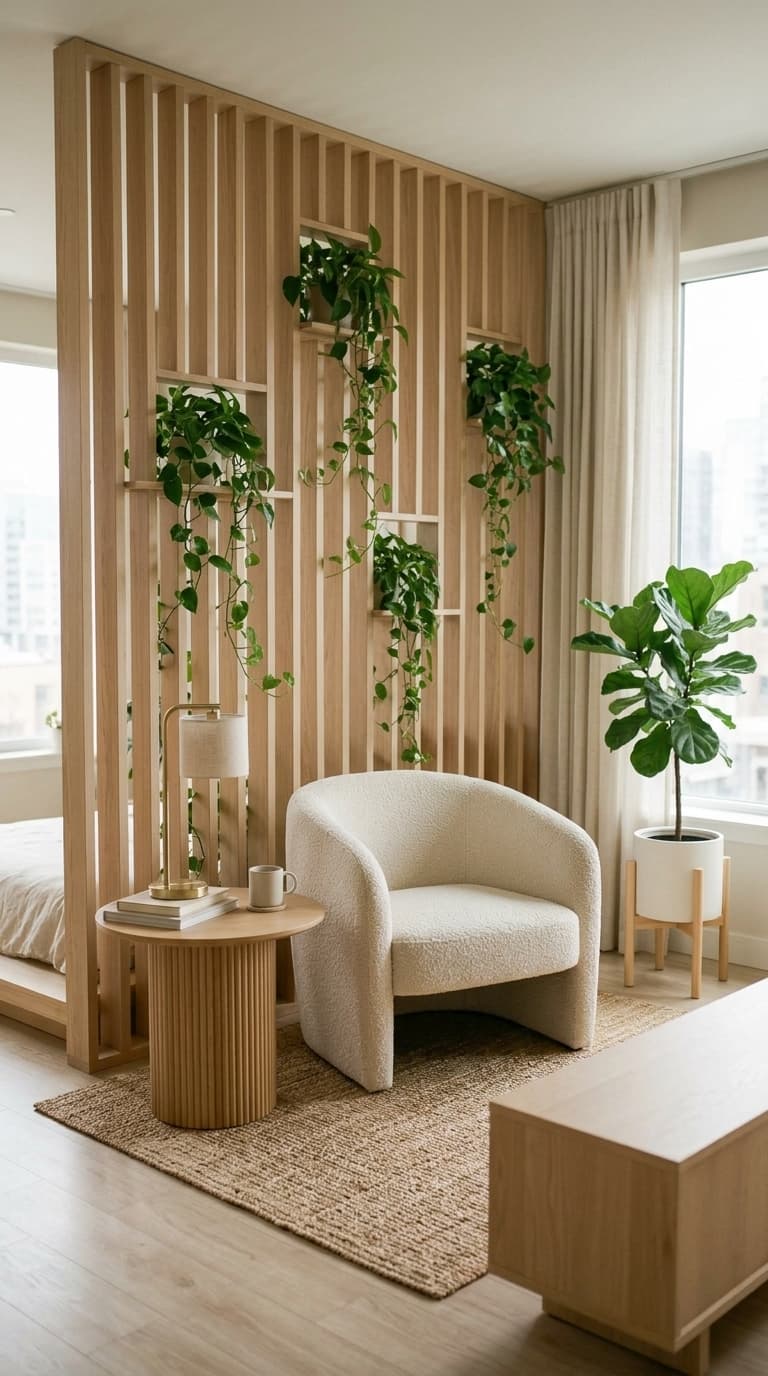
Room dividers are an excellent solution for defining spaces in open-plan living areas or creating distinct zones within a larger room. The slatted wood design seen here offers a contemporary yet warm aesthetic, providing a sense of separation without completely blocking light or sightlines. This type of divider can be particularly effective in studio apartments or multi-functional living spaces, allowing you to visually segment a bedroom area from a living or dining space.
The visual appeal of a slatted room divider lies in its ability to create a soft boundary. Unlike solid walls, these dividers allow light to filter through, maintaining an airy and open feel in the space. The natural wood tones, as depicted, bring a sense of warmth and organic texture, which pairs well with a variety of interior styles, from minimalist to bohemian. The specific design in the image incorporates small, recessed shelves, which are perfect for showcasing greenery, adding a.
1. Choosing the Right Slatted Divider
When selecting a slatted room divider, consider the material and finish to ensure it harmonizes with your existing furniture and flooring. Natural wood tones, like oak or walnut, offer a timeless appeal and can be stained or left natural to match your decor. For a more modern look, consider dividers with a matte black or white finish. The spacing between the slats is another important factor; wider gaps create a more open feel, while narrower slats offer greater privacy.
Beyond aesthetics, the functionality of the slatted divider should be a primary consideration. Some dividers come with integrated shelving, as seen in the image, which can be used for plants, books, or decorative objects. Others might offer options for mounting small shelves or hooks. If you're looking for a more substantial piece, consider a divider that can also serve as a display unit or even a partial room enclosure.
2. Integrating Plants for Biophilic Design
The image showcases an excellent example of integrating plants into a slatted room divider, creating a living, breathing element within the home. Trailing plants like Pothos, English Ivy, or String of Pearls are ideal for this purpose, as their vines can cascade down the slats, softening the structure and adding a lush, natural feel. When selecting plants, consider the light conditions in your space. Plants that tolerate lower light, such as ZZ plants or snake plants, can thrive in areas with.
Maintaining the health of your plants is key to keeping your slatted divider looking its best. Regularly check the soil moisture and water accordingly, being mindful of any potential drips. Consider using self-watering planters or placing a small tray beneath each pot to catch excess water. Pruning your plants periodically will help maintain their shape and prevent them from becoming overgrown. If your divider has built-in shelves, ensure they are sturdy enough to support the weight of the plants and their.
3. Styling the Surrounding Area
The area around a slatted room divider should complement its design and function. In the image, a plush, textured armchair is placed near the divider, creating a cozy reading nook or a conversational seating area. A small, round side table with a ribbed texture adds a sculptural element and provides a surface for a lamp, books, and a mug. The choice of a natural fiber rug, such as jute, grounds the seating area and adds warmth and texture to the floor.
The lighting in the vicinity of the divider plays a crucial role in setting the mood. A task lamp on the side table, as seen, provides focused light for reading or other activities. Consider ambient lighting options, such as floor lamps or strategically placed accent lights, to highlight the plants or the texture of the divider itself. The curtains in the background are a neutral, light-colored fabric, which allows natural light to filter in while providing a sense of privacy.
4. Practical Considerations for Placement
When deciding where to place a slatted room divider, think about the primary purpose it will serve. Is it to create a visual separation between a living area and a home office, or to define a sleeping zone in a studio apartment? Position the divider to optimize the flow of natural light and maintain a sense of openness. Avoid placing it in a way that blocks essential windows or creates awkward dead spaces.
Before committing to a specific location, measure the area thoroughly. Ensure there is adequate clearance around the divider for comfortable movement. If the divider is freestanding, check its stability and consider if it needs to be secured to the floor or wall for safety, especially in homes with children or pets. Think about the electrical outlets and any wiring that might be affected by the placement.
5. Avoiding Common Decor Mistakes
One common mistake when using room dividers is choosing a size or style that is disproportionate to the room. A divider that is too large can make a small space feel even more cramped, while one that is too small might not effectively define the intended zones. Another pitfall is neglecting the back of the divider; ensure it looks as good from all angles as it does from the front, especially if it will be visible from multiple areas.
Another mistake is failing to consider the impact on natural light. A solid or densely slatted divider can block light, making adjacent areas feel dark and enclosed. Opt for designs with wider slat spacing or incorporate open shelving to allow light to pass through. Additionally, ensure the material and finish of the divider align with the room's overall style. A dark, heavy divider might clash with a light, airy minimalist decor, for example.
6. Maintaining and Enhancing Your Divider
Regular maintenance will ensure your slatted room divider remains a beautiful and functional element in your home. For wooden dividers, dust them regularly with a soft, dry cloth to prevent buildup. If the wood appears dry or dull, you can apply a wood polish or conditioner suitable for the type of wood. For dividers with integrated shelves, keep them clean and organized. Wipe down any spills immediately to prevent staining.
To enhance the visual appeal of your slatted divider, consider subtle styling updates. You can change out decorative items on the shelves seasonally, or introduce new textures and colors through small accessories. If your divider has open sections, consider adding small, discreet LED strip lights behind the slats to create a warm, ambient glow in the evening. This can add a dramatic and sophisticated touch to your space.
- Measure your space carefully to determine the ideal size and placement for your slatted room divider.
- Select a material and finish that complements your existing decor and furniture.
- Consider dividers with integrated shelving for added functionality and display opportunities.
- Choose plants that suit the light conditions of the area where the divider will be placed.
- Ensure adequate clearance around the divider for comfortable movement and to avoid a cluttered feel.
- Regularly dust and clean the divider and its shelves to maintain its appearance and the health of any plants.