Create Your Dream Outdoor Living Space: Design Tips for Comfort and Style
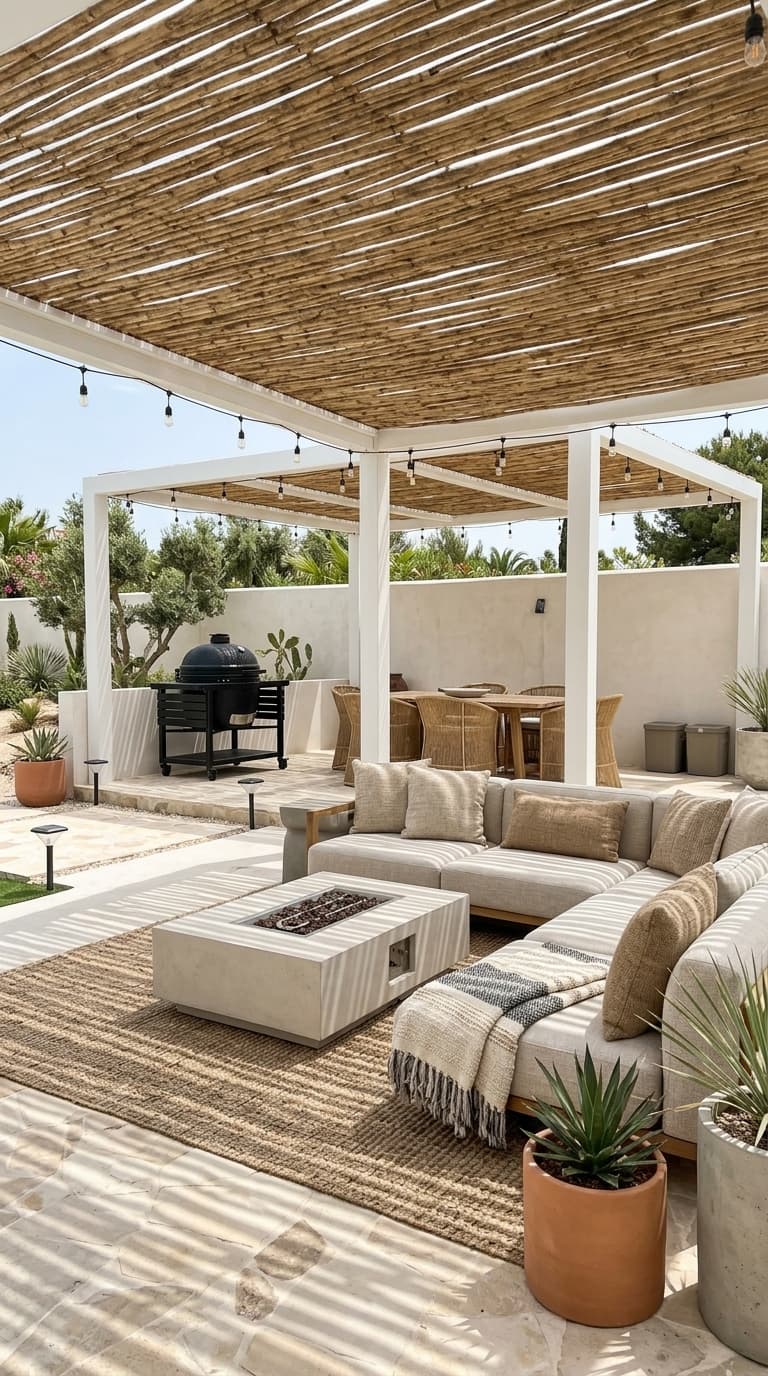
Designing an outdoor living space that seamlessly blends comfort, functionality, and style can elevate your home's appeal and provide a cherished area for relaxation and entertainment. The image showcases a sophisticated outdoor setup, featuring a spacious sectional sofa, a contemporary concrete fire pit coffee table, and a separate dining area, all sheltered by a stylish bamboo-slatted pergola. This arrangement demonstrates how to create distinct zones for lounging and dining, maximizing the utility of the outdoor area.
Achieving a cohesive and inviting outdoor living area requires thoughtful planning and attention to detail, much like designing an interior room. The pictured space exemplifies how to balance different functional areas, from the cozy seating arrangement around the fire pit to the more formal dining setting. The use of a large, textured rug anchors the seating area, defining it as a distinct zone and adding warmth underfoot.
1. Zoning Your Outdoor Space for Functionality
Effectively zoning your outdoor area allows you to create distinct areas for different activities, enhancing both usability and aesthetic appeal. In the featured image, a clear separation exists between the lounging area centered around the fire pit and the dining area. This is achieved through furniture placement and the use of a large rug to define the seating zone. When planning your own layout, consider the primary uses: relaxation, dining, cooking, or entertaining.
Creating distinct zones doesn't necessarily require physical barriers. The strategic placement of furniture, rugs, and even planters can effectively delineate different areas. For example, a sectional sofa can naturally create a cozy nook, while a dining table and chairs define a separate eating space. Consider the transition between zones; a pathway or a change in flooring material can subtly guide movement. If you're incorporating a cooking area, ensure adequate ventilation and consider proximity to the dining space for easy serving.
2. Selecting the Right Outdoor Furniture
Choosing outdoor furniture that is both comfortable and durable is paramount for creating a lasting and enjoyable living space. The image displays a plush sectional sofa and woven dining chairs, suggesting a preference for comfort and natural textures. When selecting seating, consider materials that can withstand the elements, such as treated wood, metal, or high-quality synthetic wicker. Upholstery should be made from fade-resistant and water-repellent fabrics. For dining, opt for tables and chairs that are sturdy and easy to clean.
When selecting outdoor furniture, prioritize pieces that offer both comfort and longevity. The sectional sofa in the image appears to be upholstered in a durable, weather-resistant fabric, ideal for outdoor use. Look for frames made from materials like aluminum, teak, or powder-coated steel, which resist rust and corrosion. For dining sets, consider materials that are easy to wipe down, such as ceramic tabletops or chairs made from resin or metal.
3. Incorporating Ambiance with Outdoor Lighting
Lighting is a critical element in transforming an outdoor space from a daytime area to an inviting evening retreat. The image features string lights draped across the pergola, casting a warm, ambient glow. This type of lighting is excellent for creating a festive and cozy atmosphere. Consider a layered lighting approach: ambient lighting for overall illumination, task lighting for areas like dining or cooking, and accent lighting to highlight architectural features or plants.
Strategic outdoor lighting can dramatically enhance the usability and mood of your living space after sunset. The string lights in the image provide a soft, diffused light that creates a magical ambiance, perfect for evening gatherings. Beyond decorative string lights, consider incorporating functional lighting such as wall sconces near doorways for safety, or pendant lights over a dining table to provide focused illumination. Uplighting for trees or architectural features can add depth and drama.
4. The Role of Outdoor Rugs and Textiles
Outdoor rugs and textiles, such as the jute rug and throw blankets shown, play a significant role in adding comfort, color, and texture to an outdoor living area. A well-chosen rug can anchor a seating arrangement, define a zone, and provide a softer surface underfoot, making the space feel more like an extension of your indoor living room. When selecting outdoor rugs, prioritize materials that are specifically designed for outdoor use, such as polypropylene or natural fibers treated for weather.
Beyond aesthetics, outdoor rugs and cushions contribute significantly to the comfort and functionality of your patio or deck. The rug in the image grounds the seating area, making it feel more intimate and defined. When choosing an outdoor rug, consider its size in relation to your furniture; it should be large enough for at least the front legs of your seating to rest on it.
5. Integrating Natural Elements and Greenery
Bringing the outdoors in, or rather, enhancing the outdoor environment with natural elements and greenery, is key to creating a serene and inviting atmosphere. The image incorporates potted plants of various sizes and types, adding life and color to the space. Consider incorporating a mix of foliage textures and heights to create visual interest. Large planters can act as decorative elements and also help define boundaries or create privacy.
Incorporating plants and natural materials is essential for creating an organic and welcoming outdoor sanctuary. The variety of potted plants in the image adds a vibrant touch and softens the hardscape elements. When selecting plants, consider their light requirements and your climate zone to ensure they thrive. Grouping plants of varying heights and textures can create a lush, layered look. Large planters can also serve as functional dividers, helping to define different zones within your outdoor space or create a.
6. Creating a Focal Point with a Fire Feature
A fire feature, such as the modern concrete fire pit coffee table in the image, can serve as a captivating focal point for an outdoor living space, encouraging gathering and extending usability into cooler evenings. Fire pits offer warmth and a mesmerizing visual element that draws people together. When selecting a fire feature, consider the size of your space and your preferred fuel source, whether it's propane, natural gas, or wood.
The inclusion of a fire pit, like the sleek concrete model in the image, transforms an outdoor area into a year-round destination. It provides not only warmth but also a natural gathering spot, encouraging conversation and prolonging the enjoyment of your space into the evening. When choosing a fire feature, assess your space's dimensions and your lifestyle. Propane or natural gas options offer convenience and easy ignition, while wood-burning pits provide a more traditional ambiance and crackling fire sounds.
- Measure your outdoor space to determine the appropriate scale for furniture and layout.
- Identify the primary functions of your outdoor area (dining, lounging, entertaining) to guide zoning decisions.
- Select weather-resistant materials for furniture, rugs, and textiles to ensure durability.
- Plan your lighting scheme, considering ambient, task, and accent lighting for evening use.
- Choose plants that are suitable for your climate and add visual interest to the space.
- Ensure any fire feature is placed safely and on a non-combustible surface.