Create a Calm Entryway with Balanced Decor
The entryway sets the tone for your home, acting as the first impression for guests and a daily transition zone for your family. A well-designed space balances aesthetics with practicality, avoiding clutter while showcasing personal style. This guide helps you refine your entryway decor to feel intentional and serene.
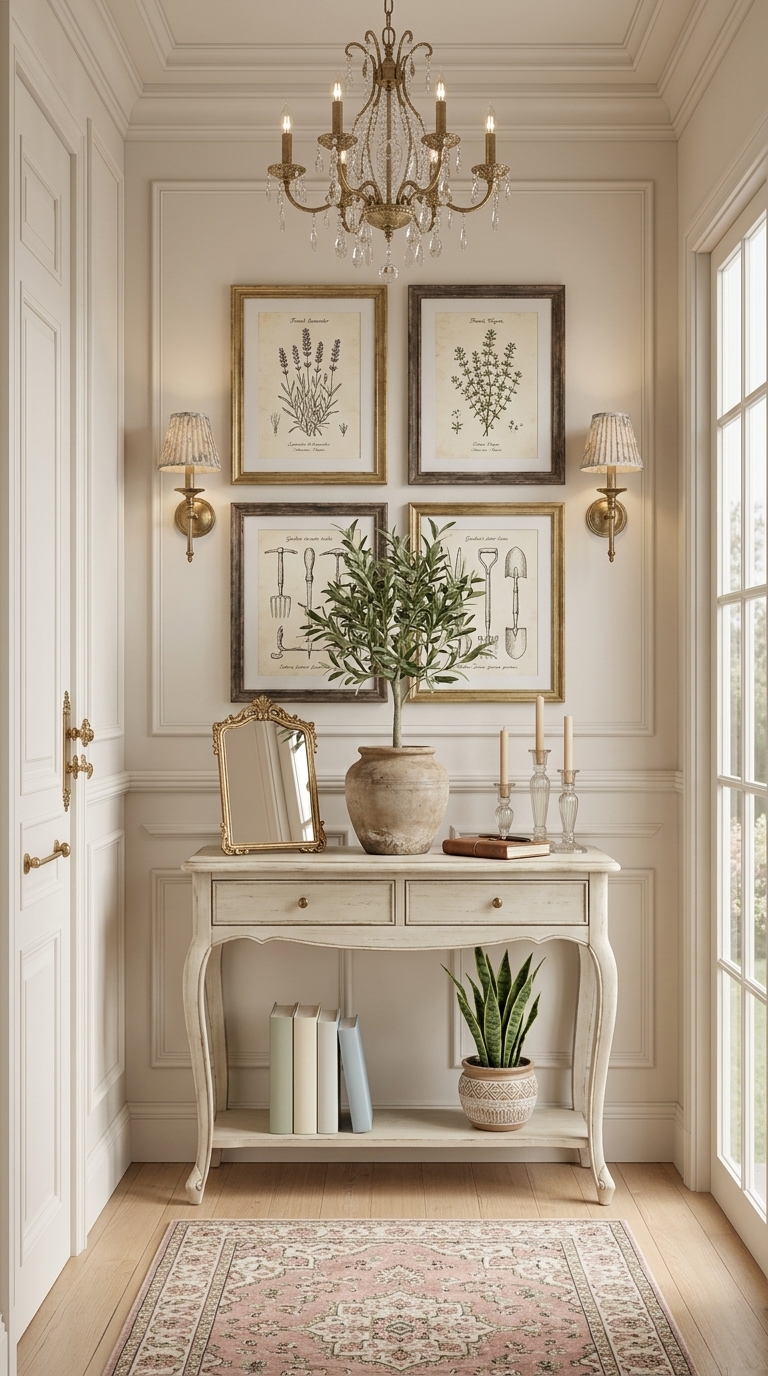
Start by assessing your current entryway layout and identifying the primary function—whether it's storage, visual appeal, or both. The image shows a harmonious blend of a console table, wall art, lighting, and plants that work together without overcrowding. Use this as a blueprint to evaluate your own space and make targeted improvements.
1. Assess Your Wall Space and Layout
Begin by measuring the wall area above your console table to determine how much visual real estate you have. The image shows four framed botanical prints arranged in a balanced grid, which creates symmetry without feeling cramped. Avoid hanging art too high or too low; the center of the groupings should be at eye level, approximately 57-60 inches from the floor.
Consider the scale of your furniture when choosing artwork size. The console table in the image is substantial, so the frames are proportionally sized to match. If your table is smaller, opt for fewer or smaller frames to maintain visual harmony and prevent the wall from feeling empty or overwhelming.
2. Layer Lighting for Ambiance and Function
Lighting is crucial in an entryway, where natural light may be limited. The image features a central chandelier for overhead illumination and two wall sconces flanking the artwork, which provide soft, directional light. This layered approach eliminates shadows and highlights key decor elements without glare.
Choose sconces with warm-toned bulbs to create a welcoming atmosphere. Avoid harsh overhead lighting alone, as it can feel clinical. The sconces in the image are positioned at shoulder height, ensuring they illuminate the art and mirror effectively while adding architectural interest.
3. Choose a Focal Point and Balance It
The console table serves as the primary focal point, with the large olive tree in a rustic pot drawing the eye. This natural element balances the structured symmetry of the framed art above. When selecting a centerpiece, consider height and texture—the tall plant contrasts with the horizontal lines of the table and the vertical lines of the door and window.
Avoid placing the focal point directly in the center if it creates visual weight on one side. The image demonstrates a thoughtful arrangement where the plant sits slightly off-center on the table, allowing space for a mirror and candles to create a balanced composition without clutter.
4. Incorporate Storage Without Clutter
The console table includes drawers and an open shelf, which are ideal for storing keys, mail, or umbrellas while keeping the surface clear. The image shows books and a small plant on the lower shelf, which adds warmth but requires intentional placement to avoid looking messy. Use baskets or boxes for items that don't belong on display.
Limit decorative items to 3-5 key pieces on the tabletop. The image features a mirror, a plant, candles, and a book—each serves a purpose. Too many objects create visual noise; instead, edit your collection regularly to maintain a calm, curated look.
5. Select a Rug That Defines the Space
A rug anchors the entryway and adds texture underfoot. The pink patterned rug in the image defines the area around the console table and ties together the color palette of the room. Ensure the rug is large enough to extend at least 12 inches beyond the table legs on all sides to prevent it from looking too small or floating.
Choose a rug with durable fibers suitable for high-traffic areas. Natural fiber rugs like jute or wool work well in entryways. Avoid overly busy patterns that compete with wall art; the subtle design of the rug in the image complements the room without competing for attention.
- Measure the wall space above your console table to plan artwork placement.
- Position the center of your art grouping at 57-60 inches from the floor.
- Use layered lighting with a chandelier and wall sconces for balanced illumination.
- Limit console table decor to 3-5 intentional items to avoid clutter.
- Choose a rug that extends at least 12 inches beyond the table legs on all sides.
- Place a plant on the console table to add natural texture and life.
- Use the lower shelf for storage or small plants, keeping items organized and minimal.