Elevate Your Workspace: Styling a Floating Desk for Style and Function
A floating desk offers a sleek, modern solution for home offices, especially in smaller spaces, by creating a sense of openness and minimizing visual clutter. The minimalist design, often appearing to hover unsupported, can transform a corner or a wall into a functional yet stylish workspace. Unlike traditional desks with bulky legs, a floating desk provides a clean aesthetic that complements various decor styles, from contemporary to Scandinavian.
Achieving a balanced and inviting workspace with a floating desk involves more than just placing a laptop on it. It requires a deliberate approach to selecting decor, managing cables, and ensuring ergonomic comfort. The visual impact of a floating desk is significant, so its presentation matters. By carefully considering the items you place on and around it, you can create an environment that inspires productivity and reflects your personal style.
1. Choosing the Right Floating Desk
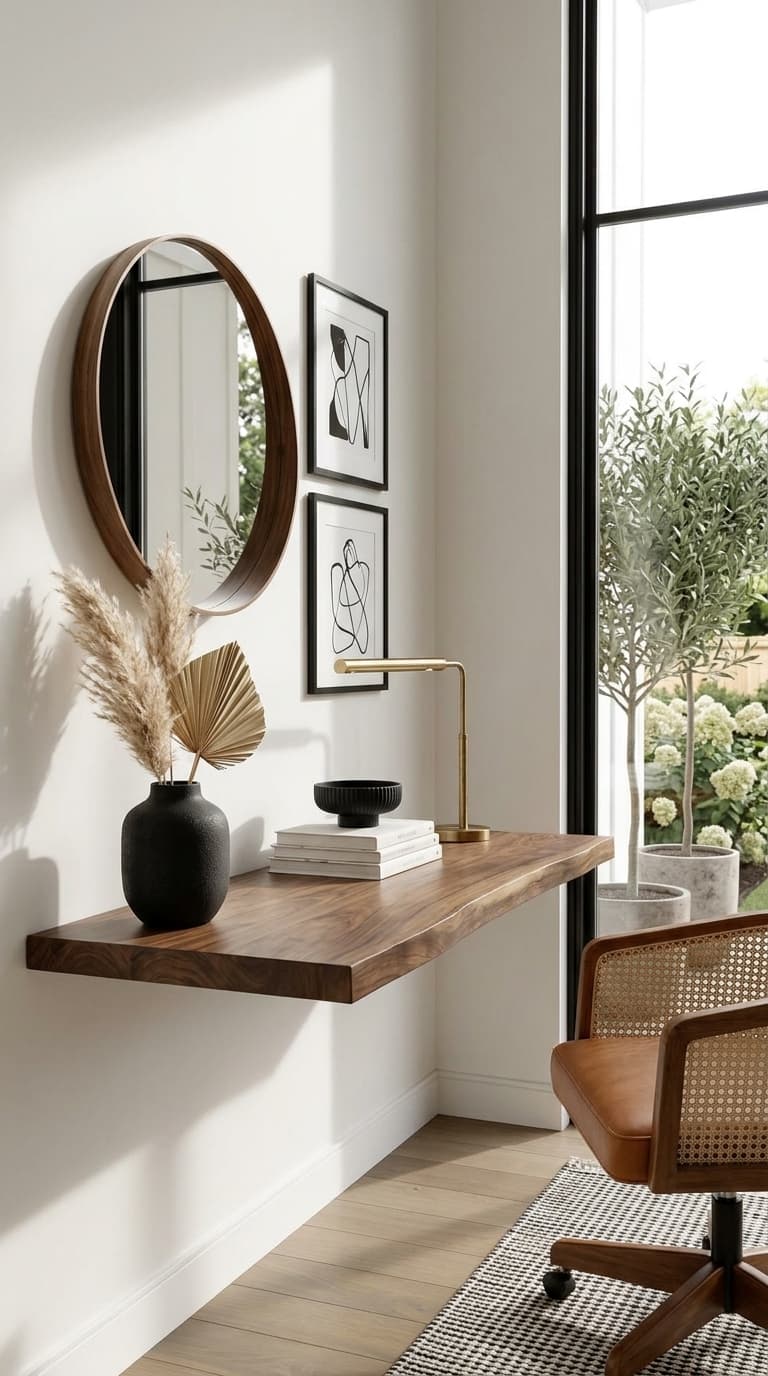
The image showcases a striking live-edge floating desk, a design that brings natural beauty and organic form into the workspace. The rich wood grain and irregular edge add character and warmth, making it a focal point. When selecting a floating desk, consider the material and its finish to match your existing decor. Options range from simple, smooth wood planks to more elaborate designs like the one pictured.
The trade-off with a live-edge desk is its unique, often asymmetrical shape, which can influence furniture placement and the overall room layout. While visually stunning, ensure the irregular edge doesn't interfere with your seating or workflow. If you prefer a more uniform look, a standard rectangular floating shelf can serve the same purpose with a cleaner, more predictable silhouette. When choosing, measure the intended wall space carefully.
2. Strategic Wall Decor Placement
Above the floating desk, a round mirror with a dark wood frame serves as a key decorative element. Its placement is strategic, drawing the eye upward and reflecting light, which is crucial for making a workspace feel larger and more inviting. The artwork, consisting of two framed abstract prints with black and white line art, adds a touch of modern sophistication without overwhelming the space. When deciding on wall decor, consider the scale and proportion relative to the desk and the.
When styling the wall above your floating desk, think about creating a cohesive gallery wall or a simple, impactful arrangement. The abstract art in the image is a safe choice as it’s neutral and modern, but you could also opt for personal photographs, motivational quotes, or even a small shelf for displaying plants or trinkets. A common mistake is hanging art too high or too low; aim for the center of the artwork to be at eye level when seated at.
3. Functional and Stylish Lighting
The brass desk lamp is a perfect example of functional lighting that also enhances the desk's aesthetic. Its slim profile and adjustable arm allow for directed light where needed, minimizing glare and eye strain during work. The warm metallic finish of the brass adds a touch of elegance and sophistication, complementing the natural wood of the desk and the modern art. When selecting a desk lamp, consider its reach and adjustability.
Beyond task lighting, consider ambient lighting in the room. The large window in the image provides ample natural light, which is ideal. However, for evenings or darker days, ensure there's adequate overhead or accent lighting to prevent the workspace from feeling dim. A common mistake is relying solely on overhead lighting, which can create shadows on your work surface. The placement of the lamp is also important; avoid positioning it where it will create glare on your computer screen.
4. Curating Desk Accessories
The accessories on the floating desk are minimal yet impactful, contributing to a sense of calm and order. A stack of books, topped with a decorative black bowl, adds texture and visual interest. A black vase filled with dried grasses and a palm leaf provides a natural, organic element. These items are chosen for their form and texture, rather than their utility, which is a hallmark of intentional styling.
A common mistake is over-accessorizing, which can quickly turn a minimalist workspace into a chaotic one. For a floating desk, where surface area might be limited, it's even more crucial to be selective. Think about the function of each item; while decorative, these pieces also contribute to the desk's personality. For instance, the books can be relevant to your work or interests, and the vase adds a touch of nature.
5. Seating and Floor Coverings
The chair pictured is a stylish leather office chair with a woven cane back, offering a blend of comfort and design. Its warm brown leather and natural cane material complement the wood tones of the desk and the overall organic feel of the space. When choosing seating for a floating desk, consider ergonomics for long work sessions, but also the visual impact. A chair that is too bulky or visually heavy can detract from the lightness of the floating desk.
Beneath the chair, a black and white patterned rug anchors the workspace and adds a layer of texture and warmth to the floor. The geometric pattern is subtle enough not to compete with other elements but provides visual interest. Rugs can define a specific zone within a larger room, making the desk area feel distinct. When selecting a rug for a home office, consider durability and ease of cleaning, especially if it's in a high-traffic area.
6. Integrating with the Surrounding Environment
The large window in the background offers a view of lush greenery and a potted tree, seamlessly integrating the indoor workspace with the outdoors. This connection to nature can significantly boost mood and productivity. When positioning a floating desk, take advantage of natural light and views whenever possible. If you don't have a direct view of nature, consider incorporating indoor plants on or near your desk to bring a touch of the outdoors in.
The overall impression of this workspace is one of calm, focus, and understated elegance. The deliberate choices in decor – the natural wood, the minimalist art, the warm metallic lamp, and the organic textures – all work together to create a harmonious environment. When styling your own floating desk, consider how each element contributes to the overall atmosphere. Avoid the temptation to fill every available space; negative space is just as important for creating a sense of calm and order.
- Measure your available wall space and desk needs before purchasing a floating desk.
- Select wall art and a mirror that are proportionate to the desk and wall size.
- Choose a desk lamp that provides adequate task lighting and complements your decor.
- Limit desk accessories to a few curated items to avoid clutter.
- Ensure your office chair is ergonomically sound and visually compatible with the desk.
- Consider a rug to define the workspace and add texture, ensuring it's appropriately sized.