Create a Stunning Gallery Wall: A Practical Guide to Styling Your Space
Elevating your living room's aesthetic often comes down to thoughtful wall decor, and a well-executed gallery wall can transform a blank canvas into a captivating focal point. This arrangement of art, photographs, and decorative objects not only adds personality and visual interest but also tells a story unique to your home. The key to a successful gallery wall lies in careful planning, a cohesive yet varied selection of pieces, and a balanced approach to placement.
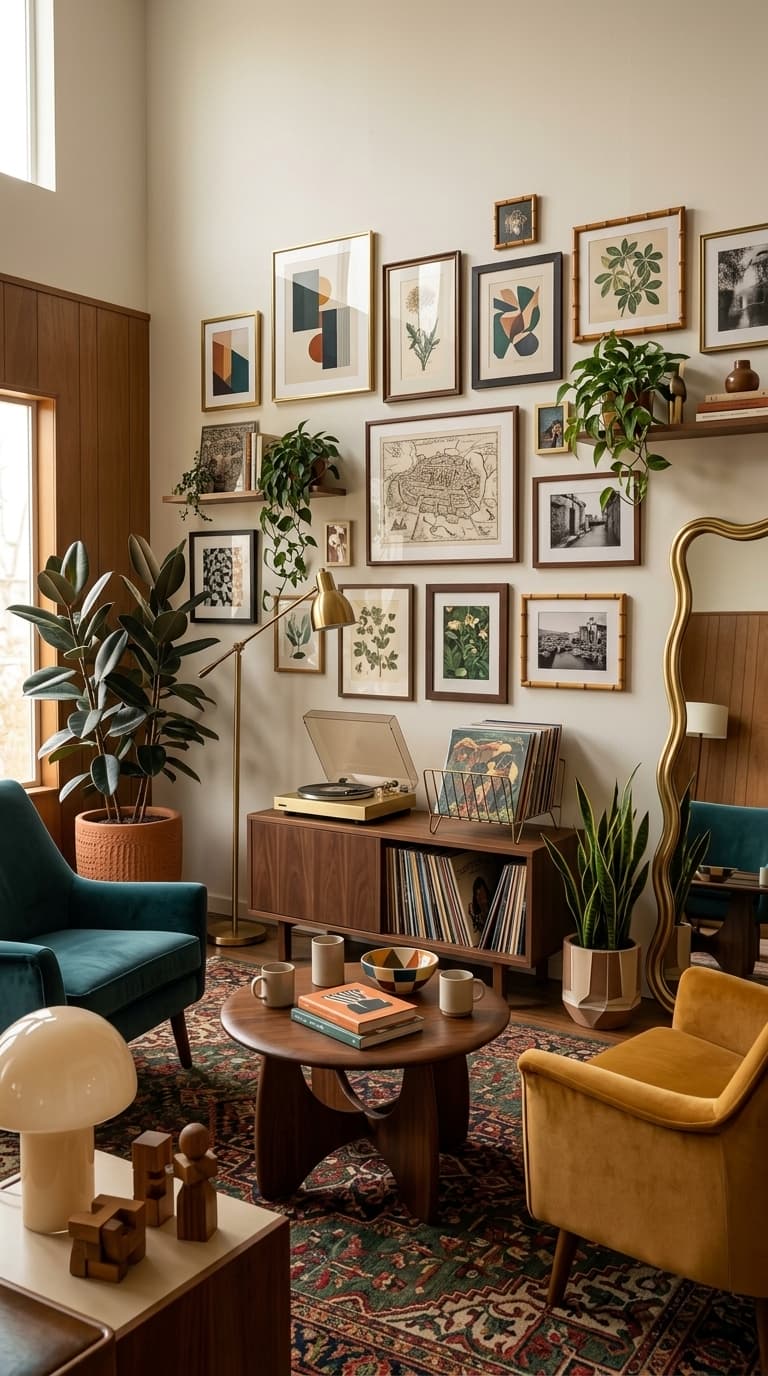
Achieving a harmonious gallery wall doesn't require an art history degree or a professional designer's eye. It's about understanding a few fundamental concepts that can be applied to any collection of items you wish to display. The image showcases a beautiful example, featuring a diverse mix of abstract art, botanical illustrations, and black and white photography, all unified by a thoughtful selection of frames and a deliberate arrangement.
1. Curating Your Collection: What to Display
The foundation of any great gallery wall is the collection itself. Consider what resonates with you and tells your personal story. The image features a delightful mix: bold abstract pieces with geometric shapes, delicate botanical prints that bring the outdoors in, and classic black and white photographs that evoke a sense of nostalgia. When selecting your own pieces, think about themes that connect them, whether it's a shared color palette, a particular subject matter like nature or.
When building your collection, consider the balance between different types of artwork. A common mistake is to have too many pieces of the same size or style, which can lead to a monotonous display. The example demonstrates a smart approach by incorporating a variety of frame sizes and orientations – some are tall and narrow, others are wider, and a few are small accent pieces.
2. Planning Your Layout: The Art of Arrangement
Once you have your collection, the next crucial step is planning the layout. This is where you decide how your pieces will interact with each other and the space. A common strategy, visible in the image, is to start with a central piece or a focal point and build outwards. Alternatively, you can create a grid-like structure for a more formal look, or an asymmetrical arrangement for a more relaxed, organic feel.
The arrangement of your gallery wall should also consider the surrounding furniture and architectural elements. In the provided image, the gallery wall is strategically placed above a credenza, creating a cohesive zone for entertainment and display. The height of the arrangement is also important; aim to hang the center of your gallery wall at eye level, typically around 57-60 inches from the floor. This ensures comfortable viewing for most people.
3. Framing Your Finds: Consistency and Contrast
The frames you choose play a significant role in the overall aesthetic of your gallery wall. They can either unify a diverse collection or add another layer of visual interest. In the inspiration image, there's a thoughtful mix of frame styles, including sleek gold, warm wood tones, and natural bamboo accents, which adds to the eclectic charm. If you prefer a more cohesive look, opt for frames in a single color or material.
When mixing frame styles, as seen in the example, it's important to maintain a sense of balance. The variety of frames here works because the artwork itself provides a strong unifying element, and the overall color palette of the room is relatively muted. , matte vs. glossy) or a consistent width. Another consideration is the matting. Using mats can help smaller pieces stand out and create a more polished look, especially when paired with larger frames.
4. Incorporating Greenery: Adding Life and Texture
Plants are a fantastic way to inject life, color, and organic texture into a gallery wall, as demonstrated in the image. Trailing plants, like the one cascading from the shelf, add a sense of movement and softness that contrasts beautifully with the hard lines of frames. Consider using a mix of hanging plants and potted plants placed on shelves within or alongside your gallery wall.
Strategically placing plants within your gallery wall arrangement can break up the visual field and add depth. A small potted plant on a shelf nestled among frames, or a trailing vine artfully draped, can soften the overall look and create a more inviting atmosphere. Think about the scale of the plants relative to the artwork; a tiny succulent might get lost next to a large framed piece, while an oversized plant could dominate a delicate print.
5. Lighting Your Display: Highlighting Your Art
Proper lighting is essential for showcasing your gallery wall and ensuring that your chosen pieces are seen in their best light. The adjustable floor lamp positioned near the gallery wall in the image is a practical example of how to provide targeted illumination. Consider using accent lighting, such as picture lights mounted above frames, or spotlights directed at specific pieces. If you're using shelves within your gallery wall, small LED strip lights can add a subtle glow.
The type of lighting you choose can also influence the mood of the room. Warm, soft lighting can create a cozy and inviting atmosphere, while brighter, cooler lighting might be more suitable for highlighting the details of intricate artwork. For a gallery wall that includes photographs, consider lighting that minimizes glare and reflections. If you're using a mix of framed and unframed pieces, or different types of artwork, you might need a combination of lighting solutions to.
6. Avoiding Common Pitfalls: Tips for Success
One of the most common mistakes when creating a gallery wall is overcrowding. It's tempting to fill every available space, but this can lead to a cluttered and chaotic appearance. The image demonstrates a balanced approach, with intentional spacing between frames and elements. Before you start hanging, measure your wall space and plan your layout to ensure it fits harmoniously within the room.
Another mistake to avoid is a lack of cohesion. While variety is good, your gallery wall should feel like a curated collection, not a random assortment of items. Ensure there's a unifying element, whether it's a color palette, a theme, or a consistent framing style. If you're unsure, start with a smaller, more manageable arrangement and build upon it over time. Also, consider the scale of your artwork in relation to the furniture and the room.
- Gather more pieces than you think you'll need to have options for arrangement.
- Lay out all potential pieces on the floor to experiment with layouts before hanging.
- Measure the wall space and plan your gallery wall's dimensions to scale.
- Use painter's tape to mark frame positions on the wall for precise placement.
- Ensure the center of your gallery wall is at eye level (around 57-60 inches from the floor).
- Incorporate plants or other decorative elements to add depth and texture.