Create a Stunning Gallery Wall That Reflects Your Unique Style
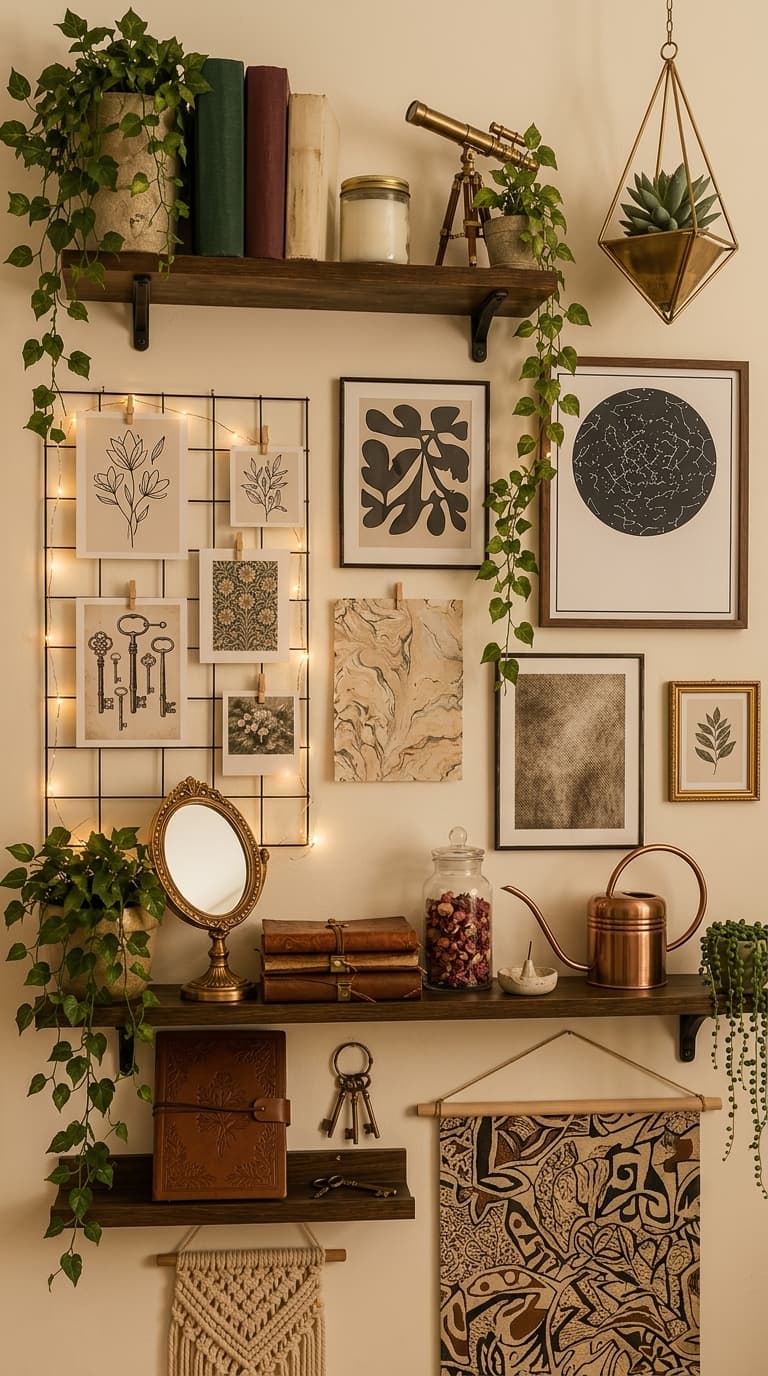
Transforming a blank wall into a captivating focal point is an art form, and a gallery wall is a fantastic way to express your personality and style. The image showcases a thoughtfully curated collection of art prints, photographs, vintage keys, and botanical illustrations, all artfully arranged to create a sense of depth and visual interest. This approach allows you to blend different aesthetics, from the modern simplicity of line art to the intricate patterns of vintage textiles, creating a truly bespoke display.
Building a gallery wall is more than just hanging pictures; it's about telling a story. The arrangement in the image demonstrates how varying frame sizes, orientations, and even the use of a wire grid for displaying smaller prints can add dynamism. The strategic placement of shelves breaks up the wall space, providing surfaces for decorative objects like books, a vintage mirror, and a journal, which further enhance the personal touch.
1. Choosing Your Theme and Style
The foundation of any successful gallery wall lies in a cohesive theme or style. The image presents a blend of natural elements, vintage finds, and celestial motifs, creating a bohemian-inspired, eclectic look. Consider what resonates with you: are you drawn to abstract art, vintage photography, botanical prints, or perhaps a mix of personal photos and travel souvenirs? Establishing a general direction will help you select pieces that work well together, preventing the wall from feeling chaotic.
When selecting your theme, consider the existing decor of the room. A gallery wall should complement, not compete with, your furniture and color scheme. For instance, if your room is filled with modern furniture, you might lean towards clean-lined frames and contemporary art. If your space has a more traditional or rustic feel, vintage frames and nature-inspired prints could be a better fit. The example shows how a mix of framed art and unframed prints clipped to a wire grid creates visual interest.
2. Selecting the Right Pieces
The beauty of a gallery wall lies in its ability to showcase a variety of items. In the featured arrangement, we see a mix of framed art prints with bold, graphic designs, delicate botanical illustrations, and even vintage keys, suggesting a love for history and natural forms. Personal photographs, especially those with a vintage feel or printed in black and white, can add a deeply personal touch. Consider incorporating different mediums, such as paintings, drawings, prints, and even textiles or small objects mounted.
Beyond traditional art, think creatively about what you can display. The image includes a decorative jar filled with dried flowers, a vintage-style mirror, and a leather-bound journal, all of which add texture and personality. These items, when placed on shelves within the gallery wall, provide a three-dimensional element that breaks up the flatness of framed pieces. Consider incorporating objects that have personal meaning to you, such as heirlooms, travel mementos, or even decorative keys like those shown.
3. Arranging Your Gallery Wall
The arrangement is crucial for a cohesive gallery wall. The example demonstrates a thoughtful layout that balances different elements. Start by laying out all your chosen pieces on the floor or a large table. This allows you to experiment with different configurations before committing to hanging. A common approach is to start with a central, larger piece and build outwards, or to create a grid-like structure. The wire grid in the image offers a more informal and flexible way to display smaller items.
When planning your layout, think about the overall shape you want to create. It could be a perfect rectangle, a more organic cluster, or even follow the lines of your furniture. The image shows a slightly asymmetrical arrangement that feels natural and dynamic. Use a level to ensure frames are straight, especially if you're aiming for a more formal look. For a more relaxed vibe, slight imperfections can add character.
4. Incorporating Plants and Lighting
Adding greenery is a fantastic way to bring life and vibrancy to your gallery wall, as seen with the lush ivy cascading down the wall in the example. Plants not only add a natural element but also soften the hard lines of frames and shelves, creating a more organic and inviting atmosphere. Consider trailing plants like pothos or ivy, which can be trained to grow along shelves or hang down, adding a dynamic, flowing element.
Lighting can dramatically enhance the impact of your gallery wall. The delicate string lights woven through the wire grid in the image add a warm, ambient glow, creating a cozy and inviting mood, especially in the evening. Consider using picture lights to spotlight key pieces, drawing attention to your favorite artworks. Alternatively, strategically placed floor or table lamps can cast a soft light that illuminates the entire display.
5. Practical Considerations and Placement
When planning your gallery wall, consider the scale of the wall and the room. A large wall can accommodate a more expansive arrangement, while a smaller space might benefit from a more focused collection. The height at which you hang your artwork is also important. A common guideline is to hang pieces at eye level, typically around 57-60 inches from the floor to the center of the artwork.
Before you start drilling holes, measure carefully and plan your layout. Use painter's tape to mark out the dimensions of your frames on the wall to visualize the arrangement. This step is crucial for ensuring proper spacing and balance. Consider the weight of your frames and artwork, and use appropriate hardware for hanging. For heavier items, consider using wall anchors or seeking professional help. Think about the flow of traffic in the room and ensure your gallery wall doesn't obstruct pathways or create.
6. Avoiding Common Mistakes
One common mistake is overcrowding the wall, which can make the space feel cluttered and overwhelming. The example shows a balanced approach, with intentional spacing between pieces and the use of shelves to break up the display. Resist the urge to fill every inch of the wall; negative space is just as important as the artwork itself. Another pitfall is inconsistent framing or a lack of a unifying element.
Another mistake is not considering the scale of the artwork in relation to the furniture and the room. Small pieces can get lost on a large wall, while oversized art can overwhelm a small space. The example uses a mix of sizes effectively, but it's important to ensure your chosen pieces are proportionate to your wall and furniture. Finally, don't be afraid to edit. Sometimes, less is more.
- Gather more art and decorative items than you think you'll need.
- Lay out all pieces on the floor to experiment with arrangements before hanging.
- Measure and mark placement on the wall using painter's tape for visualization.
- Ensure consistent spacing between framed pieces for a cohesive look.
- Incorporate plants or lighting to add depth and ambiance.
- Step back frequently to assess balance and adjust as needed.