Elevate Your Kitchen Countertops: Styling for Beauty and Function
Kitchen countertops are prime real estate in any home, often serving as the central hub for meal preparation, casual dining, and even homework sessions. While their primary function is utility, the way they are styled can significantly impact the overall aesthetic and feel of your kitchen. Overcrowded or haphazardly arranged counters can make a space feel chaotic and uninviting, whereas thoughtfully curated displays can add warmth, personality, and a touch of elegance.
Achieving a balance between form and function on your kitchen counters is key to a successful design. It's about more than just placing items; it's about intentional arrangement that makes sense for how you use your kitchen. Consider the flow of traffic, the proximity of items to where they're used, and the visual weight of each piece. By incorporating elements like natural materials, varying heights, and strategic lighting, you can create a look that is both magazine-worthy and practical for everyday life.
1. Curate Your Countertop Collection
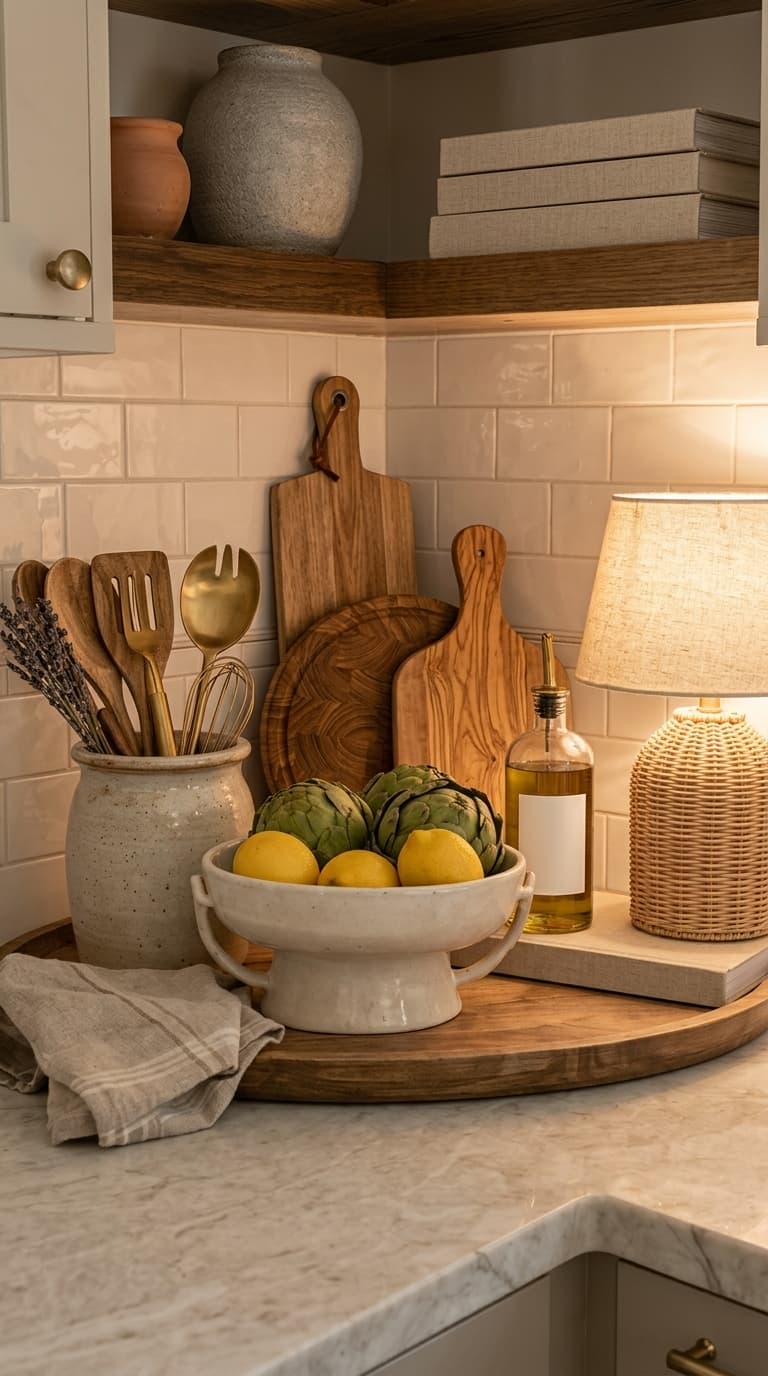
When styling kitchen counters, the first step is to declutter and then thoughtfully select the items you wish to display. Think about what you use daily versus what can be stored away. Essential tools like spatulas, whisks, and serving spoons can be beautifully housed in a ceramic crock or a decorative jar, as seen with the collection of wooden utensils and a gold whisk in the image. This not only keeps them within easy reach but also adds a textural element.
The selection of decorative items should complement your kitchen's overall style. For a warm, rustic, or farmhouse aesthetic, consider wooden cutting boards of varying sizes, leaning them against the backsplash or placing them strategically. The image showcases several beautifully grained wooden cutting boards, adding organic texture and a practical element that can also serve as a serving platter. Incorporating a small lamp, like the woven basket-style lamp in the image, can add ambient lighting and a cozy feel, especially in the evenings.
2. Master the Art of Arrangement
Arranging items on your countertop is where the magic happens. Aim for a balanced composition by varying the heights and shapes of your chosen objects. A large vase or crock holding utensils can anchor one side, while a fruit bowl or a stack of books can provide a different focal point. The use of a large wooden tray, as seen in the image, is an excellent way to corral disparate items, creating a defined zone and preventing visual clutter.
When arranging, think about creating vignettes – small, artful groupings of objects. A common mistake is to line items up in a row, which can feel monotonous. Instead, cluster items together, allowing some to overlap slightly or be placed in front of others. For instance, the cutting boards are layered, creating depth and visual interest. A bottle of olive oil next to a bowl of produce adds a practical yet decorative touch.
3. Incorporate Texture and Natural Elements
Texture plays a crucial role in adding depth and warmth to your kitchen decor. Materials like wood, ceramic, woven fibers, and natural stone can bring a tactile quality to your countertops. The image demonstrates this beautifully with the rustic ceramic crock, the smooth wooden cutting boards, the woven lamp base, and the marble countertop itself. These varied textures create visual interest and make the space feel more inviting and grounded.
Natural elements, such as fresh produce or dried botanicals, bring life and color into the kitchen. The bowl of artichokes and lemons is a perfect example of using edible items as decor, adding a vibrant, organic touch. A small bunch of dried lavender, as seen tucked into the utensil crock, can add a subtle scent and a touch of rustic charm. These natural accents break up the hard lines of cabinetry and appliances, softening the overall look and making the kitchen feel more.
4. Lighting for Ambiance and Function
Effective lighting is essential for both the functionality and ambiance of your kitchen counters. Task lighting, such as under-cabinet lights, illuminates your workspace, making food preparation safer and more enjoyable. However, decorative lighting can also significantly enhance the mood. A small table lamp placed on the counter, like the woven one in the image, can provide a warm, ambient glow, especially during evening hours or in kitchens with limited natural light.
Consider the placement of your lighting to avoid glare and shadows. A lamp with a diffused shade, such as the one pictured, will cast a softer light, creating a more pleasant environment. If you have open shelving, strategically placed small lights can highlight decorative items and add a warm glow. When choosing decorative lighting for your counters, think about its scale relative to the space and other objects.
5. Practical Considerations and Avoiding Clutter
While styling is important, practicality should never be sacrificed. Ensure that your decorative arrangements do not impede your ability to use the counter space for its intended purposes. Avoid placing items directly in the path of your main work zones, such as between the sink and the stove. If you find yourself constantly moving decorative pieces to prepare a meal, they are likely hindering your workflow. Regularly reassess your countertop setup to ensure it remains functional.
The key to avoiding clutter is intentionality. Every item on your counter should either be in active use, essential for quick access, or a deliberate decorative piece that enhances the space. A common mistake is allowing mail, keys, or other miscellaneous items to accumulate. Designate specific homes for these items away from the main countertop areas. If you have a lot of kitchen gadgets, consider vertical storage solutions or drawer organizers to keep them out of sight.
6. Styling for Different Kitchen Zones
Consider styling different zones of your kitchen counter to create visual interest and enhance functionality. For example, the area near the stove might be styled with essential cooking oils, salts, and perhaps a small herb planter, keeping frequently used items within arm's reach. The area near the sink could feature a nice soap dispenser, a small dish for rings, and perhaps a potted plant to add a touch of greenery.
Another approach is to style a dedicated display zone, often on a corner or a less trafficked section of the counter. This is where you can be more adventurous with decorative items like cutting boards, vases, or small sculptures. The grouping of cutting boards and the fruit bowl in the image exemplifies this, creating a focal point that draws the eye. When styling these zones, remember to maintain a cohesive color palette and style throughout your kitchen to ensure a harmonious look.
- Declutter your countertops, removing anything not essential for daily use or display.
- Group frequently used items like utensils, oils, or spices on a decorative tray.
- Incorporate natural elements like fresh produce or a small plant.
- Vary the heights of decorative items to create visual interest.
- Ensure any lighting added to the counter provides both ambiance and task illumination.
- Designate a specific home for non-kitchen items like mail and keys away from the counter.