How to Organize Your Kitchen Countertops for a Calm, Functional Space
A cluttered kitchen countertop can make even the most beautiful space feel chaotic and stressful.
The key to a calm, functional kitchen is thoughtful organization that balances style with everyday usability.
1. Define Your Zones for Function and Flow
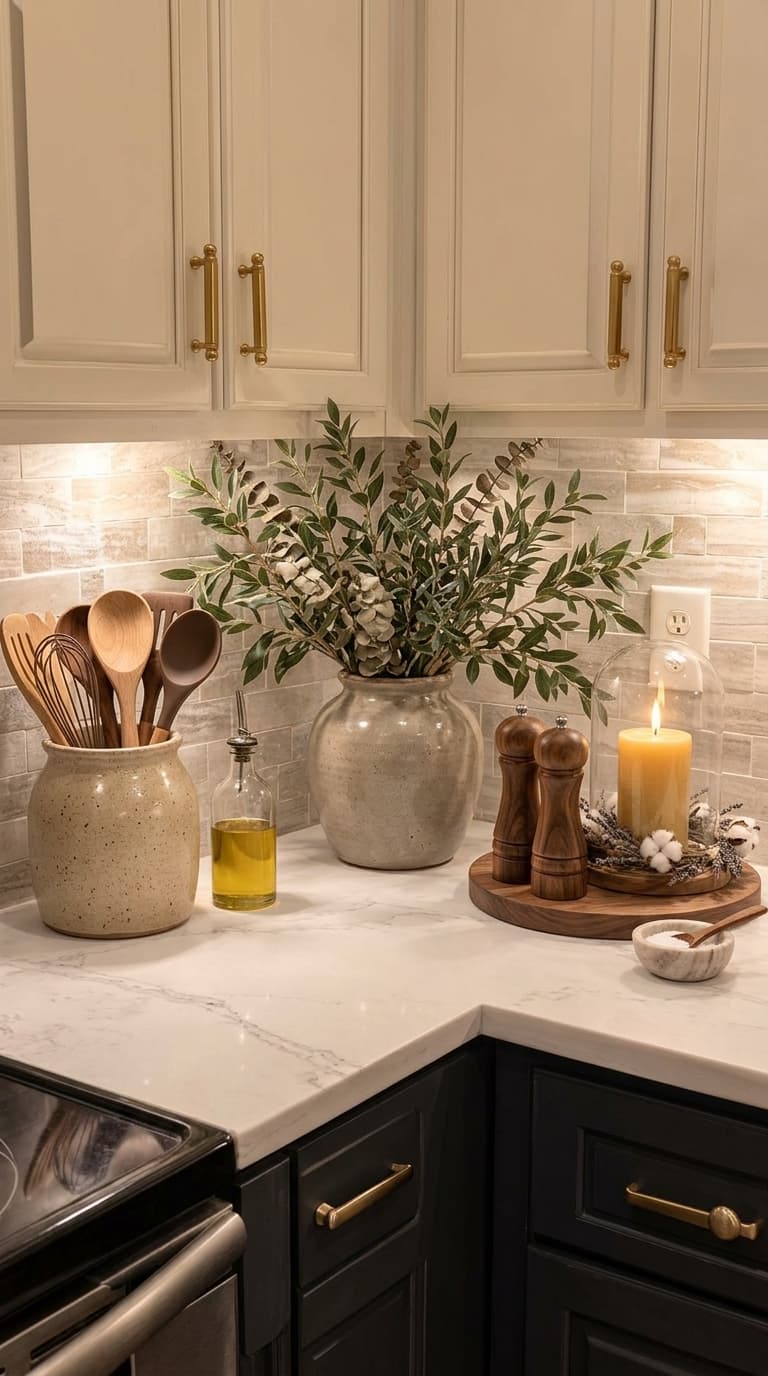
Start by identifying the primary tasks you perform on your countertop, such as food prep, cooking, or serving. In this image, the area near the stove is clearly designated for cooking tools, while the space to the right holds decorative and functional items like the candle and spices. By mentally dividing the counter into zones, you can assign each item a purposeful location, which prevents random placement and makes it easier to find what you need.
Avoid the common mistake of using the entire countertop as a single storage area. Instead, keep high-use items like cooking utensils and oil within easy reach, while storing less frequently used decor or appliances in cabinets. This zoning approach creates a natural workflow and reduces the time spent searching for tools or clearing space for tasks.
2. Choose the Right Containers for Visual Harmony
The image shows a speckled ceramic jar holding wooden utensils, which adds texture and cohesion. When selecting containers, choose materials and colors that complement your cabinetry and backsplash. For example, the neutral tones of the jars in the photo blend well with the cream cabinets and white marble, creating a unified look. Using consistent materials—like ceramic, wood, or stone—across containers helps unify the space.
Avoid mixing too many styles or colors in one area, as this can create visual noise. Instead, opt for one or two container types that match your kitchen's aesthetic. This ensures that even functional items like a whisk holder or oil bottle contribute to the decor rather than detracting from it.
3. Use Vertical Space to Reduce Clutter
In this kitchen, the utensil jar and oil bottle are placed on the counter, but the real space-saver is the vertical arrangement of items. The tall vase with greenery draws the eye upward, making the countertop feel less crowded. Consider using taller containers or standing items like spice grinders to utilize vertical space effectively.
Avoid placing large items in the center of the counter, as this blocks workflow. Instead, position taller items toward the back or corners, and keep frequently used tools in front. This strategic placement maintains accessibility while enhancing the visual balance of the space.
4. Incorporate Decor That Serves a Dual Purpose
The candle under a glass dome in the image is a great example of decor that also functions as a centerpiece. It adds warmth and ambiance while being a practical item. Similarly, the wooden tray holding the pepper mills and cotton stems serves as both a decorative base and a functional holder for spices.
Choose decor items that can be used daily, such as a stylish soap dish or a tray that holds frequently accessed tools. This reduces the need for separate storage and ensures your decor remains relevant and useful, not just visually appealing.
5. Maintain a Minimalist Approach to Avoid Overcrowding
Even in a beautifully decorated kitchen, less is more. The image shows only a few carefully chosen items: a vase, a utensil jar, a candle, and spices. This minimalism prevents the countertop from feeling overwhelming. Start by removing any unnecessary items and keep only what you use regularly or truly love.
A common mistake is adding decor just because it looks nice, without considering its impact on functionality. Before placing a new item, ask if it serves a purpose or enhances the space. If not, consider storing it elsewhere to maintain a clean, open feel.
- Identify your main kitchen tasks and assign each a dedicated zone on the countertop.
- Choose 1-2 container styles that match your kitchen's color palette and material theme.
- Place taller items like vases or spice grinders toward the back to free up front space.
- Select decor items that are both beautiful and functional, like trays or candle holders.
- Remove all non-essential items from the counter and store them in cabinets or drawers.
- Review your setup weekly to ensure nothing has accumulated and clutter is avoided.