Layer Textures to Create Warmth in Your Living Room
Creating a warm and inviting living room often feels like a balancing act between style and comfort. Many homeowners focus on furniture layout or color schemes, but the key to true warmth lies in the textures you choose to layer throughout the space.
This guide will show you how to thoughtfully combine materials like woven baskets, soft knits, and natural fibers to build a layered, comfortable environment that feels both stylish and lived-in, without overwhelming your room.
1. Understand the Role of Texture in Warmth
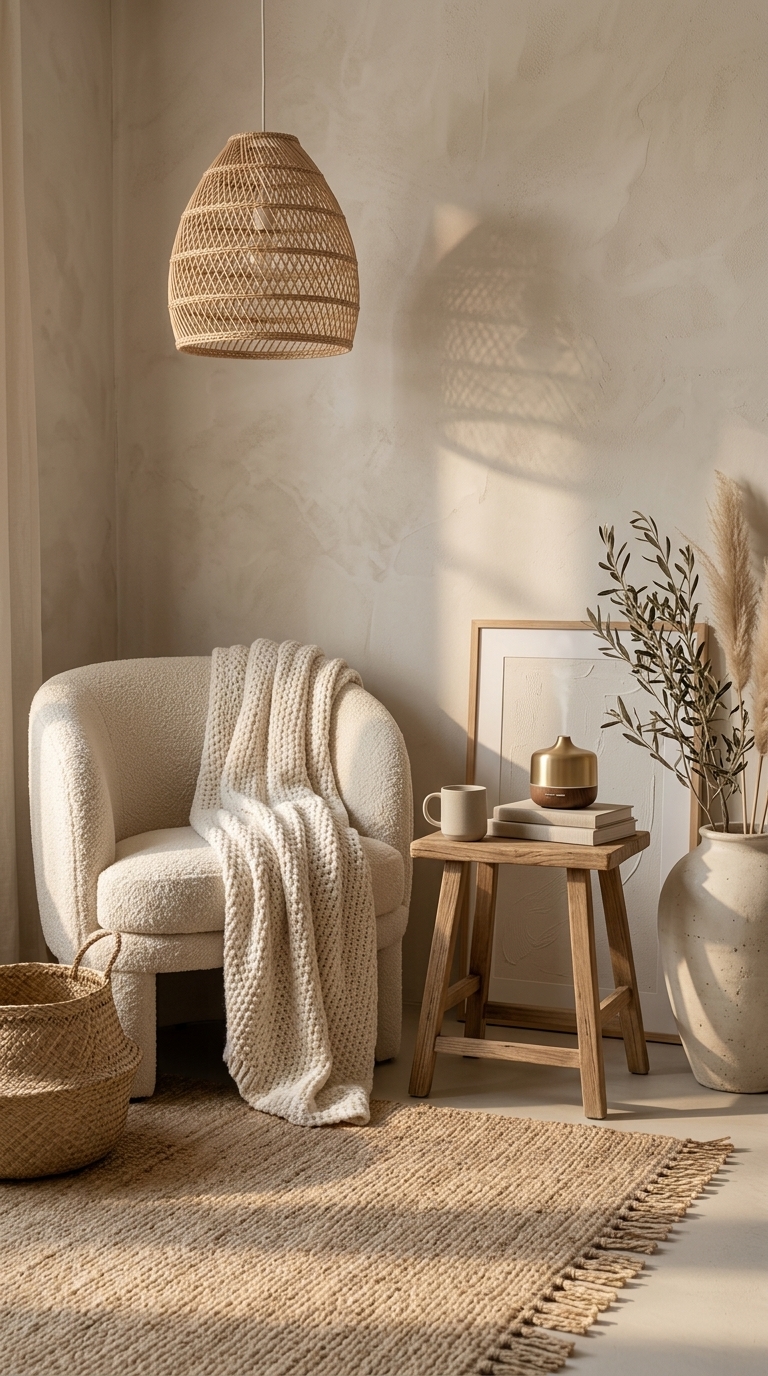
Texture is the invisible force that transforms a flat room into a space that feels welcoming and cozy. In this image, the combination of the woven pendant lamp, the chunky knit throw, the woven rug, and the natural fiber basket creates a rich tapestry of tactile experiences that invite touch and relaxation.
When selecting textures, prioritize materials that feel soft and natural to the touch, such as wool, cotton, jute, or rattan. These materials absorb light differently than smooth surfaces, creating depth and visual warmth that makes a room feel more intimate and comfortable.
2. Start with a Textured Foundation
Before adding decorative layers, establish a textured foundation on the floor. A woven jute or seagrass rug, like the one seen in the image, provides a natural base that grounds the space and adds significant warmth underfoot.
Measure your room's dimensions and choose a rug that allows for at least 12 inches of space around the edges of your main furniture pieces. This prevents the rug from feeling cramped and ensures the texture enhances the room's flow rather than competing with it.
3. Layer Textiles for Comfort and Visual Interest
Textiles are the most effective way to add warmth and softness to a living room. The chunky knit throw draped over the armchair in the image is a perfect example of how a single piece can transform a seating area from functional to inviting.
Mix different textile weights and textures—such as a smooth linen throw with a chunky knit blanket—to create visual depth. Avoid stacking too many layers; instead, focus on 2-3 key pieces that work together harmoniously to prevent a cluttered look.
4. Incorporate Natural Materials for Organic Warmth
Natural materials like wood, rattan, and ceramic bring organic warmth to a space. The wooden side table and woven pendant lamp in the image demonstrate how these elements create a cohesive, earthy feel that complements the soft textiles.
Choose one or two natural material pieces to anchor your room's texture scheme. For example, a woven basket for storage or a ceramic vase with dried botanicals can add texture without overwhelming the space, making it feel more grounded and serene.
5. Balance Light and Shadow with Textured Surfaces
Light plays a crucial role in how textures are perceived. The warm sunlight in the image casts soft shadows from the woven lamp, highlighting its intricate pattern and adding dimension to the wall. This interplay of light and shadow makes textures feel more dynamic and alive.
Position textured pieces where natural light can interact with them. A woven basket or a textured wall hanging will catch light beautifully, creating subtle shadows that enhance the room's warmth without requiring additional lighting fixtures.
- Measure your room to determine the ideal rug size, ensuring at least 12 inches of space around furniture.
- Choose one textured textile piece (like a chunky knit throw) to place on your main seating area for immediate warmth.
- Select a natural material item (such as a woven basket or wooden side table) to anchor your texture scheme.
- Position textured elements where natural light can highlight their patterns and create depth.
- Limit your textured layers to 2-3 key pieces to avoid visual clutter and maintain a calm atmosphere.