Achieve Ultimate Coziness: A Guide to Layering Rugs in Your Living Room
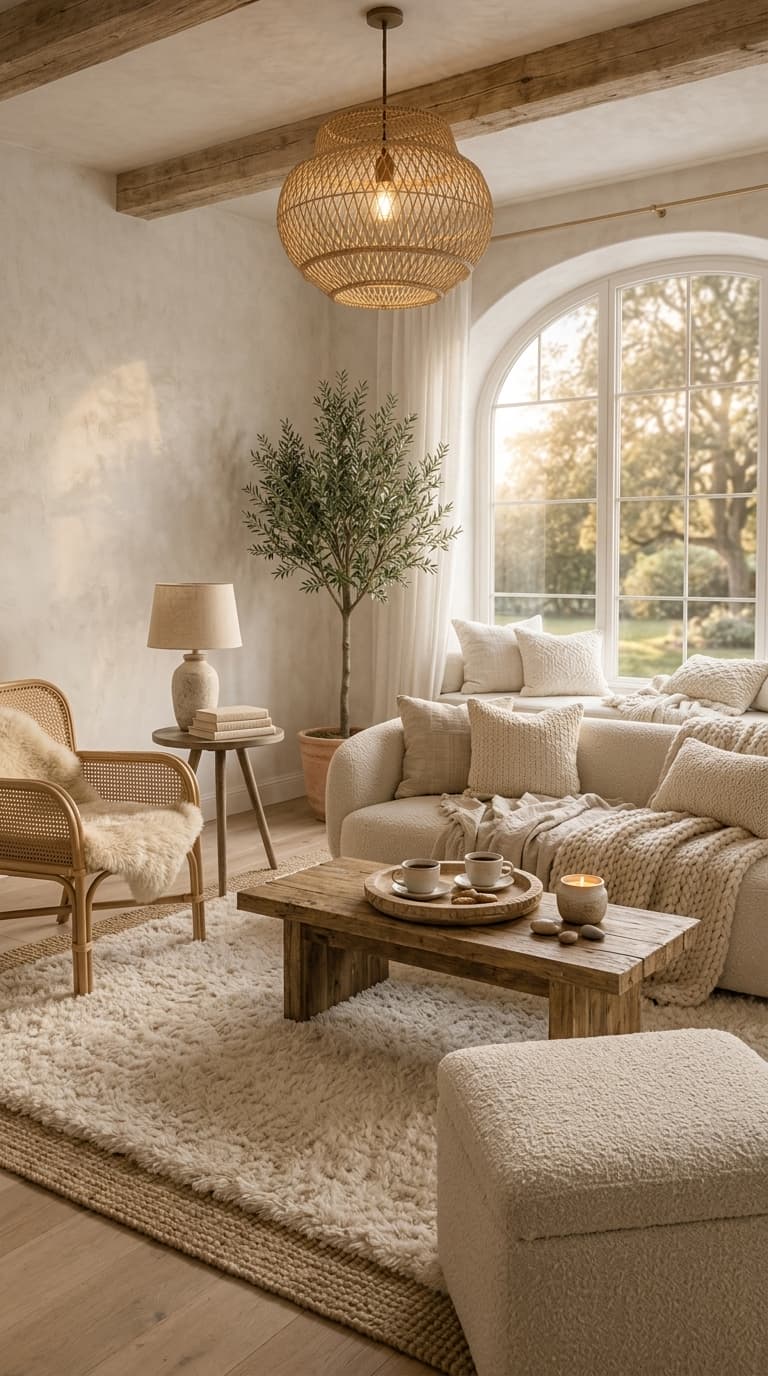
Creating a truly inviting and comfortable living space often hinges on the details, and one of the most impactful elements is the flooring. In this serene living room, the strategic layering of rugs transforms the space into a haven of warmth and texture. The foundation is a natural jute rug, providing an earthy, grounded feel and a subtle textural contrast to the hardwood floors. Layered on top, a plush, high-pile cream rug introduces an undeniable sense of luxury and softness.
The art of layering rugs is more than just placing one rug over another; it's about creating a curated look that adds dimension and personality to your room. The visual weight and texture of the rugs are key. A larger, neutral base rug like the jute in the image provides a stable canvas, while a smaller, more decorative or texturally rich rug on top adds a focal point and a touch of luxury.
1. Choosing Your Base Rug: The Foundation of Texture
The base rug in a layered arrangement serves as the anchor, providing a stable and often larger surface area that grounds the entire composition. In this living room, a natural jute rug forms this essential base. Jute, sisal, or other natural fiber rugs are excellent choices for a foundation layer because they are durable, relatively inexpensive, and offer a subtle, organic texture that complements a wide range of decor styles.
The practical advantage of using a natural fiber rug as a base is its ability to add texture without overwhelming the space. Unlike heavily patterned or brightly colored rugs, natural fibers offer a more understated elegance. They are also generally easier to clean and maintain, making them a practical choice for high-traffic areas. When layering, the base rug should ideally be thinner than the top rug to avoid creating a tripping hazard and to allow the top rug to lie.
2. The Top Layer: Adding Depth and Luxury
The top rug is where you can truly express your style and introduce elements of comfort and luxury. In this image, a thick, cream-colored shag or high-pile rug is layered over the jute. This choice immediately elevates the coziness factor, inviting bare feet to sink into its plush fibers. The color of the top rug is crucial; a lighter shade like cream or ivory can brighten the space and create a sense of airy spaciousness, while also providing a beautiful.
The placement of the top rug is as important as its texture and color. It should be positioned to enhance the functionality and aesthetic of the seating arrangement. Here, it's centered within the seating area, extending under the front legs of the sofa and the armchair, effectively defining the conversation zone. This creates a more intimate and cohesive feel. When layering, avoid having the top rug slide around.
3. Defining Zones and Anchoring Furniture
One of the most practical benefits of layering rugs is their ability to visually define different zones within an open-plan living space or to anchor a specific furniture grouping. In this living room, the layered rug combination clearly delineates the primary seating area. The jute rug provides a broad base that encompasses the sofa, armchair, and coffee table, while the plush cream rug sits atop it, drawing the eye and emphasizing the central gathering spot.
When anchoring furniture with layered rugs, consider the scale of your pieces. The rugs should be large enough so that at least the front legs of your sofa and accent chairs rest on the top rug. This creates a sense of unity and prevents the furniture from looking like it's floating. The coffee table should also be positioned so it's accessible from the seating and sits comfortably on the layered rugs.
4. Balancing Textures for a Tactile Experience
The success of layered rugs lies in the interplay of textures, creating a rich, tactile experience that appeals to both the eyes and the sense of touch. The image showcases a masterful balance: the coarse, woven texture of the jute base rug provides a grounding, natural element, while the soft, deep pile of the cream rug introduces a luxurious, inviting feel. This contrast is key.
When selecting textures for your layered rugs, consider the existing materials in your room. If you have a lot of smooth, hard surfaces like leather or polished wood, a plush or shag rug on top will provide a welcome softness. Conversely, if your furniture and other textiles are already very soft and plush, a base rug with a more pronounced weave or texture can add a grounding contrast.
5. Color Palette and Mood Creation
The color choices in layered rugs play a significant role in setting the mood and overall aesthetic of a room. In this tranquil living room, the use of neutral, earthy tones – the natural beige of the jute and the soft cream of the plush rug – creates a serene and calming atmosphere. This monochromatic or near-monochromatic approach allows the textures to take center stage, adding visual interest without being overwhelming.
When layering rugs, consider how the colors will interact. A lighter-colored top rug can brighten a darker base rug, making the overall area feel more spacious and airy. Conversely, a darker top rug placed on a lighter base can create a more dramatic and grounded effect. If you're aiming for a bolder look, you could layer a patterned rug over a solid base, or vice versa, ensuring the colors within the pattern complement your room's existing palette.
6. Practical Considerations and Maintenance
While layered rugs offer significant aesthetic benefits, it's important to consider their practical implications and maintenance. The jute rug provides a durable base that can help protect the floor beneath it, and its natural fibers are generally resistant to stains and wear. However, the plush top rug, especially if it's a high-pile variety, will require more regular care. Vacuuming frequently is essential to prevent dirt from becoming embedded in the fibers, which can be more challenging with shag or deep-pile.
To ensure longevity and prevent slippage, consider using a rug pad between the two rugs, especially if the base rug is thin or the top rug is prone to shifting. A thin, non-slip rug pad can provide extra cushioning, improve insulation, and most importantly, keep the top rug securely in place. This is particularly important in high-traffic areas or if you have children or pets. When vacuuming, use the appropriate setting for your top rug's pile height.
- Measure your seating area to determine the appropriate size for both your base and top rugs.
- Select a durable, neutral-toned rug for your base layer, such as jute or sisal.
- Choose a top rug with a contrasting texture and complementary color to add depth and comfort.
- Ensure the base rug is large enough to extend under the front legs of your main furniture pieces.
- Consider using a non-slip rug pad between the two rugs to prevent shifting.
- Vacuum your layered rugs regularly, using appropriate settings for each rug's material and pile height.