Master the Art of Layering Oriental Rugs for a Rich Home Library
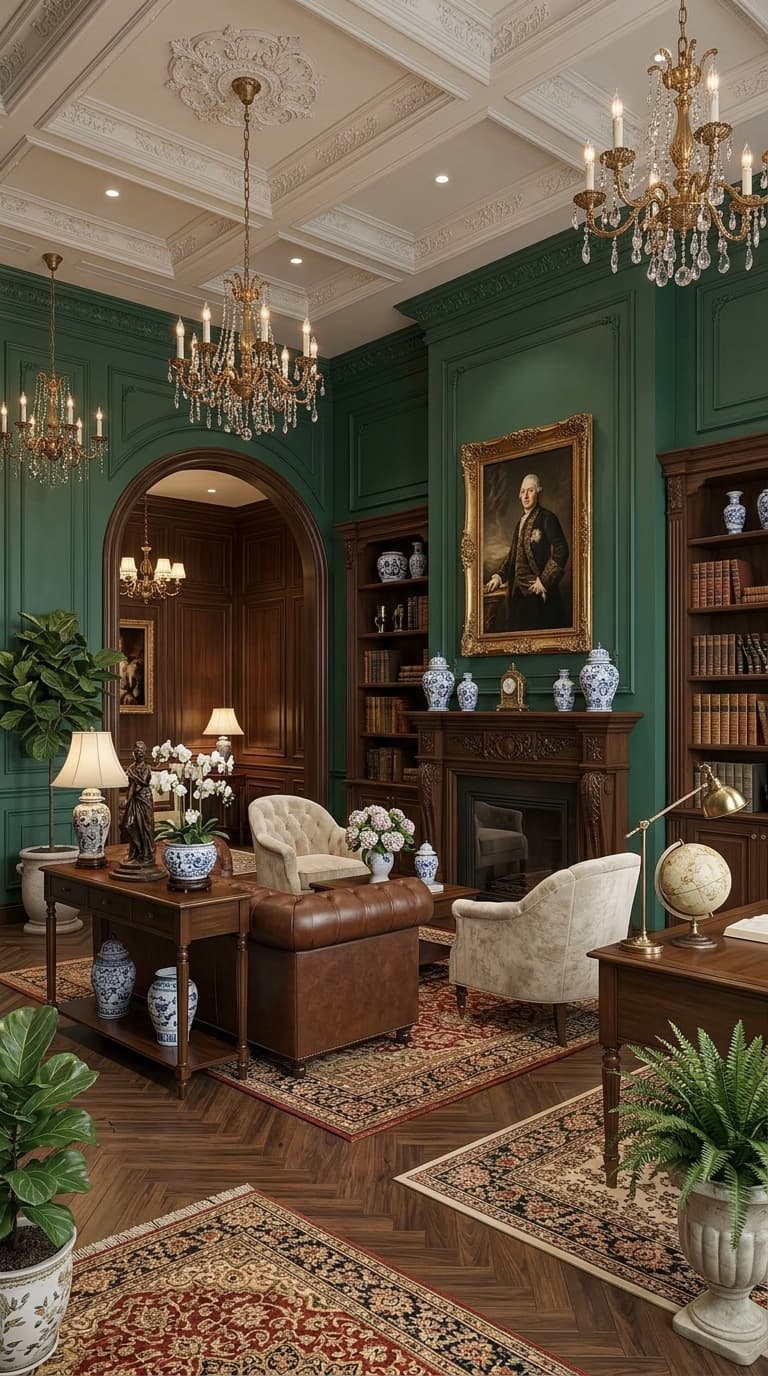
Creating a home library that exudes sophistication and comfort is a dream for many. This space, often envisioned as a sanctuary for reading and reflection, benefits immensely from thoughtful decor choices that blend functionality with aesthetic appeal. The image showcases a room that masterfully achieves this, featuring deep emerald green walls, grand chandeliers, and rich wood accents. A key element contributing to the room's opulent feel is the strategic use of layered oriental rugs.
Layering oriental rugs is a decor technique that can elevate the visual appeal and comfort of any room, but it's particularly effective in spaces like a home library where a sense of history and gravitas is desired. The visual complexity and rich patterns of oriental rugs, when layered thoughtfully, create a sense of depth and character that single rugs often cannot achieve. This approach allows for a dynamic interplay of colors and designs, adding a unique personality to.
1. Choosing the Right Rugs for Layering
Selecting the right oriental rugs for layering involves considering both their individual patterns and how they will interact when placed together. In a room like the one pictured, with its deep green walls and dark wood furniture, rugs with rich, warm tones like deep reds, creams, and blues would provide a beautiful contrast and complement the existing color palette. When layering, it's often effective to use a larger, more neutral or subtly patterned rug as the base layer.
The material and pile height of your chosen rugs also play a crucial role in successful layering. For a base layer, a rug with a lower pile height is generally preferable, as it provides a stable foundation and prevents the top rug from shifting excessively. Natural fibers like wool are excellent choices for both durability and aesthetic appeal, offering a luxurious feel underfoot.
2. Strategic Placement for Defined Zones
The arrangement of layered rugs is key to defining distinct zones within a larger room, such as a home library. In the image, multiple rugs are used to delineate areas for reading, conversation, and perhaps a small workspace. A large oriental rug anchors the main seating area, with a smaller rug layered beneath a coffee table or ottoman, creating a cozy nook. Another rug might be placed in front of the fireplace, drawing attention to this central feature.
When layering rugs, consider the overall footprint of your furniture groupings. The base rug should ideally extend under the front legs of your main seating pieces, such as sofas and armchairs, to visually connect them. The smaller, top rug can then be placed to enhance this grouping, perhaps centered under a coffee table or extending slightly beyond it. If you have a desk area, as suggested by the globe and desk lamp in the image, a separate rug.
3. Balancing Patterns and Colors
Achieving a harmonious balance between the patterns and colors of layered oriental rugs is crucial for a sophisticated look. The image demonstrates a successful approach where the intricate patterns of the rugs complement the rich, deep tones of the room's walls and furnishings. A common strategy is to pair a rug with a dominant, bold pattern with one that features a more subtle or monochromatic design.
When layering, consider the overall color story you want to tell. The deep green walls in the pictured library provide a dramatic backdrop, and the oriental rugs add layers of warmth and visual texture. If your room has a more neutral color scheme, you have more freedom to introduce bolder colors and patterns through your rugs. Conversely, if your walls and furniture are already quite vibrant, opt for rugs with more muted tones or simpler designs for your.
4. Avoiding Common Layering Mistakes
One of the most common mistakes when layering rugs is choosing sizes that are disproportionate, leading to an unbalanced or awkward appearance. If the top rug is too small, it can look like an afterthought, failing to create a cohesive visual unit with the base rug. Conversely, if it's too large, it can overwhelm the base rug and make the entire arrangement feel chaotic. Another pitfall is selecting rugs with clashing patterns or colors that fight for attention.
Another mistake to avoid is neglecting the practical aspects of rug layering. If the rugs are too thick or have slippery backings, they can create a tripping hazard, especially in a high-traffic area like a living room or library. It's essential to use a non-slip rug pad beneath the base rug to prevent shifting and to protect your flooring. Also, consider the maintenance.
5. Enhancing Comfort and Acoustics
Beyond their aesthetic contributions, layered oriental rugs significantly enhance the comfort and acoustics of a room. The added thickness from layering provides a softer, more luxurious feel underfoot, making the space more inviting for relaxation and extended periods of sitting or standing. This is particularly beneficial in a library, where comfort is paramount for enjoying long reading sessions. The multiple layers of fabric also act as natural sound dampeners, absorbing ambient noise and reducing echo.
The tactile experience of walking on layered rugs is a subtle yet powerful element of interior design. The combination of different textures and the plushness underfoot can transform the feel of the room, making it more grounded and substantial. In a space with hard surfaces like wood floors and potentially plaster walls, rugs are essential for softening the environment. Layering amplifies this effect, creating a richer sensory experience.
6. Practical Considerations for Maintenance
Maintaining layered oriental rugs requires a slightly more diligent approach than caring for a single rug. Regular vacuuming is essential, paying attention to both rugs individually and the space between them where dust and debris can accumulate. For deeper cleaning, it's often best to separate the rugs. The base rug can be vacuumed thoroughly, and the top rug can be taken outside for a more vigorous shake and vacuuming.
When choosing rugs for layering, especially in a home library or study, think about their durability and ease of cleaning. Wool rugs, while beautiful, can be sensitive to certain cleaning methods. If you opt for synthetic blends, they might offer greater resilience to stains and wear. Always check the manufacturer's care instructions for each rug. Using a high-quality rug pad beneath the base layer is not only for safety but also helps to protect the fibers of both.
- Identify the primary furniture grouping you want to anchor with your base rug.
- Select a larger, perhaps more neutral, oriental rug for the base layer.
- Choose a smaller, complementary oriental rug with a distinct pattern or color for the top layer.
- Ensure the base rug extends under the front legs of your main seating furniture.
- Position the top rug to create a focal point, such as under a coffee table or ottoman.
- Use a non-slip rug pad under the base rug to prevent shifting and ensure safety.