Maximize Your Small Bedroom: Style and Function for Cozy Living
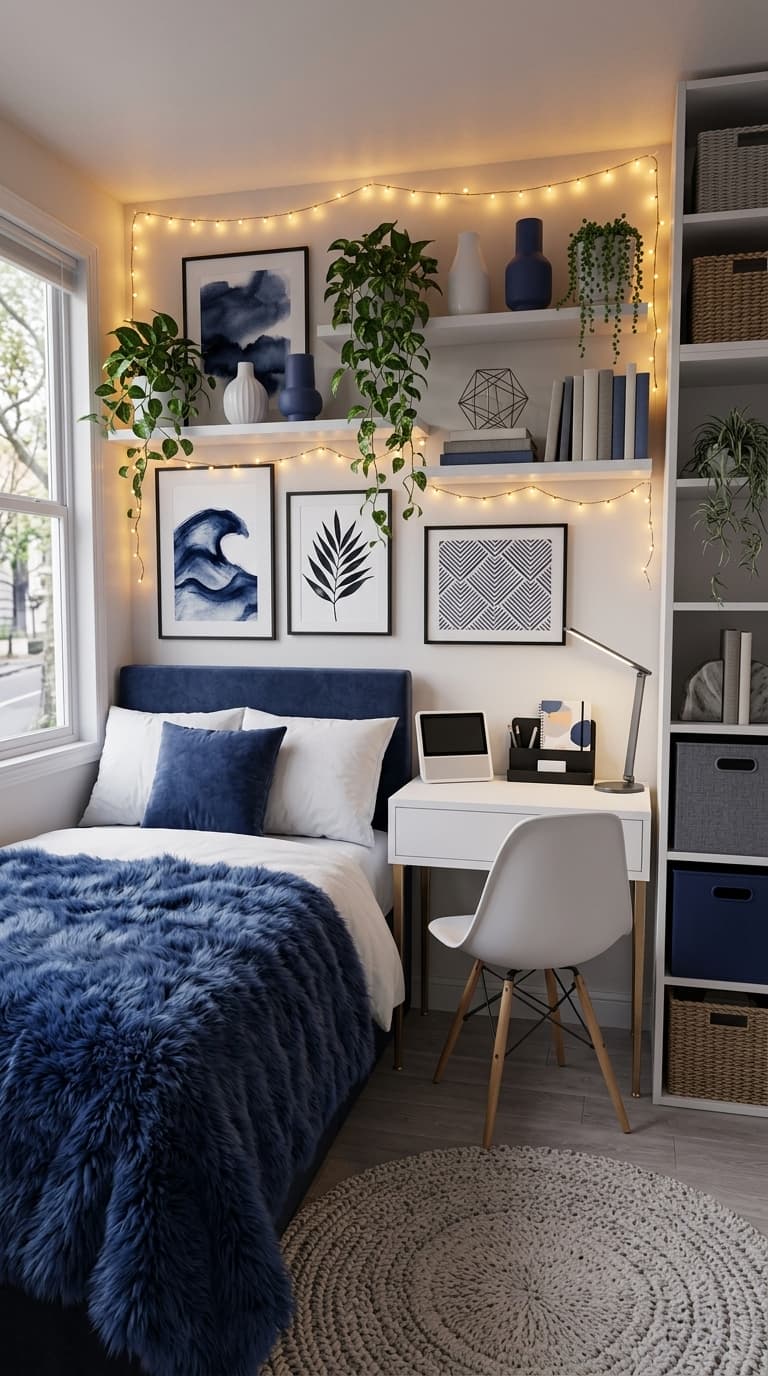
Creating a functional and stylish bedroom, especially in a smaller space, can feel like a design puzzle. The key is to select pieces that serve multiple purposes and to arrange them thoughtfully to maximize the perceived square footage. This bedroom showcases how to achieve a cozy yet organized atmosphere by incorporating smart storage solutions, layered textures, and ambient lighting. The strategic placement of furniture, the use of vertical space with shelving, and the addition of decorative elements like plants and artwork all.
When dealing with limited space, every decor decision counts. The goal is to create a room that is not only aesthetically pleasing but also highly functional for everyday living. This involves careful consideration of color palettes, furniture choices, and the integration of lighting and accessories. The example room demonstrates a cohesive approach, using a calming color scheme and a mix of textures to add depth and interest.
1. Smart Bedding and Textile Choices
The bed is often the largest piece of furniture in a bedroom, and in a small space, its impact is amplified. Opting for a bed frame with built-in storage, such as drawers or a lift-up mattress base, can significantly increase your storage capacity without adding bulk. Alternatively, consider a simple platform bed that allows for under-bed storage bins. The bedding itself plays a crucial role in both comfort and style.
The choice of throw pillows and blankets can dramatically alter the mood and comfort of your bed. Here, a single, deep navy velvet pillow provides a rich accent against the white bedding, complementing the larger navy throw. This deliberate use of color and texture adds a sophisticated touch. When selecting pillows, consider their size and shape in relation to your bed; too many can make it look cluttered.
2. Vertical Storage and Wall Decor
Maximizing vertical space is essential in small bedrooms. The image features a tall, narrow shelving unit that provides ample storage without encroaching on floor space. This unit is thoughtfully styled with a mix of books, decorative baskets, and plants, demonstrating how to balance utility with aesthetics. The open shelves allow for easy access to items, while the baskets help conceal clutter, maintaining a tidy appearance. When planning your own vertical storage, consider the height of your ceilings and the available wall space.
Wall decor is crucial for adding personality and style without consuming valuable floor space. The artwork in this room is strategically placed on the wall above the bed and desk, drawing the eye upward and creating visual interest. The collection features abstract blue art, a botanical print, and a geometric pattern, all framed in black for a cohesive look. This curated gallery wall adds depth and character to the room.
3. Functional Desk and Workspace Integration
Integrating a functional workspace into a small bedroom requires careful planning to ensure it doesn't dominate the room. The white desk in the image is sleek and compact, fitting neatly into a corner without feeling bulky. Its minimalist design complements the overall aesthetic. The desk surface is kept relatively clear, with essential items like a laptop, a desk lamp, and a small organizer. This approach emphasizes functionality and avoids visual clutter.
The accessories on the desk contribute to its functionality and style. The modern, adjustable desk lamp provides task lighting, essential for working or reading, and its slim profile doesn't take up much space. A simple desk organizer holds pens and notebooks, keeping the surface tidy. A small, modern laptop and a minimalist tablet add to the workspace feel. When setting up your own desk, prioritize items that are essential for your tasks.
4. Ambient Lighting and String Lights
Lighting plays a pivotal role in setting the mood and enhancing the perceived size of a room. In this bedroom, ambient lighting is achieved through a combination of overhead light (implied by the window light) and decorative string lights. The warm glow of the string lights, draped along the upper walls and around the shelves, adds a cozy and inviting atmosphere, particularly in the evening. This type of lighting is excellent for creating a relaxed ambiance without being harsh.
Beyond decorative string lights, consider other light sources to ensure the room is well-lit for various activities. The desk lamp provides focused task lighting, essential for working or reading without disturbing others. If your room has limited natural light, consider incorporating a floor lamp or a table lamp on a bedside stand to provide additional ambient light. Layering different types of lighting – ambient, task, and accent – allows you to control the mood and functionality of the space.
5. Incorporating Greenery and Natural Elements
Plants bring life, color, and a sense of calm to any space, and they are particularly effective in small bedrooms. The image features several hanging plants and potted plants strategically placed on shelves and cascading down. These plants add a natural, organic element that softens the lines of the furniture and decor. The lush greenery provides a beautiful contrast to the blues and whites of the room's color scheme.
The placement of plants is key to enhancing the room's design without creating clutter. The hanging plants draw the eye upward, adding vertical interest and making the ceiling feel higher. Potted plants on the shelves add pops of color and texture, breaking up the visual monotony of books and decor items. When arranging plants, think about their growth habits. Trailing plants are perfect for shelves, while upright plants can fill empty corners.
6. Rugs and Floor Coverings
A rug can anchor a space, add warmth, and define different zones within a room, even a small one. The round, textured rug in this bedroom is placed beside the bed, creating a soft landing for feet and adding a layer of comfort and visual interest to the floor. Its neutral, earthy tone complements the blue accents in the bedding and artwork, providing a subtle contrast to the wooden floor.
The texture and material of a rug significantly contribute to the room's overall feel. The braided, natural fiber texture of the rug in the image adds a tactile element and a touch of bohemian charm. This texture provides a cozy contrast to the smooth surfaces of the desk and the plushness of the bedding. When choosing a rug, think about the desired level of comfort and the room's style.
- Measure your available floor space and wall height before purchasing furniture or shelving.
- Select bedding and throw pillows that add texture and color without overwhelming the space.
- Choose artwork that complements your room's color scheme and hang it at eye level.
- Opt for a compact desk with integrated storage if you need a workspace.
- Incorporate hanging plants or small potted plants to add life and color.
- Select a rug that anchors the space and adds warmth, considering its texture and size.