Maximize Your Small Home Office: Style and Function for Productivity
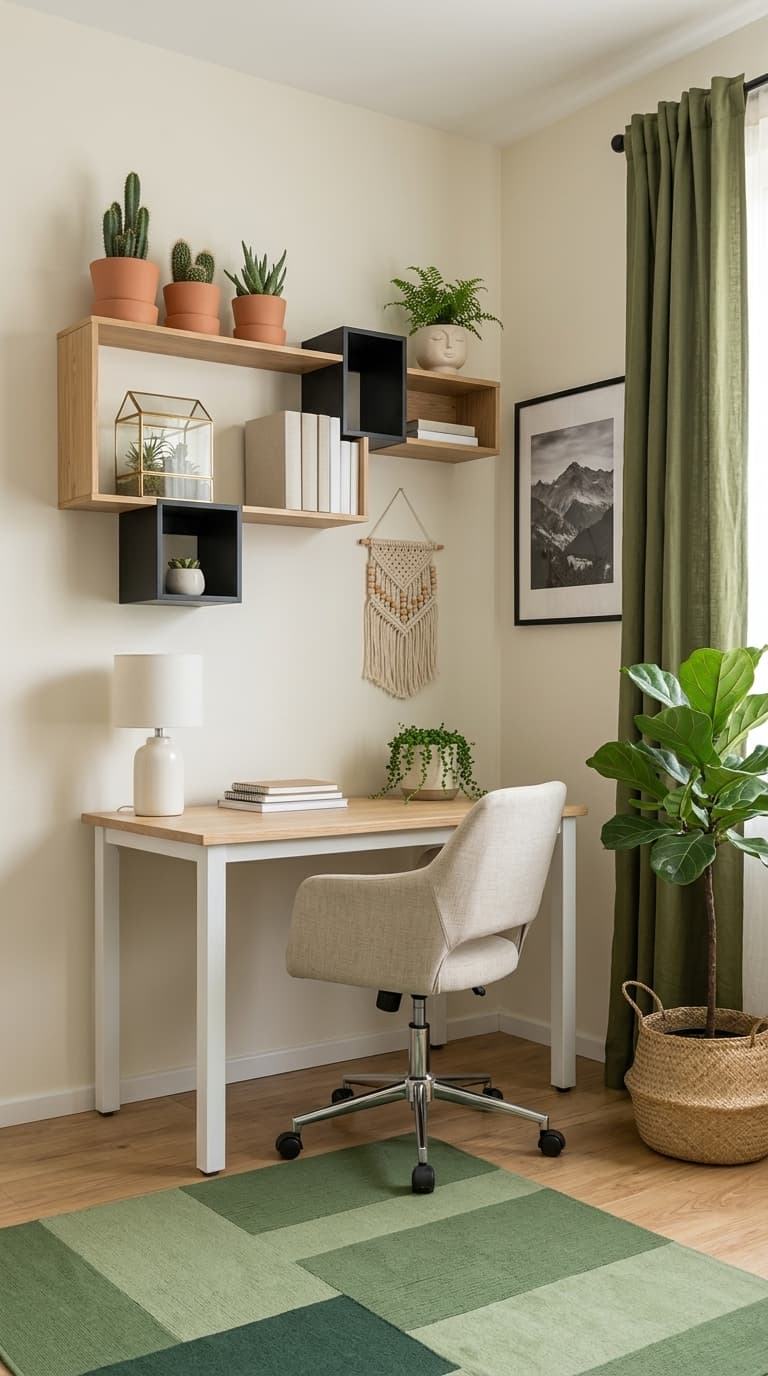
Creating a functional and inspiring home office, even in a small footprint, is achievable with thoughtful decor choices. This space demonstrates how to blend essential work elements with aesthetic appeal, proving that a dedicated workspace doesn't need to be large to be effective. By utilizing vertical space with floating shelves and incorporating natural elements like plants, you can cultivate an environment that fosters focus and creativity.
The image showcases a home office that expertly balances a minimalist aesthetic with practical needs, making it an ideal model for anyone looking to optimize a smaller room. The strategic placement of furniture, the thoughtful use of wall space for storage and display, and the incorporation of natural textures and colors all contribute to a serene yet functional environment. Whether you're setting up a new home office or revamping an existing one, understanding the principles behind this design can help.
1. Choosing the Right Desk for Compact Spaces
The desk is the anchor of any home office, and in a small space, its dimensions and design are critical. The light wood desk in the image features a simple, clean-lined design with slender legs, which contributes to an open and airy feel, preventing it from overwhelming the room. Opting for a desk with a minimal visual footprint, perhaps a floating desk or one with a slim profile, can make a significant difference.
When selecting a desk for a small home office, think about its functionality beyond just a surface. Does it have any built-in storage, like shallow drawers or a small shelf? While this desk is quite minimalist, many compact desks offer discreet storage solutions that can help keep your workspace tidy. If your chosen desk lacks storage, plan for complementary solutions like desk organizers or wall-mounted drawers.
2. Ergonomic Seating for Comfort and Style
The office chair is crucial for comfort during long work hours, and its visual impact on a small space should not be underestimated. The beige, upholstered chair in the image offers a soft, neutral tone that complements the room's palette and avoids appearing bulky. Its design is streamlined, with a supportive back and a swivel base, providing both comfort and mobility. When choosing a chair for a home office, prioritize ergonomics to support your posture and prevent strain.
Consider the chair's footprint and how it interacts with the surrounding furniture and rug. The wheeled base of this chair allows for easy movement, tucking neatly under the desk when not in use. This mobility is essential in a small space where you might need to shift the chair to access other areas or simply to create more open floor space. If you're concerned about scratching your floors, opt for chairs with casters designed for your flooring type or use.
3. Smart Storage Solutions with Floating Shelves
Maximizing vertical space is a cornerstone of small-space design, and the floating shelves in this home office are a prime example of effective storage and display. The combination of open wooden shelves and closed black cube units offers versatility. The open shelves are perfect for displaying decorative items like plants and framed art, adding personality without taking up valuable desk space. The closed cubes provide a place to tuck away less aesthetically pleasing items, helping to maintain a clutter-free environment.
The arrangement of items on the shelves is just as important as the shelves themselves. Grouping items by color, size, or theme can create a cohesive look. Here, the terracotta pots with succulents and cacti add a natural, earthy element, while the glass terrarium offers a touch of modern elegance. Books are neatly stacked, providing both function and a visual element. Avoid overcrowding the shelves; negative space is crucial for preventing a cluttered appearance.
4. The Role of Lighting in a Home Office
Adequate lighting is essential for productivity and eye comfort, especially in a home office. The desk lamp in the image provides task lighting, directed precisely where it's needed for reading, writing, or computer work. Its simple, ceramic base and neutral shade blend seamlessly with the room's decor, adding a soft glow without being distracting. When choosing a desk lamp, consider its size relative to your desk and the type of light it emits.
Beyond task lighting, consider ambient and accent lighting to enhance the overall atmosphere of your home office. The natural light streaming in from the window, softened by the green curtains, plays a significant role in making the space feel bright and welcoming. If your office lacks sufficient natural light, consider adding a floor lamp or wall sconces to provide broader illumination. Layering different light sources can create depth and mood.
5. Incorporating Greenery for a Calming Atmosphere
Plants are a powerful tool for enhancing any workspace, bringing life, color, and a sense of calm. This home office features several plants, strategically placed to add visual interest and improve the environment. The collection of succulents and cacti on the upper shelf, housed in simple terracotta pots, adds a touch of desert charm and requires minimal maintenance. On the desk, a trailing plant adds a softer, more organic element, while a larger fiddle-leaf fig in a woven basket near.
The placement of plants is key to their impact. Grouping smaller plants together on shelves creates a cohesive display, while a larger floor plant can anchor a corner of the room. The woven basket for the fiddle-leaf fig adds texture and warmth, complementing the natural materials used throughout the space. Beyond their aesthetic appeal, plants can help purify the air and reduce stress, contributing to a more productive and pleasant work environment.
6. Adding Texture and Personality with Decor Accents
The right decor accents can transform a functional space into a personalized sanctuary. The macrame wall hanging above the desk adds a bohemian touch and introduces a soft, tactile texture to the wall. This piece, along with the framed mountain landscape art, adds personality and visual depth without overwhelming the space. When choosing wall art and decorative objects, consider pieces that resonate with you and reflect your style.
The green geometric rug grounds the space and introduces a vibrant color that ties in with the curtains and plants. Its pattern adds visual interest and defines the work area, while also providing comfort underfoot. When selecting a rug for a home office, consider its size in relation to the desk and chair. It should be large enough for the chair to roll on comfortably without falling off the edge.
- Measure your available space to select a desk that fits comfortably without overwhelming the room.
- Choose an ergonomic office chair with adjustable features for long-term comfort and support.
- Utilize floating shelves to maximize vertical storage and display personal items.
- Incorporate a mix of task lighting (desk lamp) and ambient lighting for optimal illumination.
- Select plants that suit your office's light conditions and add natural elements.
- Add a rug to define the workspace and introduce texture, ensuring it's large enough for your chair.