Bring Nature Indoors: Styling with Natural Fiber Decor
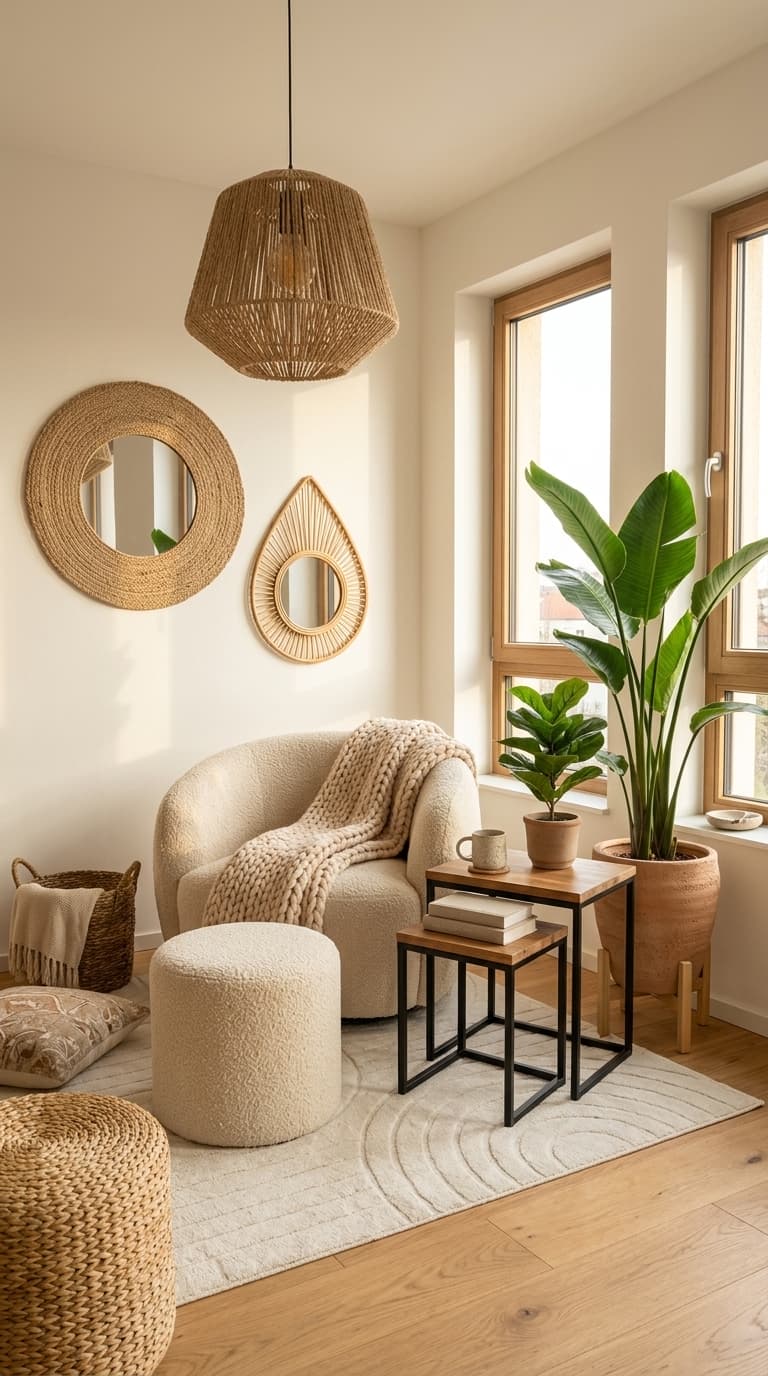
The allure of natural fiber decor lies in its ability to infuse a space with warmth, texture, and an organic, grounded feel. From the tactile appeal of jute and rattan to the cozy softness of wool and cotton, these materials connect us to nature and create a sense of calm. In this living area, the strategic use of natural fibers transforms a simple corner into a welcoming sanctuary.
Embracing natural fibers in your home decor is a practical and beautiful way to enhance your living environment. It’s about more than just aesthetics; it’s about creating a tactile experience that soothes and comforts. Consider the interplay of textures: the chunky knit throw draped over the boucle armchair, the woven poufs scattered on the floor, and the subtly patterned rug beneath them all contribute to a rich sensory experience.
1. The Power of Woven Textures
Woven textures are a cornerstone of natural fiber decor, offering visual depth and a handcrafted feel. The pendant light in this image, crafted from thick jute rope, is a prime example of how a lighting fixture can double as a sculptural art piece. Its substantial form commands attention while its open weave allows light to filter through, creating beautiful patterns on the ceiling and walls. Similarly, the woven poufs and the basket provide functional seating and storage while contributing to the.
Mirrors framed in natural materials like jute or rattan are excellent for bouncing light and adding a touch of organic elegance. The circular jute mirror and the teardrop-shaped rattan mirror in this vignette are not just functional but also serve as decorative elements that enhance the room's natural aesthetic. Their sunburst-like patterns add a subtle graphic quality without overwhelming the space. When hanging mirrors, think about what they will reflect.
2. Soft Furnishings for Comfort
Soft furnishings are essential for creating a cozy and inviting atmosphere, and natural fibers excel in this role. The plush, boucle armchair provides a soft, inviting seat, while the generously sized, chunky knit throw blanket draped over it adds an extra layer of comfort and visual warmth. The texture of the knit is both tactile and visually appealing, inviting you to snuggle up. When choosing throws and cushions, consider the weight and weave of the fabric.
The floor coverings in this space, including the large area rug and the woven poufs, are crucial for defining the seating area and adding softness underfoot. The rug, with its subtle, abstract pattern and neutral tone, grounds the furniture and absorbs sound, contributing to a more peaceful environment. The round, textured poufs offer flexible seating options and echo the organic shapes found elsewhere in the room. When selecting a rug, consider its size relative to your furniture.
3. Incorporating Greenery
Plants are a natural extension of a natural fiber decor scheme, bringing life, color, and improved air quality into your home. The large Bird of Paradise plant in a terracotta pot, paired with a smaller potted plant on the side table, adds a vibrant, tropical feel to this corner. The terracotta pot itself complements the earthy tones of the natural fibers, creating a cohesive look. When choosing plants, consider the light conditions in your space.
The placement of plants is key to their impact. A large floor plant can act as a natural room divider or a statement piece, while smaller plants on shelves or tables add pops of color and life without taking up too much space. The contrast between the lush green foliage and the neutral, textured decor elements creates a beautiful visual balance. When selecting pots, natural materials like terracotta, ceramic, or woven baskets enhance the organic feel.
4. Layering for Depth and Interest
Layering different textures and elements is fundamental to creating a rich and inviting decor scheme, especially when working with natural fibers. In this corner, the rug provides a base, the armchair and poufs add seating and softness, and the throw blanket introduces an additional layer of comfort and visual appeal. The mirrors on the wall add height and reflect light, further enhancing the sense of depth. This layering technique prevents the space from feeling flat or one-dimensional.
The arrangement of the side tables also contributes to the layered feel. The nesting tables, with their wooden tops and dark metal frames, offer functional surfaces for drinks, books, or decorative objects. Their stacked design adds a subtle vertical element that breaks up the horizontal lines of the rug and seating. When layering, consider the balance of shapes and sizes. A mix of round, square, and organic forms can create visual harmony.
5. Choosing a Neutral Palette
A neutral color palette is often the foundation for successful natural fiber decor, allowing the textures and materials to take center stage. The cream-colored armchair, the off-white rug, and the natural tones of the jute and rattan elements create a serene and cohesive look. Neutrals provide a calming backdrop that makes the space feel more expansive and peaceful. This approach is highly versatile, as it allows for easy introduction of accent colors through smaller items like cushions, throws, or artwork if.
The beauty of a neutral palette lies in its ability to highlight the inherent beauty of natural materials. The subtle differences in the weave of the pendant light, the texture of the boucle chair, and the grain of the wooden side tables become more apparent when not competing with bold colors. This focus on material quality and texture creates a sophisticated and timeless aesthetic. When building a neutral scheme, consider using different shades of the same color, or combining complementary neutrals.
6. Practical Considerations for Longevity
While natural fiber decor is beautiful, it's important to consider its practical care and longevity. Jute and rattan can be sensitive to excessive moisture and direct sunlight, which can cause them to fade or become brittle over time. Position woven items away from direct sun exposure if possible, and be mindful of spills. For rugs made from natural fibers like jute or sisal, regular vacuuming is essential to remove dust and debris.
When incorporating natural fiber elements, especially seating and storage, consider their durability and suitability for your lifestyle. Boucle fabrics, while soft and stylish, can be prone to snagging, so placement in high-traffic areas might require extra care. Poufs and baskets made from woven materials are generally robust but can be susceptible to wear and tear if used excessively as primary seating. For items like the large pendant light, ensure it is securely installed and cleaned according to the manufacturer's recommendations, typically.
- Assess the natural light in your room to determine the best placement for mirrors and plants.
- Select a rug that anchors your seating area and complements the textures of your furniture.
- Layer a soft throw blanket over your armchair or sofa for added comfort and visual warmth.
- Incorporate at least one live plant in a pot that harmonizes with your decor's natural palette.
- Choose decorative mirrors with frames made from natural materials like jute, rattan, or wood.
- Consider adding woven poufs or baskets for flexible seating and stylish storage solutions.