Achieve a Tidy Kitchen Pantry with Smart Open Shelving
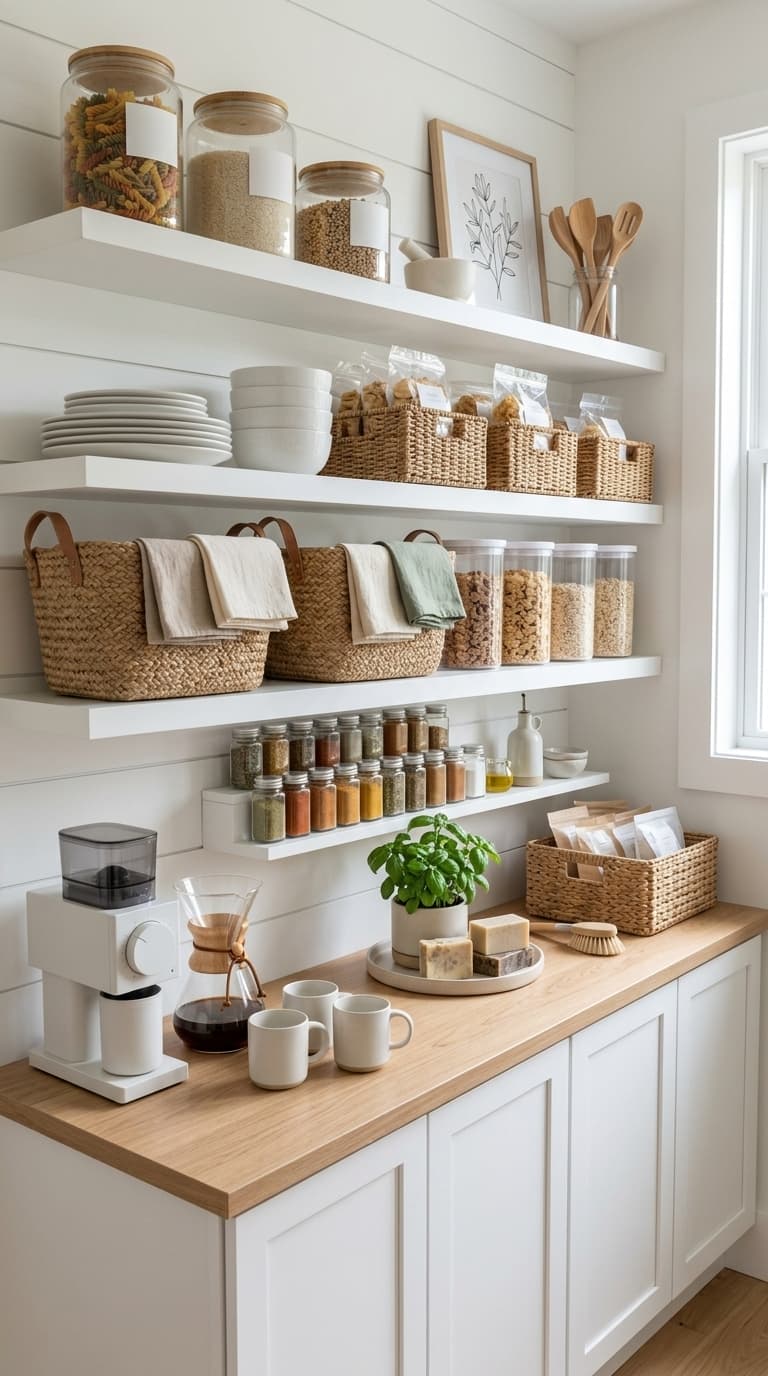
Open shelving in a kitchen pantry offers a fantastic opportunity to blend practicality with aesthetic appeal. Unlike closed cabinets, shelves put your kitchen essentials on display, making them easily accessible and visually integrated into your home's design. This approach can transform a cluttered space into a curated showcase of your culinary ingredients and tools. The key to successful open shelving lies in thoughtful organization, consistent container choices, and a mindful approach to what you display.
This guide will walk you through the process of creating an organized and visually pleasing kitchen pantry using open shelving. We'll explore how to select the right containers, arrange items for both accessibility and style, and maintain a clutter-free environment. By implementing these strategies, you can transform your pantry from a hidden storage area into a functional and attractive extension of your kitchen. We'll cover everything from choosing the right jars and baskets to arranging spices and everyday items, ensuring.
1. Selecting the Right Containers for Your Shelves
The foundation of an organized pantry with open shelving is the choice of containers. Opt for uniform or complementary styles to create a sense of order and visual calm. Glass jars with airtight lids are excellent for dry goods like pasta, rice, grains, and snacks, allowing you to see the contents and keeping them fresh. Woven baskets, as seen here, are perfect for corralling smaller items, bagged goods, or linens, adding texture and warmth.
When choosing containers, think about the items you store most frequently. If you bake often, consider dedicated containers for flour, sugar, and baking chips. For everyday snacks, smaller jars or bins work well. Avoid a hodgepodge of different container types, as this can quickly lead to a chaotic appearance. Measure your shelf depth and height to ensure your chosen containers fit comfortably without overcrowding. Consider the lids as well; bamboo or natural wood lids can add a touch of warmth.
2. Strategic Arrangement for Accessibility and Aesthetics
Arranging items on open shelves is a balance between what's easy to grab and what looks good. Place frequently used items at eye level or within easy reach. Heavier items, like large bags of rice or flour, should be on lower shelves to prevent accidents and make them easier to lift. Lighter, less frequently used items can go on higher shelves. Within each shelf, group like items together.
The visual appeal of open shelving relies on thoughtful placement. Use the larger glass jars and baskets as anchors, distributing them evenly across the shelves. Smaller items, like spice jars or individual snack bags, can fill in the gaps. Avoid stacking too many items directly on top of each other, which can create a messy look and make it difficult to access items at the bottom.
3. The Power of Labels and Consistency
Labels are your best friend when it comes to maintaining an organized pantry with open shelving. Even with clear containers, labels ensure that everyone in the household knows exactly what's inside, preventing mix-ups and saving time. Opt for simple, clean labels that match your overall decor style. You can use pre-printed labels, chalkboard labels, or even handwritten tags on a neutral background. Consistency in labeling is key; decide on a format and stick to it.
Beyond just identifying contents, labels can also contribute to the aesthetic. Consider using labels that are subtle and blend in with the containers, or choose ones that add a pop of color or texture. For items stored in opaque baskets, clear and prominent labels are essential. For glass jars, consider labels that are easy to remove or reposition if you change the contents. The act of labeling itself can be a mindful process, encouraging you to take stock of your.
4. Maintaining a Clutter-Free Display
Open shelving requires a commitment to regular tidying to prevent clutter from accumulating. Unlike closed cabinets where a bit of mess can be hidden, an untidy open shelf is immediately noticeable. Schedule a weekly or bi-weekly quick tidy-up session to put stray items back in their designated places, wipe down shelves, and check for any expired goods. This proactive approach prevents small messes from becoming overwhelming.
To avoid clutter, be mindful of what you place on the shelves. Resist the urge to display every single item you own. Keep only what is necessary and frequently used on the open shelves. Items that are rarely used or are visually unappealing can be stored in closed cabinets or drawers. Regularly declutter your pantry by removing items that are past their expiration date or that you no longer use.
5. Incorporating Texture and Visual Interest
While functionality is paramount, don't forget to add elements that make your pantry visually appealing. The image showcases how woven baskets and natural wood accents bring warmth and texture to the white shelves. Varying the heights and shapes of your containers can create visual interest. For instance, tall glass jars can be paired with shorter baskets or stacks of bowls. The inclusion of a small piece of artwork or a simple vase with greenery can add a personal touch and.
Consider the interplay of materials. The smooth glass of jars contrasts beautifully with the rough texture of woven baskets. Wooden utensils or cutting boards can add another layer of natural warmth. Even the way you fold linens, like the tea towels draped over the baskets, can contribute to the visual appeal. When arranging, think about creating pleasing compositions. Step back and assess the balance and flow of items on each shelf.
6. Practical Considerations for Open Shelving
Before committing to open shelving, consider the practicalities. Dust can be a significant issue, especially in kitchens where cooking can create airborne particles. Regular dusting and wiping down of shelves and containers are essential. If you have young children or pets, consider the safety of items stored on open shelves. Heavy or breakable items should be placed on lower, more secure shelves. Also, think about the amount of natural light in your kitchen; items exposed to direct sunlight for extended.
When planning your open shelving, measure your space carefully. Ensure there is adequate clearance between shelves for your chosen containers and for easy access. Consider the weight capacity of your shelves and the wall they are mounted on, especially if you plan to store heavy items. If you're installing new shelves, opt for sturdy materials and secure mounting hardware. For existing shelves, ensure they are robust enough for your needs.
- Measure your shelf depth and height before purchasing new containers.
- Group similar items together in uniform or complementary containers.
- Place frequently used items at eye level for easy access.
- Use clear, consistent labels for all pantry items.
- Schedule regular quick tidy-ups to prevent clutter.
- Wipe down shelves and containers weekly to manage dust.