Create a Serene Neutral Bedroom: Layering Textures for a Cozy Retreat
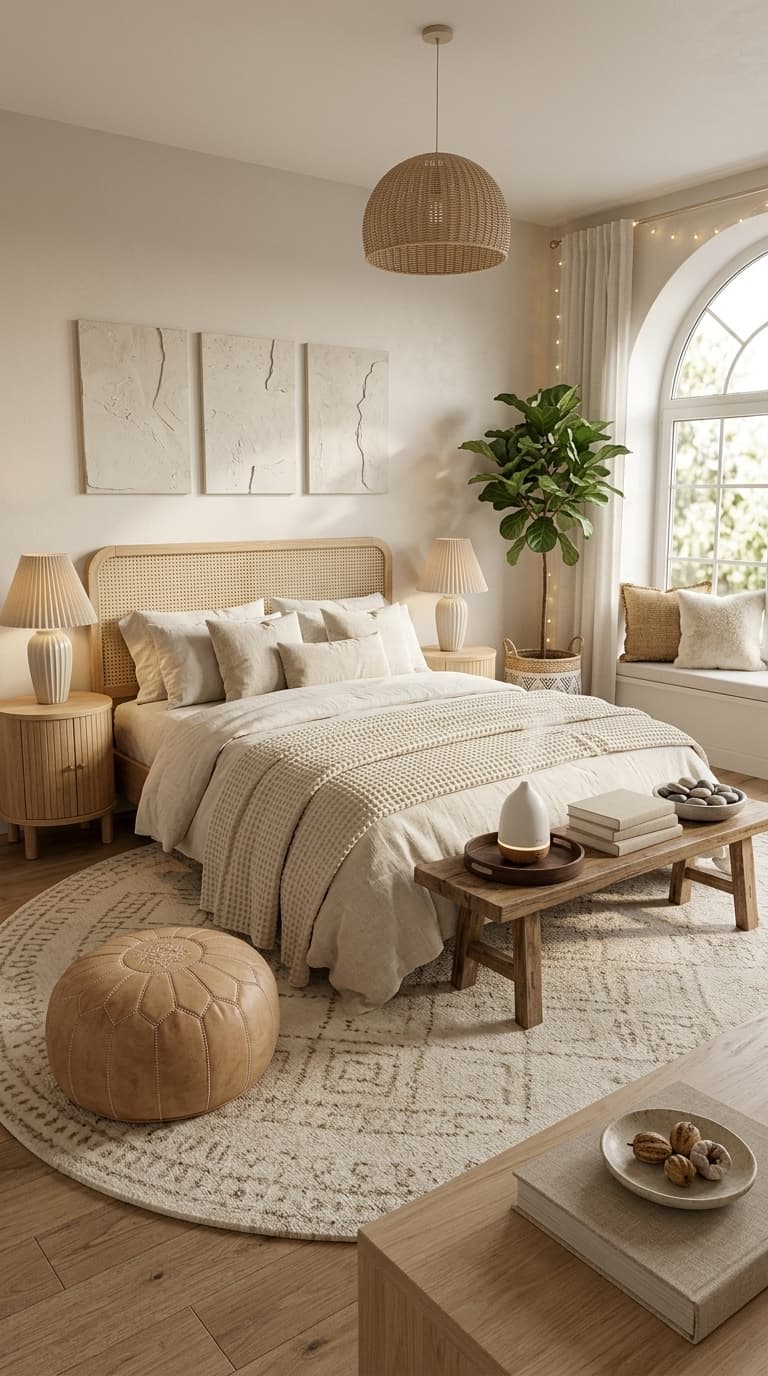
Transforming your bedroom into a peaceful haven doesn't require a bold color palette. This serene bedroom showcases the power of a neutral color scheme, proving that subtle shades can create immense warmth and depth. The key lies in the thoughtful layering of textures, which adds visual interest and a sense of cozy comfort. From the woven rattan headboard to the plush rug and the variety of textiles on the bed, each element contributes to a cohesive.
Achieving a balanced and inviting neutral bedroom involves more than just picking shades of beige or white. It's about creating a tactile experience that soothes the senses and promotes relaxation. Consider the interplay of different materials – the smooth wood of the nightstands, the rough texture of the wall art, the softness of the bedding, and the intricate patterns of the rug.
1. The Foundation: Choosing Your Neutral Palette
Selecting the right neutral base is crucial for setting the tone of your bedroom. Think beyond basic white and explore a spectrum of soft hues like warm creams, gentle grays, muted taupes, and earthy beiges. These colors provide a calming backdrop that promotes rest and tranquility. When choosing your wall color, consider the natural light in your room. A warmer neutral might be ideal for a room with less natural light to prevent it from feeling.
Once your primary neutral wall color is chosen, consider how other large elements, like your bedding and curtains, will interact with it. Opting for linens in slightly different shades of your chosen neutral can create subtle contrast and prevent the room from feeling monotonous. For instance, if your walls are a soft cream, consider bedding in a slightly warmer beige or a cooler off-white. This nuanced approach to layering neutrals adds sophistication and depth.
2. Material Matters: Weaving in Texture
Texture is the secret ingredient in a neutral decor scheme, transforming a potentially bland space into a rich, inviting environment. Look for opportunities to introduce varied textures through your furniture and decor. The rattan headboard in this room is a prime example, offering a natural, woven element that adds warmth and visual interest. Consider incorporating wooden nightstands with interesting grain patterns, a plush upholstered bench, or even a woven storage basket.
Beyond furniture, textiles are your best friends for adding texture. Layering different fabrics on your bed is a simple yet effective way to build visual depth. Combine smooth linen sheets with a waffle-knit duvet cover and a chunky knit throw. The variety in weave and weight creates a luxurious feel and makes the bed look incredibly inviting. Don't forget about your floor coverings; a textured rug, like the one pictured with its geometric pattern and soft.
3. The Art of Layering: Bedding and Throws
The bed is often the focal point of a bedroom, and layering your bedding is a powerful technique to create a luxurious and inviting look, especially within a neutral palette. Start with high-quality sheets in a soft, breathable fabric. Then, introduce a duvet or comforter in a complementary neutral shade. The magic happens with the addition of throws and accent pillows.
When layering pillows, aim for a mix of sizes and textures to add dimension. Start with your sleeping pillows, then add larger Euro pillows against the headboard for a structured look. Follow with standard sleeping pillows, and finally, introduce smaller accent pillows in varying textures and subtle patterns. This layered approach not only makes the bed look professionally styled but also provides extra comfort and support.
4. Lighting for Ambiance: Soft and Inviting Glow
Lighting plays a critical role in establishing the mood of a bedroom, and in a neutral scheme, it's essential for adding warmth and depth. Layer your lighting sources to create a soft, inviting ambiance. Overhead lighting, like the woven pendant lamp shown, can provide general illumination, but it's often best used on a dimmer switch to control the intensity. Table lamps on nightstands, with textured shades that diffuse the light, offer task lighting and create cozy.
The type of light bulbs you choose also impacts the overall feel. Opt for warm white bulbs (around 2700K) to cast a soft, inviting glow rather than a harsh, cool light. Natural light is also a key component; ensure your window treatments allow for ample natural light during the day while providing privacy when needed. The large arched window in the image floods the room with natural light, enhancing the airy feel.
5. Grounding the Space: Rugs and Floor Coverings
A well-chosen rug can anchor your bedroom and significantly contribute to its overall comfort and style, especially in a neutral design. The round rug in this image, with its subtle geometric pattern and soft texture, defines the sleeping area and adds a layer of warmth underfoot. When selecting a rug for a neutral bedroom, consider its texture and pattern. A plush shag rug can add luxurious softness, while a jute or sisal rug offers a more.
The placement of your rug is also important for creating a cohesive look. In this bedroom, the round rug is positioned to encompass the foot of the bed and a seating area, creating a distinct zone. If you have a rectangular bed, a rectangular rug placed partially under the bed and extending outwards is a classic choice. For smaller bedrooms or to add an extra layer of comfort, consider layering a smaller, textured rug over a.
6. Decorative Accents: The Finishing Touches
Decorative accents are where you can inject personality and refine the serene aesthetic of your neutral bedroom. The triptych wall art above the bed, with its textured, abstract design, adds a subtle artistic element without introducing strong colors. Consider pieces that have interesting textures or subtle variations in tone. Natural elements, like the large potted plant, bring life and a touch of organic beauty into the space.
Don't overlook the power of smaller details. A simple wooden tray holding a few decorative objects, like the books and stones on the bench, can create a curated vignette. A decorative diffuser or a stack of artfully arranged books on a nightstand can add a personal touch. Even the choice of hardware on your furniture or the style of your lampshades contributes to the overall design.
- Assess your current wall color and consider if it leans too warm or too cool for your desired serene atmosphere.
- Identify at least three different textures you can introduce through bedding, throws, or decorative pillows.
- Evaluate your existing lighting and plan for at least one additional light source, such as a table lamp or string lights.
- Measure your bed and the surrounding floor space to determine the ideal rug size for your room.
- Select one piece of wall art or a decorative object that features interesting texture or a subtle natural element.
- Declutter surfaces and arrange a few curated decorative items on your nightstand or a bench to add a personal touch.