Use Natural Light and Pendant Lighting to Brighten Your Small Living Room
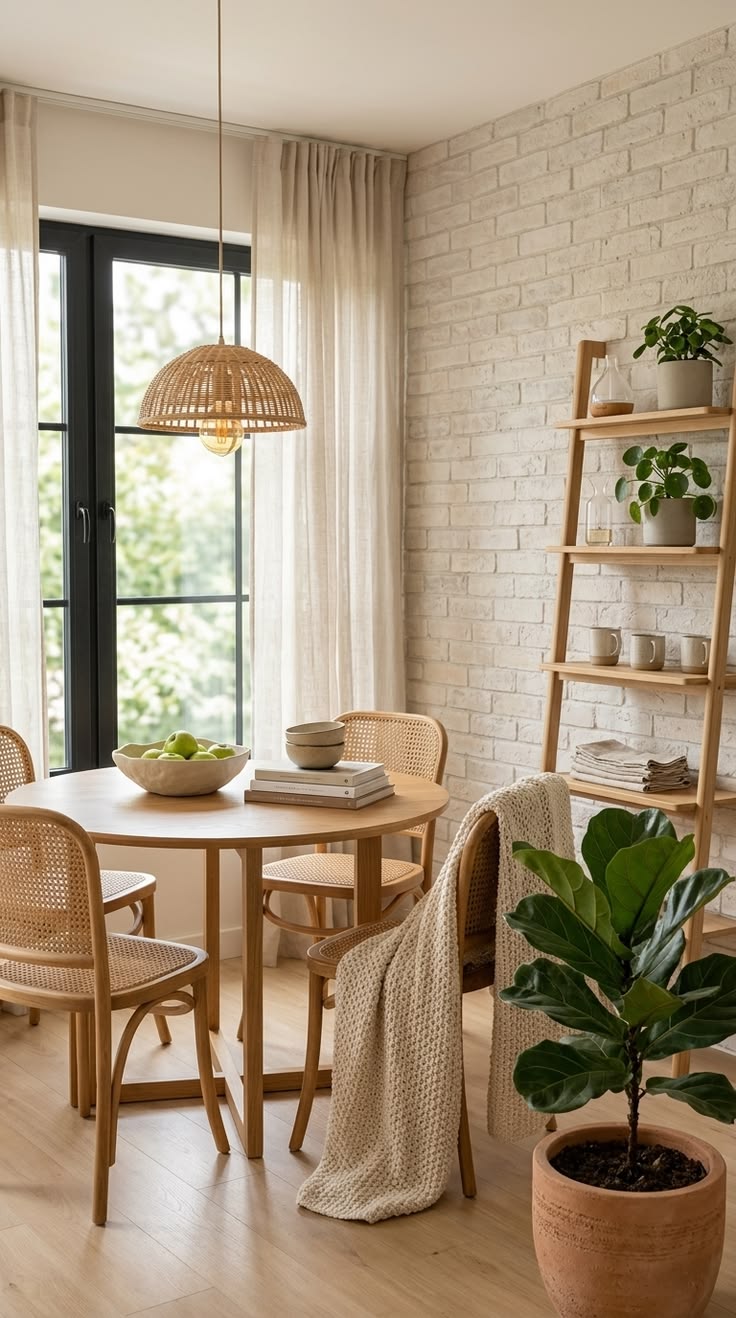
When a living room feels cramped, the first place to look for a solution is often the lighting. In this space, a large window with sheer curtains allows abundant natural light to flood in, while a single pendant light adds focused illumination over the dining area.
By combining these two light sources thoughtfully, you can create a layered lighting scheme that makes the room feel larger and more inviting without adding clutter.
1. Maximize Natural Light with Sheer Curtains
Sheer curtains are a game-changer for small living rooms because they diffuse harsh sunlight while still allowing light to pass through. In the image, the light beige curtains are drawn back to let in as much daylight as possible, which brightens the entire space and reduces the need for artificial lighting during the day.
To replicate this effect, choose curtains made of lightweight fabric like linen or voile. Hang them on a rod that extends slightly beyond the window frame to allow the curtains to be pulled completely aside, maximizing the view and light intake.
2. Use a Pendant Light for Focused Ambiance
A pendant light, like the woven rattan dome shown, provides a warm, ambient glow that is perfect for dining or conversation areas. It hangs from the ceiling, saving floor space and drawing the eye upward, which can make a room feel taller.
When selecting a pendant, consider the height of your ceiling and the size of your table. A light fixture that is too large can overwhelm a small space, while one that is too small may not provide adequate illumination.
3. Layer Lighting for Different Times of Day
Layering lighting means using multiple sources to suit different activities and times of day. In the image, the natural light from the window is complemented by the pendant light, which can be turned on in the evening to create a cozy atmosphere.
Consider adding a floor lamp or table lamp in a corner to provide task lighting for reading or a decorative lamp on a side table. This approach allows you to adjust the brightness and mood without overhauling the entire lighting scheme.
4. Choose Light Colors to Reflect Light
Light-colored walls, such as the white painted brick seen in the image, reflect light and help make a room feel more open. Dark colors absorb light and can make a space feel smaller and more enclosed.
If you are planning to paint or refresh your living room, opt for a light neutral shade like off-white, cream, or soft gray. These colors will enhance the effect of both natural and artificial light, creating a brighter environment.
5. Avoid Clutter to Maintain Light Flow
Cluttered surfaces can block light and create shadows, reducing the effectiveness of your lighting plan. In the image, the space is kept relatively uncluttered, with only a few carefully placed items like books and a bowl of fruit on the table.
To maintain a clean look, use storage solutions like the ladder shelf shown, which holds plants, mugs, and folded linens vertically. This keeps items off the floor and out of the way of light paths.
- Measure your ceiling height to determine the correct pendant light length.
- Choose sheer curtains that match your wall color for a seamless look.
- Select a pendant light that is proportional to your table size.
- Paint walls in a light, reflective color to enhance brightness.
- Use vertical storage like a ladder shelf to keep floors clear.
- Turn on the pendant light in the evening to create a warm ambiance.
- Keep surfaces free of clutter to allow light to travel freely.