Achieve a Cozy Mid-Century Modern Vibe: Styling Your Living Room Corner
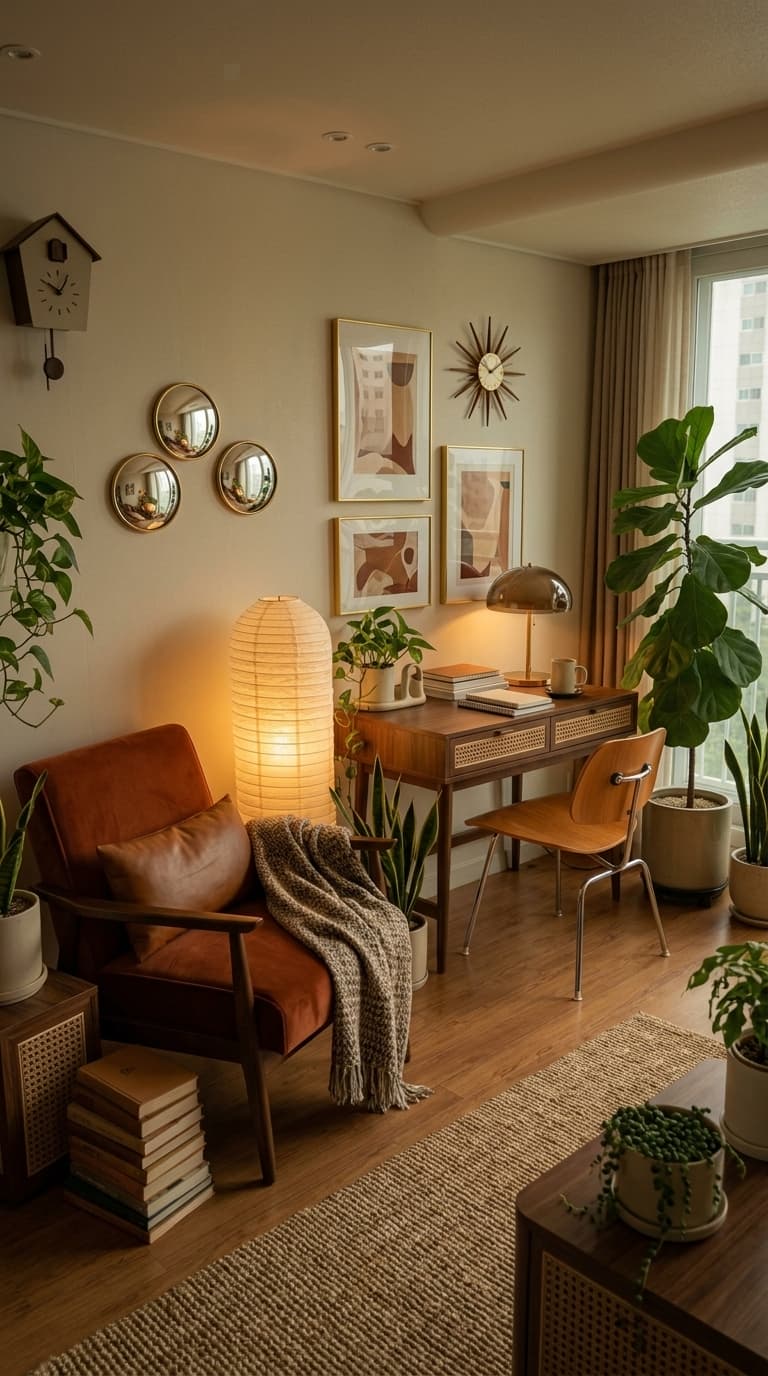
Creating a distinct atmosphere in your home doesn't require a complete overhaul. Often, focusing on a specific zone, like a reading nook or a small workspace, can dramatically enhance the overall feel of a room. This mid-century modern-inspired corner, with its warm wood tones, rich textures, and curated art, offers a masterclass in achieving a sophisticated yet comfortable aesthetic. The careful selection of furniture, the strategic placement of lighting, and the thoughtful addition of decorative elements all contribute to.
The beauty of this particular corner lies in its ability to blend functionality with style, embodying the essence of mid-century modern design. It’s a space that invites you to sit down, perhaps with a book or to tackle some correspondence, all while surrounded by visually pleasing elements. The combination of natural materials, like the wood of the desk and chair, with softer textures from the throw blanket and armchair upholstery, creates a tactile richness.
1. The Foundation: Armchair and Side Table Selection
The rust-colored armchair serves as the anchor for this cozy corner, its plush upholstery and inviting silhouette beckoning you to relax. When selecting an armchair for a similar purpose, consider the scale of your space. A bulky armchair might overwhelm a small corner, while a too-slender option could feel lost. Look for clean lines and a comfortable depth, ideally with armrests that are wide enough to hold a book or a small drink.
Complementing the armchair is a simple, slatted wooden side table. Its design is understated, allowing the armchair to take center stage, yet it provides essential functionality. For a similar setup, measure the height of your armchair's seat and armrests to ensure the side table is at a comfortable and accessible level for placing items like a cup of tea, a remote, or your current read.
2. Layering Light for Ambiance
Lighting is crucial for setting the mood, and this corner masterfully employs multiple sources. The tall, paper lantern floor lamp provides a soft, diffused glow that fills the space with a warm, ambient light. This type of lighting is ideal for creating a cozy atmosphere, perfect for reading or unwinding. When choosing a floor lamp, consider its height relative to your seating and surrounding furniture.
Adding task lighting and a touch of vintage style is the desk lamp. Its metallic dome shade directs light downwards, making it perfect for illuminating the workspace on the desk. The brass finish adds a classic mid-century element and complements the warm tones of the wood. When placing a desk lamp, ensure it's positioned to avoid glare on screens or direct light into your eyes.
3. The Workspace: Desk and Chair Dynamics
The wooden desk, with its clean lines and cane-front drawers, is a quintessential mid-century modern piece that adds both style and practicality to the corner. Its compact size makes it suitable for smaller spaces, while the drawers offer discreet storage for essentials. When choosing a desk for a similar setup, think about the depth needed for your activities – whether it's for a laptop, writing, or simply as a decorative surface.
Paired with the desk is a simple, wooden chair with a curved back and metal legs. This chair is visually light, preventing the workspace from feeling cluttered. When selecting a desk chair, prioritize comfort for the duration you'll be using it, but also consider its visual impact. A chair that is too bulky can detract from the overall aesthetic. The minimalist design of this chair complements the desk and the room's style.
4. Wall Decor: Art and Accents
The arrangement of framed artwork above the desk is a key element in defining the mid-century modern style of this corner. The abstract pieces, with their earthy color palettes and organic shapes, complement the warm tones of the furniture and the overall ambiance. When curating art for your own space, consider grouping pieces of similar sizes or themes to create a unified look. The gold frames add a touch of subtle elegance and tie in with the metallic accents.
Adding further visual interest to the wall are the three circular, mirrored accents and the sunburst clock. The mirrors, arranged in a staggered pattern, reflect light and create a sense of spaciousness, while the clock adds a classic mid-century motif. When incorporating decorative wall elements, think about balance and scale. These smaller accents, when grouped together, create a dynamic display without overwhelming the wall.
5. Bringing in Nature: The Power of Plants
The inclusion of plants is essential for bringing life and a natural element into this mid-century modern corner. The large fiddle-leaf fig tree in the corner adds significant height and a lush, green presence, instantly making the space feel more vibrant and grounded. When selecting plants, consider the light conditions of your space. For areas with ample natural light, larger plants like a fiddle-leaf fig or a monstera can thrive.
Smaller potted plants are strategically placed on the desk and near the armchair, adding touches of green at different levels. A snake plant on the desk provides a vertical accent, while a trailing plant on the side table or floor adds a softer, more organic line. These smaller additions contribute to the overall sense of abundance and connection to nature. When incorporating plants, think about varying their heights and textures to create visual interest.
6. Textures and Textiles: Adding Warmth and Comfort
The textiles in this corner play a vital role in creating its cozy and inviting atmosphere. The chunky knit throw blanket draped over the armchair adds a layer of warmth and tactile comfort. Its neutral color and substantial texture complement the rust-colored upholstery without competing with it. When choosing throws and blankets, consider the material and weight for the season and your personal preference.
The natural fiber rug underfoot grounds the entire seating area and adds another layer of texture to the space. Its woven construction and neutral tone provide a warm foundation and help to define the corner as a distinct zone within the larger room. When selecting a rug, consider its size in relation to the furniture it anchors. A rug that is too small can make the arrangement feel disjointed, while one that is too large might overwhelm the space.
- Assess your corner's natural light to choose appropriate plants.
- Measure your armchair's height to select a side table at a comfortable level.
- Layer lighting with a floor lamp for ambiance and a desk lamp for task lighting.
- Select artwork that complements your room's color palette and style.
- Choose textiles like throws and pillows that add comfort and texture.
- Consider a natural fiber rug to define the space and add warmth.