Mastering Bookshelf Styling for a Sophisticated Home Office
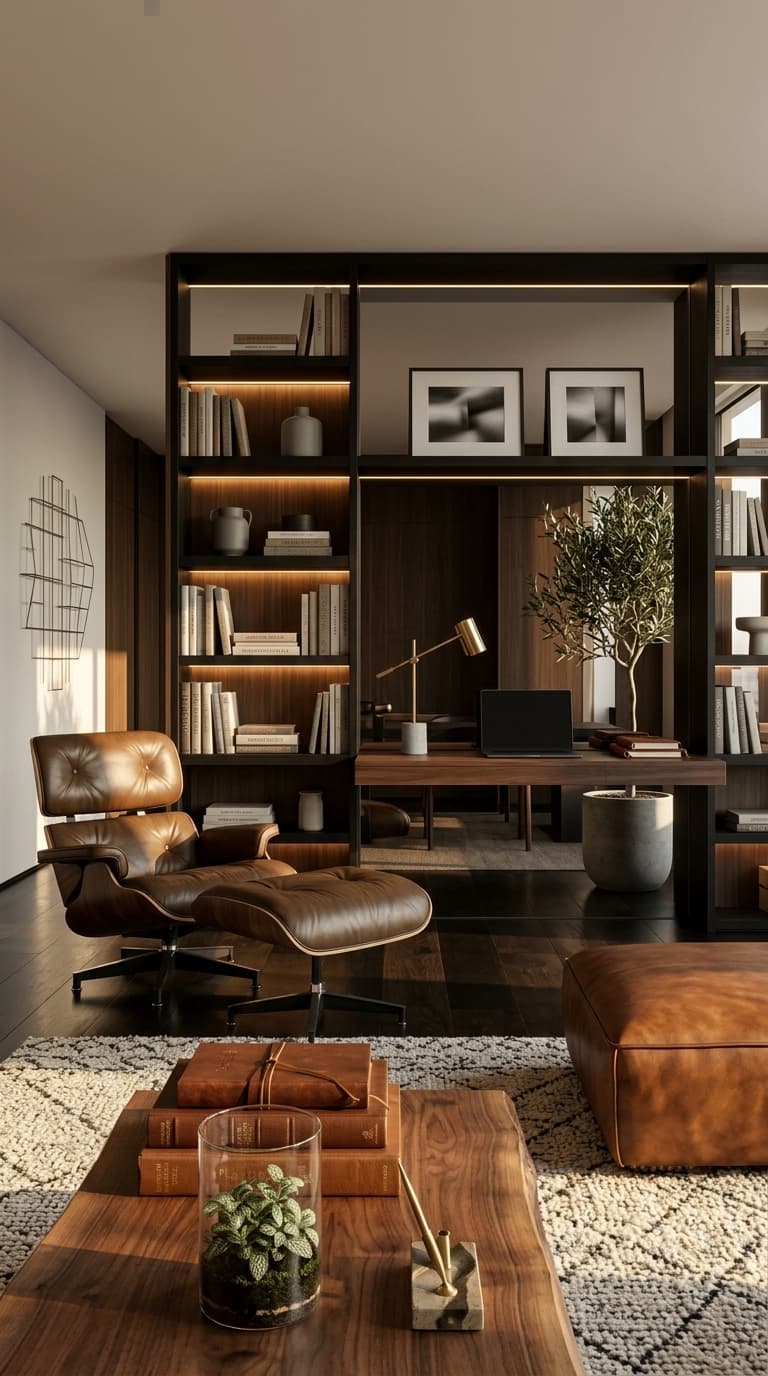
Creating a home office that is both functional and aesthetically pleasing is crucial for productivity and well-being. The image showcases a sophisticated home office where the bookshelf is a central design element, not just a storage solution. Its dark wood frame and integrated lighting create a warm, inviting atmosphere, while the carefully curated items on its shelves add personality and style. This approach transforms a utilitarian piece of furniture into a focal point that enhances the overall design of the room.
The key to a successful bookshelf display lies in balancing form and function. It's about more than just filling shelves with books; it's about creating visual interest, showcasing personal taste, and ensuring that essential items are easily accessible. The example image demonstrates this balance with a mix of books arranged both vertically and horizontally, decorative objects like vases and framed art, and even a small plant. The built-in lighting draws attention to the displayed items, highlighting the textures and colors within the collection.
1. Curating Your Book Collection for Display
When styling bookshelves, the books themselves are primary decorative elements. Consider the visual impact of their spines; a cohesive color palette can create a sense of order and sophistication, as seen with the neutral tones in the image. Don't be afraid to mix hardcovers and paperbacks, but pay attention to their condition and size. Grouping books by color, size, or even subject can add a layer of intentionality to your display.
Beyond just aesthetics, think about the practicalities of your book collection. If you have a large number of books, consider dedicating specific shelves or sections to them, perhaps organizing by genre or author for easy retrieval. For those with fewer books or a desire for a more minimalist look, a few well-chosen volumes can make a statement. Consider the height and depth of your shelves when selecting books to display.
2. Incorporating Decorative Objects
Decorative objects are essential for adding personality and visual interest to bookshelves. In the featured office, vases of varying sizes and neutral tones are strategically placed among the books, creating focal points and adding depth. Framed artwork, like the abstract pieces shown, introduces another layer of visual appeal and can tie into the room's overall color scheme. When selecting decorative items, consider their scale and proportion relative to the books and the shelf space.
The placement of decorative items should feel intentional and balanced. In the image, the objects are not randomly placed but are integrated thoughtfully within the book arrangements. A small potted plant adds a touch of life and color, softening the hard lines of the shelves and books. Consider incorporating items that have personal meaning, such as souvenirs, photographs, or small sculptures, to make your bookshelf a true reflection of your life.
3. The Role of Lighting
Integrated lighting, as demonstrated in the image, is a powerful tool for enhancing bookshelf displays. The warm glow emanating from the shelves draws attention to the books and decorative objects, creating a sophisticated and inviting atmosphere. This type of lighting not only makes the items more visible but also adds a cozy ambiance to the room, especially during evening hours. When planning lighting for your bookshelves, consider the type of bulbs – warm white LEDs are often ideal for creating a welcoming mood.
Beyond built-in options, consider other lighting solutions to highlight your bookshelf. Small, adjustable spotlights can be aimed at specific items or sections to create dramatic effect. Battery-operated LED strip lights are a versatile option for adding subtle illumination without the need for complex wiring. Even a well-placed desk lamp, like the one on the desk in the image, can cast a warm light that spills onto nearby shelves, contributing to the overall mood.
4. Achieving Balance and Proportion
Achieving visual balance on your bookshelves is about distributing visual weight evenly across the shelves and the entire unit. This doesn't mean everything has to be perfectly symmetrical, but rather that the arrangement should feel stable and pleasing to the eye. In the image, the placement of larger items like vases and books is balanced by smaller decorative pieces and empty space. Varying the heights of objects and book stacks helps to create a dynamic yet balanced composition.
Proportion plays a crucial role in how your bookshelf styling is perceived. Ensure that the items you choose are in proportion to the size of the shelves. A tiny decorative object on a very large shelf will look lost, while a collection of oversized items might make a shelf feel cramped. The image shows a good mix of scales – substantial books, medium-sized vases, and smaller decorative accents. When arranging, step back frequently to assess the proportions.
5. Avoiding Common Styling Mistakes
One of the most common mistakes is overcrowding shelves, which can make a space feel cluttered and chaotic. The image demonstrates the importance of negative space; leaving some areas on the shelves empty allows the displayed items to stand out and prevents the overall look from becoming overwhelming. Another pitfall is arranging all books in the same orientation, which can lead to a monotonous appearance. Mixing vertical and horizontal stacks, as seen in the example, adds visual interest.
Another frequent error is neglecting the impact of color and texture. A shelf filled with books of similar colors and textures can lack visual appeal. Introducing a variety of colors, materials, and finishes in both books and decorative items can create a richer, more engaging display. For instance, pairing smooth ceramic vases with textured book covers adds tactile dimension. Additionally, placing items too close to the edge of the shelf can create a sense of instability and risk.
6. Practical Next Steps for Your Bookshelf
Begin by decluttering your existing bookshelf. Remove any books you no longer read or need, and dust off all surfaces. Then, take stock of your decorative items. Gather objects that have personal meaning or complement your room's decor. Consider the color palette of your room and select books and accessories that align with it. If your book collection is extensive, decide how you want to organize them – by color, size, or subject.
Once you have a curated selection of books and decor, start arranging them on your shelves. Begin with larger items like books or vases, placing them strategically to create a sense of balance. Incorporate smaller decorative objects, grouping them in visually appealing clusters. Remember to vary the orientation of your books, mixing vertical and horizontal stacks. If your shelves lack built-in lighting, consider adding LED strip lights or small spotlights to highlight your display.
- Declutter and dust your existing bookshelves.
- Curate a selection of books and decorative items that fit your room's style.
- Arrange books in alternating vertical and horizontal stacks for visual interest.
- Incorporate decorative objects like vases, plants, or artwork in balanced groupings.
- Ensure adequate lighting to highlight your displayed items.
- Step back and assess the balance, proportion, and overall aesthetic of your arrangement.