Elevate Your Living Room: Styling Built-In Bookshelves for a Modern Aesthetic
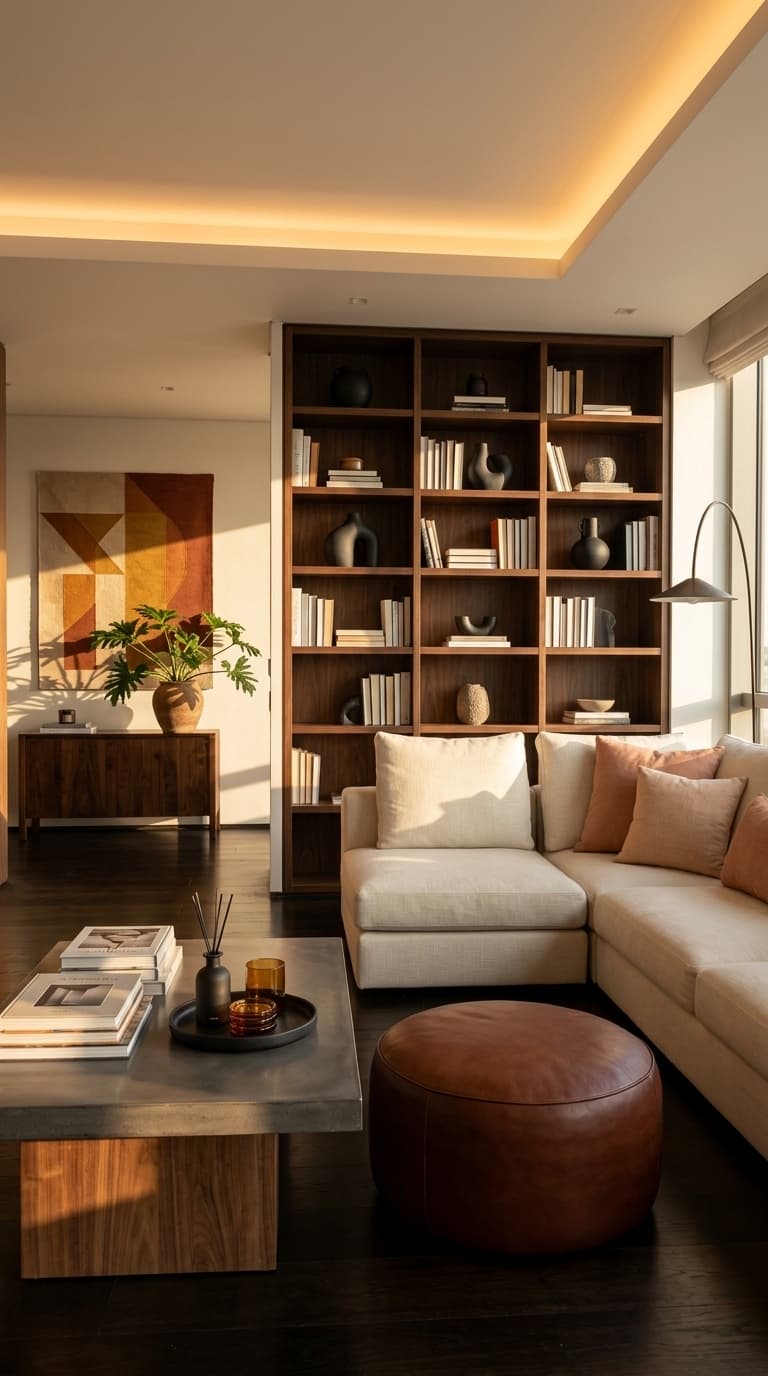
Built-in bookshelves offer a fantastic opportunity to add both storage and visual interest to your living room. In this modern space, the dark wood shelves create a striking contrast against the lighter walls and furniture, providing a warm, grounded feel. The key to making them work is thoughtful styling, balancing the practical need for book storage with decorative elements that reflect your personal style and enhance the room's overall design.
Achieving a balanced and aesthetically pleasing bookshelf display involves more than just filling shelves with books. It's about creating vignettes, varying heights and textures, and leaving intentional negative space to prevent a cluttered appearance. The example showcases a sophisticated approach, mixing hardback books with sculptural decorative objects and subtle accents. This deliberate arrangement invites the eye to wander, creating a dynamic and engaging display. Whether you have a grand floor-to-ceiling unit or a smaller set of built-ins, the principles of effective styling remain.
1. Assess Your Collection and Space
Before you begin arranging, take stock of what you have. Sort through your books, deciding which ones to keep on display and which might be better stored elsewhere or donated. Consider the size, color, and condition of your books. For a modern look, a curated selection often works best, so don't feel obligated to display every single book you own. Think about the overall aesthetic you're aiming for in your living room.
Beyond books, identify other decorative items that can enhance your shelves. This might include vases, sculptures, framed photos, or small plants. Consider the scale and proportion of these items relative to the books and the shelf space. In the image, the dark, sculptural objects provide a modern counterpoint to the books, adding visual interest and a sense of artistry. When selecting decorative pieces, think about how they will interact with the books – do they add color, texture, or a different shape?
2. Create Visual Interest with Arrangement
The arrangement of books is crucial for a dynamic display. Instead of placing all books vertically, mix in horizontal stacks. This breaks the visual line of spines and creates natural resting places for decorative objects. Vary the height of these stacks and consider placing them on different sides of the shelves to create asymmetry. For instance, a tall stack on one side can be balanced by a smaller stack and a decorative item on the other.
Incorporate decorative objects strategically to complement your book arrangement. Place larger items on shelves where you have horizontal book stacks, using them as bookends or as standalone pieces. Vary the heights and shapes of these objects to create a pleasing rhythm. For example, a tall vase can be placed next to a stack of books, while a smaller, round sculpture might sit atop a few horizontally stacked volumes.
3. Balance and Scale
Achieving a sense of balance is key to a successful bookshelf display. This doesn't necessarily mean perfect symmetry, but rather an even distribution of visual weight. If you have a large, dominant object on one shelf, balance it with a cluster of smaller items or a substantial book stack on the opposite side of the same shelf or on an adjacent shelf. Consider the overall height and width of your shelves.
Pay close attention to the scale of your decorative items in relation to your books and the shelf size. Oversized objects can make a shelf look cramped, while tiny items can get lost. In the image, the dark, sculptural pieces are substantial enough to make a statement against the books without dominating the entire shelf. When choosing decorative items, hold them up against your books and shelves to gauge their proportion.
4. Color and Texture
Color plays a significant role in the overall mood and aesthetic of your bookshelf. While a monochromatic or neutral palette can create a sophisticated, modern look, introducing pops of color can add personality and vibrancy. You can achieve this through book covers, decorative objects, or even by arranging books with their colorful spines facing outward. In the example, the dark wood of the shelves provides a rich backdrop, and the neutral tones of the books and decor create a cohesive, calm atmosphere.
Texture adds another layer of depth and interest to your bookshelf styling. Mix smooth, glossy surfaces with rough, matte finishes. For example, a ceramic vase can be paired with a textured woven basket, or a smooth metal sculpture can sit alongside books with linen covers. The dark, sculptural objects in the image offer a smooth, organic texture that contrasts beautifully with the paper and fabric of the books.
5. Lighting and Accents
Effective lighting can dramatically enhance your bookshelf display, highlighting your curated items and adding ambiance to the room. If your built-ins have integrated lighting, ensure it's positioned to illuminate the shelves without creating glare. If not, consider adding subtle LED strip lights along the edges of the shelves or using small, adjustable spotlights directed at key decorative pieces. The warm, ambient glow from the ceiling cove lighting in the image softly illuminates the shelves, creating a welcoming atmosphere.
Small accents can tie your bookshelf display together and add a personal touch. This could include framed photographs, small pieces of art, or even a collection of similar small objects. In the image, the decorative items are chosen for their sculptural quality and modern form, adding an artistic element. Consider adding a small plant or a decorative tray to hold smaller items like keys or remotes if the shelves are near a seating area.
6. Avoiding Clutter and Maintaining Style
One of the biggest challenges with bookshelves is preventing them from becoming cluttered. Regularly edit your display, removing items that no longer serve a purpose or that detract from the overall aesthetic. Aim for a 'less is more' approach, where each item has a reason for being there. Leave ample negative space on each shelf; this breathing room is essential for making the display feel intentional and sophisticated.
To ensure your styled bookshelves remain a cohesive part of your living room's decor, periodically step back and assess the overall impact. Do the shelves complement the furniture and other decor elements? Are the colors and textures working together harmoniously? If the display starts to feel stale or disconnected, it might be time for a refresh. Consider the function of the room as well. If your bookshelves are in a high-traffic area, ensure that the items displayed are not easily knocked over.
- Declutter your books and decorative items, keeping only those that fit your desired aesthetic.
- Vary book arrangements by mixing vertical and horizontal stacking on shelves.
- Incorporate decorative objects that complement the books in terms of size, color, and texture.
- Ensure a balance of visual weight across shelves, using negative space effectively.
- Consider adding subtle lighting to highlight key items and enhance ambiance.
- Periodically review and edit your bookshelf display to prevent clutter and maintain a fresh look.