Cozy Up Your Living Room: A Practical Guide to Styling Floating Shelves
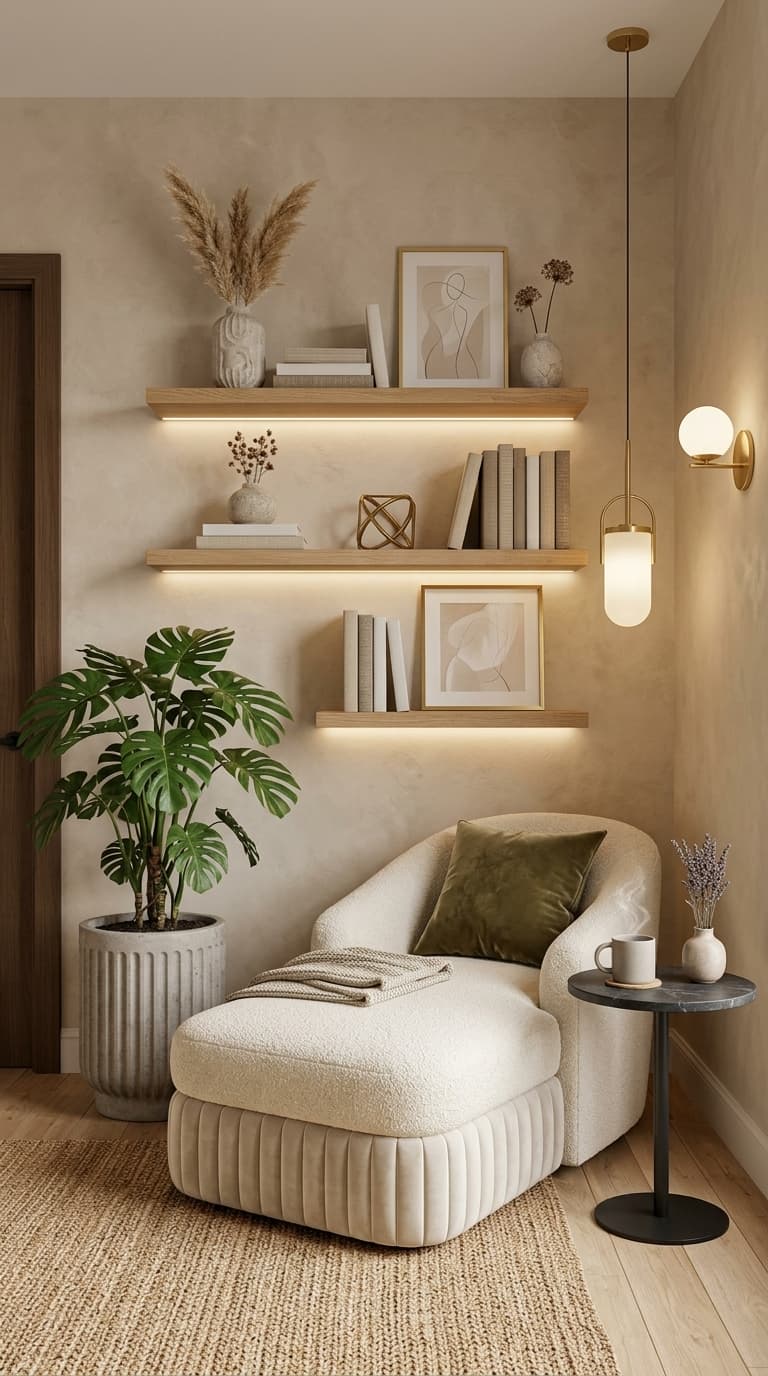
Creating a cozy and inviting living room often hinges on thoughtful styling and the strategic use of decor elements. Floating shelves, in particular, offer a versatile solution for both storage and display, allowing you to personalize your space without overwhelming it. The image showcases a serene corner, where natural textures and warm lighting combine to create a sense of tranquility. The key to replicating this ambiance lies in understanding how to arrange items on shelves to achieve a balanced.
Achieving a cozy atmosphere in your living room is about more than just soft furnishings; it's about curating a collection of items that evoke warmth and personality. Floating shelves provide an excellent canvas for this, allowing you to display cherished objects, books, and decorative accents in a way that feels intentional and uncluttered. The example here demonstrates how a few well-chosen pieces, combined with ambient lighting, can transform a simple wall into a focal point.
1. Selecting the Right Shelving Material and Placement
The floating shelves in the image appear to be made of a light-colored wood, possibly oak or a similar natural grain, which contributes significantly to the room's warm and organic feel. When choosing shelves for your own space, consider materials that complement your existing decor. Natural wood tones, for instance, add immediate warmth, while painted finishes can offer a more modern or minimalist look.
The visual weight and scale of the shelves should be proportionate to the wall space and the furniture below. In the provided image, the shelves are spaced generously, allowing each level to breathe and preventing the wall from looking too busy. When planning your own shelf layout, measure the available wall space and consider how the shelves will interact with other elements in the room, such as windows, doors, or larger furniture pieces.
2. Curating Your Shelf Display: Books and Art
The shelves are thoughtfully adorned with a mix of books and framed art, creating visual interest without feeling overstuffed. Notice how the books are arranged both vertically and horizontally, adding texture and dimension. Varying the orientation of books can break up monotony and make the display more dynamic. Consider grouping books by color or size for a cohesive look, or mix them with other decorative items.
The artwork on the shelves is framed in a simple, light-colored frame that harmonizes with the wood of the shelves and the neutral wall tones. This understated framing ensures the art itself is the focus, rather than the frame. When choosing art for your shelves, think about scale and proportion. A single, larger piece can make a statement, while a collection of smaller pieces can create a gallery-like feel.
3. Incorporating Natural Elements and Texture
A key element contributing to the cozy feel of this display is the inclusion of natural textures. The large vase filled with dried pampas grass on the top shelf introduces height, movement, and a soft, organic form. Smaller dried floral arrangements in minimalist vases on the other shelves add subtle touches of nature. These elements bring an earthy, grounded feel to the decor. When selecting natural elements, consider dried grasses, branches, or even small potted plants that thrive indoors.
The textured rug beneath the chaise lounge and the ribbed detail on the planter for the large Monstera plant further emphasize the importance of texture in creating a cozy environment. On the shelves, consider adding small decorative objects with interesting textures, such as a woven sphere or a ceramic piece with a matte finish. These tactile elements invite the eye to explore and add depth to the display.
4. The Role of Lighting in Ambiance
Integrated LED strip lighting beneath each shelf plays a crucial role in creating the warm, ambient glow seen in the image. This type of lighting provides a soft, diffused illumination that highlights the displayed items and adds a cozy atmosphere without being harsh. When installing shelf lighting, consider options like LED strips, puck lights, or small spotlights. Aim for a warm white light (around 2700K-3000K) to enhance the cozy feel.
Beyond the integrated shelf lighting, a stylish pendant light hangs nearby, and a wall sconce provides additional illumination. These accent lights contribute to the layered lighting scheme, preventing the space from feeling dim or one-dimensional. The wall sconce, with its upward and downward light projection, adds a decorative element and casts a soft light on the wall. When planning your lighting, think about combining ambient, task, and accent lighting.
5. Styling the Area Around the Shelves
The floating shelves are positioned above a comfortable chaise lounge, creating a dedicated reading or relaxation nook. The choice of a textured, neutral-colored chaise lounge with a plush olive green cushion adds comfort and a touch of color that complements the natural tones of the shelves and walls. A small, dark side table next to the lounge holds a mug and a small vase of lavender, adding functional and decorative touches.
The natural fiber rug grounds the seating area and adds another layer of texture to the space. Its neutral, woven pattern complements the earthy tones of the room and defines the zone. When placing a rug in relation to your shelves and seating, ensure it's large enough to encompass the main furniture pieces, creating a cohesive and comfortable area. The large potted Monstera plant in a ribbed concrete planter adds a significant vertical element and a vibrant splash of.
6. Avoiding Common Styling Mistakes
One common mistake when styling floating shelves is overcrowding them with too many items. This can make the shelves look cluttered and detract from the intended cozy and curated aesthetic. Resist the urge to fill every available space. Instead, focus on a few select pieces that have meaning or visual appeal. Another mistake is failing to consider the scale and proportion of the items displayed. Very small objects can get lost, while overly large items can overwhelm the shelf.
' Allowing empty areas on the shelves gives the displayed items room to breathe and prevents the overall look from feeling too busy. Ensure that the lighting is adequate and complements the displayed items without creating glare. Finally, consider the overall flow and function of the room. Shelves should not only look good but also serve a purpose, whether it's for storage or display. If the shelves are in a high-traffic area, ensure that the items displayed are not.
- Assess your wall space and choose floating shelves that are appropriately sized and securely mounted.
- Select a wood tone or finish for your shelves that complements your room's existing color palette.
- Curate a mix of books, art, and decorative objects, varying their orientation and scale for visual interest.
- Incorporate natural elements like dried grasses, branches, or small plants to add texture and warmth.
- Plan for layered lighting, including integrated shelf lights and accent lamps, to create a cozy ambiance.
- Arrange furniture and accessories around the shelves to create a balanced and inviting seating or display area.