Mastering Floating Shelves: Style and Storage for a Clutter-Free Space
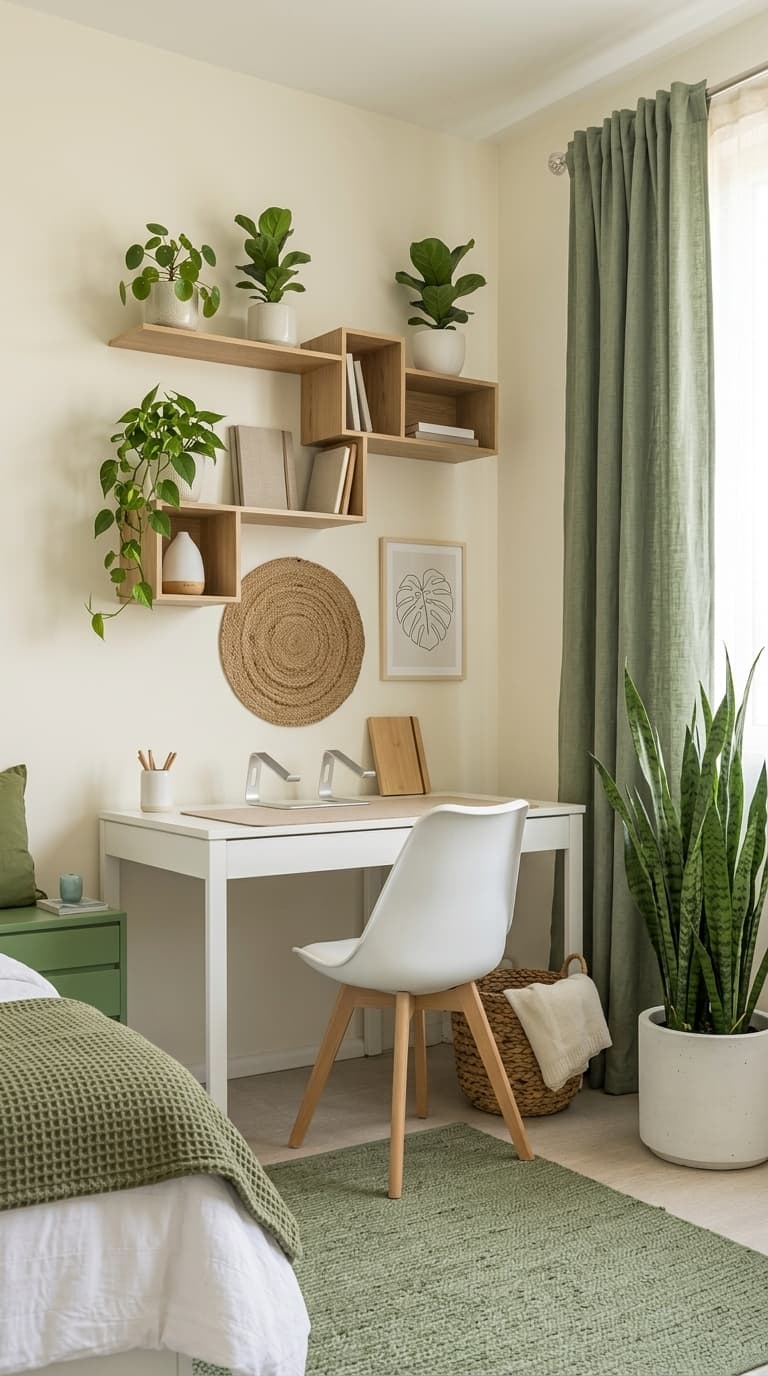
Floating shelves offer a sleek, modern solution for displaying decor and storing essentials without the bulk of traditional furniture. In this serene space, the staggered wooden shelves create a dynamic visual element against the neutral wall, housing a curated selection of greenery, books, and decorative items. This approach not only maximizes vertical space but also adds personality and warmth to the room. When considering floating shelves for your own home, think about the overall aesthetic you want to.
The key to successful floating shelf styling lies in thoughtful curation and strategic placement. This room demonstrates how to use them effectively, integrating them into a functional area that also serves as a relaxing retreat. Notice how the shelves are not overloaded; each item has space to breathe, preventing a cluttered appearance. The mix of textures, from the woven wall hanging to the smooth ceramic planters and the natural wood of the shelves themselves, adds depth and interest.
1. Choosing the Right Floating Shelves
The visual impact of floating shelves is significantly influenced by their material and design. In this setup, the warm, natural wood tone of the shelves complements the neutral wall color and the green accents in the room, creating a cohesive and inviting atmosphere. When selecting shelves for your space, consider how their material will interact with your existing decor. Wood can bring warmth, metal can offer a modern industrial feel, and acrylic can provide a minimalist, almost invisible.
Beyond material, the configuration of floating shelves plays a crucial role in their functionality and visual appeal. The staggered, almost geometric arrangement seen here breaks up the monotony of a flat wall and offers varied compartments for different types of items. This modular approach allows for flexibility in styling. You might opt for a symmetrical arrangement for a more formal look or an asymmetrical one, like this example, for a more dynamic and contemporary feel.
2. Strategic Placement for Impact
The placement of floating shelves is as important as their style. Here, they are positioned above a desk, creating a dedicated zone for work and study while also serving as a decorative feature. This strategic placement utilizes often-underused vertical space, keeping the desk surface clear and promoting a sense of order. When deciding where to install shelves, consider the function of the area.
The arrangement of the shelves themselves can also dictate their placement. The interlocking, stepped design in this image creates visual interest and allows for different heights and depths, accommodating various items. This dynamic layout prevents the wall from looking too static. When planning your own shelf placement, consider the flow of the room. Will the shelves be a focal point, or a subtle addition?
3. Curating Your Shelf Displays
The items you choose to display on your floating shelves are what truly bring them to life. This arrangement masterfully balances greenery with books and decorative objects, creating a layered and engaging look. The plants, in various sizes and types, add life and color, softening the lines of the shelves and the desk below. When selecting items for your shelves, aim for a mix of heights, textures, and forms.
The interplay of different elements on the shelves is crucial for a well-styled display. Here, the round, woven wall hanging adds a natural, textural contrast to the straight lines of the shelves and the framed artwork. The books are neatly stacked or placed upright, providing structure, while the plants introduce organic shapes. When curating your own shelf displays, experiment with different groupings. Try placing taller items towards the back or sides, and smaller items in the foreground.
4. Integrating Plants for a Natural Touch
Plants are an excellent addition to floating shelves, bringing life, color, and a sense of calm to any space. The variety of plants shown here, from the trailing vine to the upright snake plant and the leafy fiddle-leaf fig, demonstrates how different species can add dynamic visual interest. When choosing plants for shelves, consider their light requirements and growth habits. Trailing plants, like the one cascading down, are perfect for adding a soft, organic element.
The placement of plants on shelves can significantly impact the overall aesthetic. In this image, the plants are distributed across different shelves, creating a balanced and natural feel. A trailing plant on a higher shelf draws the eye downwards, while a fuller plant on a lower shelf anchors the arrangement. When styling with plants, think about how they interact with other decorative items. A lush green plant can provide a beautiful contrast to books or minimalist sculptures.
5. Balancing Books and Decorative Objects
Books can serve both a functional and decorative purpose on floating shelves. Here, they are arranged in a way that adds visual order and a touch of intellectual charm. Stacking some books horizontally and placing others vertically creates variation and makes the display more dynamic. When incorporating books, consider their spine colors and sizes. You can group them by color for a cohesive look or mix them up for a more eclectic feel.
Decorative objects are essential for adding personality and visual interest to your floating shelves. The round woven piece and the framed artwork in this image provide textural and graphic elements that break up the uniformity of books and plants. When selecting decorative items, think about scale and proportion. A few well-chosen pieces are more effective than many small, insignificant items. Consider objects with different shapes and materials – ceramic vases, wooden sculptures, or metallic accents can all add depth.
6. Maintaining a Clutter-Free Aesthetic
Achieving a clutter-free look on floating shelves requires intentionality and regular maintenance. The minimalist approach seen here, with ample negative space around each item, is key. Avoid the temptation to fill every available inch. Instead, focus on displaying a select few items that are meaningful or aesthetically pleasing. Regularly assess what's on your shelves and remove anything that has become redundant or visually distracting.
To maintain a clutter-free aesthetic, consider the function of each item on your shelves. If a shelf is part of a workspace, ensure that essential tools are neatly organized, perhaps using small containers or trays. For decorative shelves, the focus should be on visual harmony. Avoid letting cords or cables become visible, and ensure that any storage solutions, like decorative boxes, are integrated seamlessly into the design.
- Measure your wall space and plan the layout and size of your floating shelves before purchasing.
- Select shelf materials that complement your room's existing decor and can support the weight of your intended items.
- Arrange items on shelves with varying heights, textures, and forms to create visual interest.
- Incorporate plants, considering their light needs and growth habits for optimal placement.
- Balance books with decorative objects, using curated vignettes rather than overcrowding.
- Regularly declutter and tidy your shelves to maintain a clean, organized, and clutter-free aesthetic.