Elevate Your Walls: Styling Floating Shelves with Plants and Decor
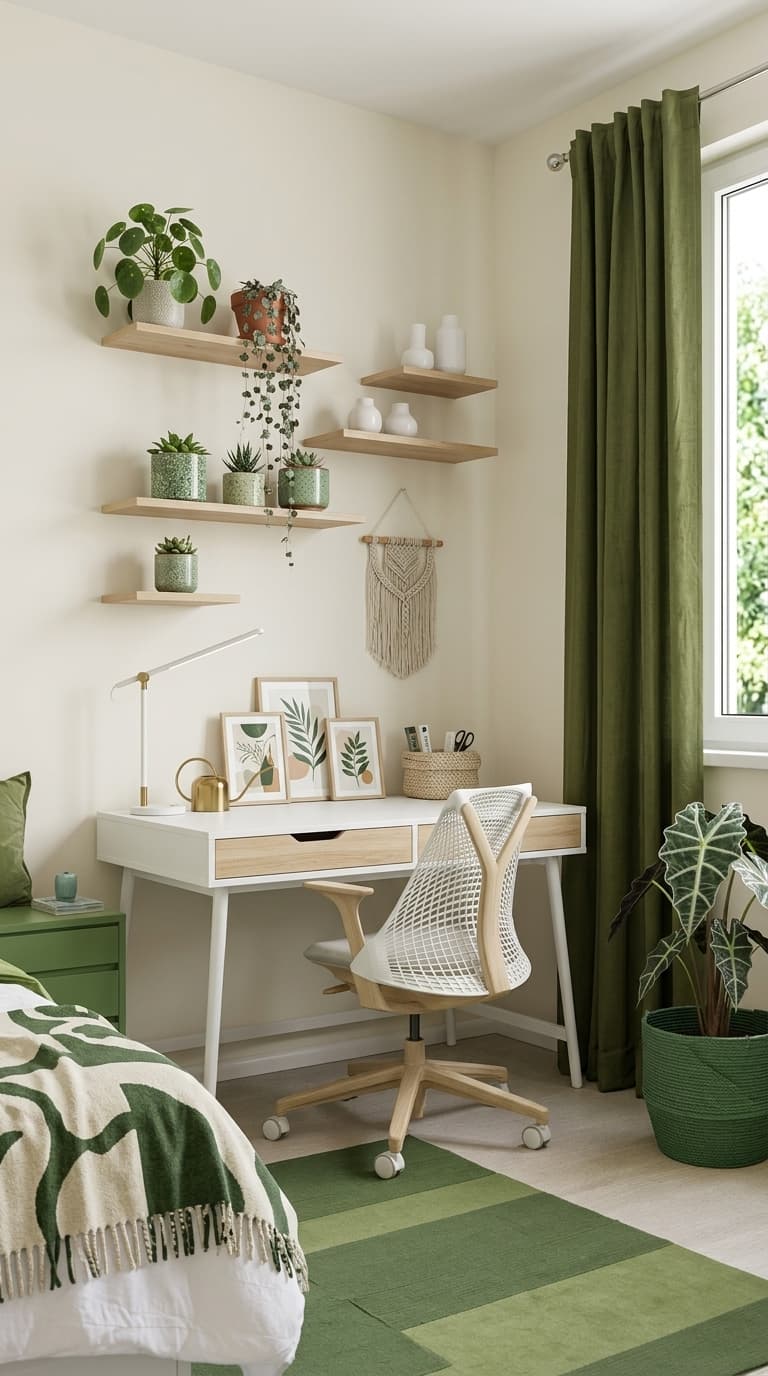
Floating shelves offer a versatile and stylish solution for displaying decor, organizing essentials, and adding visual interest to any room. In this serene bedroom corner, floating shelves are used to their full potential, showcasing a curated collection of greenery, minimalist vases, and textural art. The light wood tone of the shelves complements the natural elements, creating a cohesive and calming aesthetic. This approach not only maximizes vertical space but also brings life and personality into the area, transforming a blank.
The key to successful floating shelf styling lies in balance, proportion, and thoughtful curation. Notice how the shelves in this image are arranged at varying heights, preventing a monotonous look and drawing the eye upwards. The mix of plant sizes and types, from trailing vines to compact succulents, adds dynamic texture and color. Interspersed with these natural elements are simple, elegant ceramic vases, providing a clean contrast and a touch of sophistication.
1. Choosing the Right Floating Shelves
The foundation of any well-styled shelf display is the shelf itself. In this image, light-colored wooden floating shelves are used, which offer a warm, natural aesthetic that pairs beautifully with the surrounding decor. When selecting shelves for your own space, consider the overall style of your room. For a modern look, sleek metal or minimalist white shelves might be ideal. If you're aiming for a rustic or farmhouse feel, reclaimed wood or darker stained shelves could be a better fit.
Beyond material and size, consider the installation method. True floating shelves conceal the mounting hardware, creating a clean, seamless look. This is particularly important when the shelves are intended as a primary decorative element, as seen in the image where they blend effortlessly with the wall. If you're opting for shelves with visible brackets, ensure the brackets complement your decor style. For instance, black industrial brackets can enhance a modern or loft-style space, while ornate wrought iron brackets might suit.
2. The Power of Plants on Shelves
Plants are a fantastic way to inject life, color, and texture into your decor, and floating shelves provide the perfect elevated stage for them. The image showcases a variety of potted plants, from the lush Pilea on the top shelf to the trailing String of Hearts and various succulents below. When selecting plants for shelves, consider their light requirements and growth habits. Plants that thrive in indirect light, like many of those pictured, are often ideal for shelves that aren't.
When arranging plants on shelves, think about balance and visual weight. Place larger, fuller plants towards the back or center to create a stable anchor, and use smaller plants or trailing varieties to fill in gaps or spill over the edges. Avoid overcrowding; each plant needs a little breathing room to look its best and to prevent potential issues like poor air circulation or disease spread. Consider the watering needs of your plants and how you'll manage any potential drips.
3. Incorporating Decorative Objects
Beyond plants, decorative objects are essential for adding personality and completing the look of your floating shelves. The image demonstrates a thoughtful mix of items, including minimalist white vases and a macrame wall hanging. These objects serve to break up the greenery and add different textures and forms. When choosing decorative items, aim for pieces that resonate with your personal style and the overall theme of the room.
The placement of decorative objects is just as important as their selection. Think about negative space – the empty areas around your objects – as this allows each piece to stand out and prevents the shelves from looking cluttered. In the image, the simple white vases are strategically placed to complement the plants without competing for attention. The macrame wall hanging adds a textural element and a touch of bohemian charm, demonstrating how art can be integrated onto shelves or.
4. Styling with Artwork and Prints
Artwork and prints are powerful tools for adding color, theme, and personality to your shelf displays. The desk area in the image features a collection of framed botanical prints, which tie in beautifully with the plant theme and add a sophisticated touch. When selecting artwork for shelves, consider the scale relative to the shelf and other objects. A single large piece can make a statement, while a grouping of smaller prints can create a gallery-like effect.
To create a cohesive look with artwork, consider a unifying theme or color scheme. Botanical prints, abstract art with muted tones, or even personal photographs can all work, provided they harmonize with the surrounding decor. Don't be afraid to mix media; combine framed prints with smaller decorative objects or even small plants placed within the arrangement. When arranging multiple pieces, vary their heights and orientations to create visual interest.
5. Balancing Functionality and Aesthetics
Floating shelves aren't just for display; they can also serve practical storage purposes. The desk in the image has drawers for hidden storage, but the shelves themselves are styled to be both beautiful and functional. For instance, a stylish watering can and a basket for pens and scissors are placed on the desk, hinting at the workspace function. On the shelves, while primarily decorative, the inclusion of vases and plants can also contribute to a sense of calm and well-being.
Achieving a balance between aesthetics and functionality means making conscious choices about what you display and how you arrange it. Avoid clutter by regularly decluttering your shelves and keeping only items that serve a purpose or bring you joy. If your shelves are in a workspace, like the desk area shown, consider incorporating organizers that are both practical and visually appealing, such as woven baskets or minimalist trays.
6. Avoiding Common Styling Mistakes
One of the most common mistakes when styling floating shelves is overcrowding. Too many items crammed onto a shelf create visual chaos and detract from the beauty of individual pieces. Resist the urge to fill every inch of space. Instead, embrace negative space – the empty areas around your objects – which allows each item to breathe and be appreciated. Another mistake is a lack of variation; using only items of similar size, shape, or color can lead to a monotonous display.
Another pitfall is neglecting the overall room context. Your shelves should complement, not compete with, the rest of your decor. Ensure the style, color palette, and theme of your shelf arrangement align with the room's existing aesthetic. For example, placing overly rustic items on sleek, modern shelves might look out of place. Also, consider the practicalities of maintenance. If you're displaying plants, ensure they are placed where they can receive adequate light and where spills can be easily managed.
- Assess the wall space and shelf size needed for your chosen location.
- Select shelves that match your room's overall decor style.
- Choose a variety of plants considering light needs and growth habits.
- Curate decorative objects that reflect your personal style and add texture.
- Arrange items with varying heights and consider negative space for balance.
- Regularly declutter and dust your shelves to maintain a tidy appearance.