Elevate Your Kitchen Countertops: Styling with Decorative and Functional Items
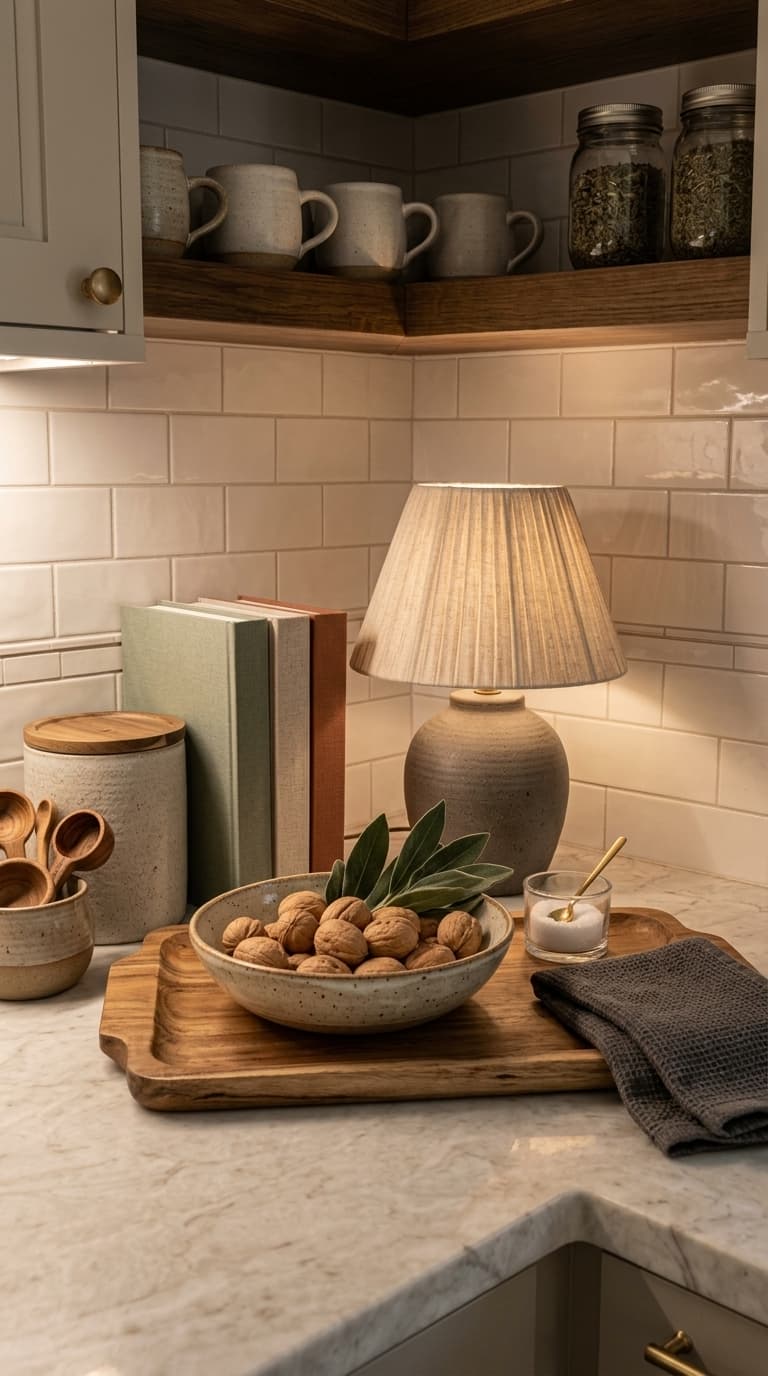
Kitchen countertops often become the central hub of activity, a place for meal prep, casual dining, and sometimes, just a landing zone for mail and keys. However, they can also be a prime opportunity to inject personality and style into your kitchen. Instead of leaving them bare or cluttered, consider a thoughtful arrangement of decorative and functional items that reflect your aesthetic while serving a purpose.
Achieving a well-styled kitchen countertop involves a balance between form and function. It's about choosing items that are not only beautiful to look at but also practical for everyday use. Think about the items you reach for most often and how they can be incorporated into your decor. This might include attractive canisters for storing dry goods, stylish utensil holders, or even a small decorative lamp to add warmth and ambiance.
1. The Art of Layering: Combining Form and Function
Layering decorative and functional items on your kitchen countertops creates visual interest and depth, transforming a simple surface into a curated display. Begin by establishing a foundation, such as a rustic wooden tray or a woven placemat, to visually define a specific zone. Upon this base, artfully arrange your chosen elements. A ceramic lamp, for instance, can provide soft, ambient lighting and act as a sculptural focal point, while a carefully stacked collection of attractive books introduces color and a sense.
When layering, maintaining a sense of intentional order is paramount to prevent the countertop from appearing cluttered or overwhelming. Select items that harmonize with each other, considering their color palette and material composition. For example, the warm, natural tones of wooden utensils and a complementary wooden tray can beautifully echo the earthy texture of a ceramic lamp and the muted hues found in a stack of books.
2. Strategic Placement: Creating Visual Balance
The strategic placement of items on your countertop profoundly influences the overall visual balance and the perceived flow of your kitchen space. Designating a corner as the site for a styled vignette, much like the arrangement featuring a lamp and a bowl, can effectively draw the eye and transform a potentially underutilized area into a decorative focal point. Grouping related items together, rather than scattering them haphazardly, fosters a more cohesive and less chaotic appearance.
When arranging decorative elements, adhere to the principle of visual weight to achieve a harmonious composition. Larger or darker items naturally anchor a space, providing a sense of stability, while smaller or lighter objects can be strategically used to introduce accents and points of interest. The lamp, with its substantial base and shade, often serves as a primary focal point. The bowl of walnuts and a ceramic canister provide mid-level visual weight, grounding the arrangement, while smaller details like a salt.
3. The Power of Texture and Material
Incorporating a diverse range of textures and materials is fundamental to infusing your kitchen decor with depth, warmth, and tactile appeal. The visual example showcases a rich interplay: the smooth, cool surface of the marble countertop contrasts with the rough, organic texture of the ceramic lamp and storage canister. The natural grain of the wooden tray and utensils adds a layer of organic warmth, while the soft, inviting pleats of the lamp shade introduce a gentle softness.
The thoughtful combination of different materials also plays a significant role in shaping the overall aesthetic of your kitchen. The earthy, matte finish of ceramic pieces can evoke a sense of groundedness and artisanal craftsmanship, while the polished sheen of natural wood brings an inherent warmth and organic beauty. The subtle variations in the glaze of ceramic mugs displayed on open shelving add unique character and visual interest.
4. Functional Decor: Items That Serve a Purpose
The most successful and enduring countertop styling seamlessly integrates items that are not only aesthetically pleasing but also highly practical for everyday use. The ceramic canister, complete with a fitted wooden lid, exemplifies this principle perfectly, offering ample storage for dry goods while simultaneously serving as an attractive decorative element. Similarly, a collection of well-crafted wooden spoons and cooking utensils housed in a stylish holder are essential for culinary tasks but can also be displayed attractively as part of the decor.
Consider how everyday kitchen items can be elevated to the status of decorative features through thoughtful selection. Instead of opting for utilitarian plastic containers, choose attractive alternatives made from ceramic, glass, or brushed metal. Select utensil holders that possess inherent aesthetic appeal, perhaps crafted from stoneware, natural wood, or sleek metal. A small, stylish lamp can serve a dual purpose: providing essential task lighting for late-night snacks or adding a cozy, ambient glow during meal preparation.
5. Open Shelving: Displaying Your Best
Open shelving, as elegantly demonstrated above the countertop in the image, provides an exceptional opportunity to extend your styling efforts beyond the immediate counter surface and integrate them into the vertical space of your kitchen. The warm wooden shelves are thoughtfully utilized to showcase a curated collection of ceramic mugs and clear glass jars filled with vibrant herbs. This arrangement not only ensures these frequently used items remain conveniently within easy reach but also effectively transforms them into attractive decorative features.
When incorporating open shelving into your kitchen design, maintaining a sense of visual order is crucial to prevent the space from appearing cluttered or disorganized. A practical approach involves grouping similar items together and consciously varying the heights and shapes of the objects you display to create dynamic visual interest. For instance, placing taller jars or canisters behind shorter mugs can effectively create a sense of depth and dimension.
6. Avoiding Clutter and Maintaining Flow
The most pervasive challenge encountered when styling kitchen countertops is the inherent tendency towards accumulating clutter. It is remarkably easy for a few carefully chosen decorative items to gradually multiply into an overwhelming and disorganized collection. To effectively circumvent this issue, it is essential to regularly assess the items present on your countertops and critically evaluate whether each item is truly necessary or if it could be more appropriately stored away.
A highly effective strategy for maintaining perpetually clutter-free countertops involves establishing specific zones for different purposes. For example, one area might be designated for food preparation, another for a decorative vignette, and perhaps a small, defined space for incoming mail or keys. This intentional zoning helps to contain items within their designated areas and prevents them from spreading haphazardly across the entire surface. Implementing a routine of regular decluttering, perhaps on a weekly basis, can yield significant improvements in both appearance.
- Identify 2-3 functional items you use daily that can be displayed attractively.
- Select a decorative tray or placemat to anchor a countertop vignette.
- Choose items with varying heights and textures to create visual interest.
- Ensure your styled items do not obstruct essential workspace or traffic flow.
- Regularly declutter countertops, putting away items that are not in use.
- Consider adding a small lamp to provide ambient or task lighting.