Elevate Your Kitchen Countertops: Styling with Decorative Trays
Kitchen countertops often become the command center for daily life, accumulating everything from mail and keys to appliances and cooking tools. While functionality is key, this high-traffic area also presents a prime opportunity to inject personality and style into your kitchen. Instead of letting clutter take over, consider using decorative trays as a strategic design element. A well-chosen tray can corral disparate items, create a focal point, and elevate the overall aesthetic of your kitchen, transforming a utilitarian surface into a curated.
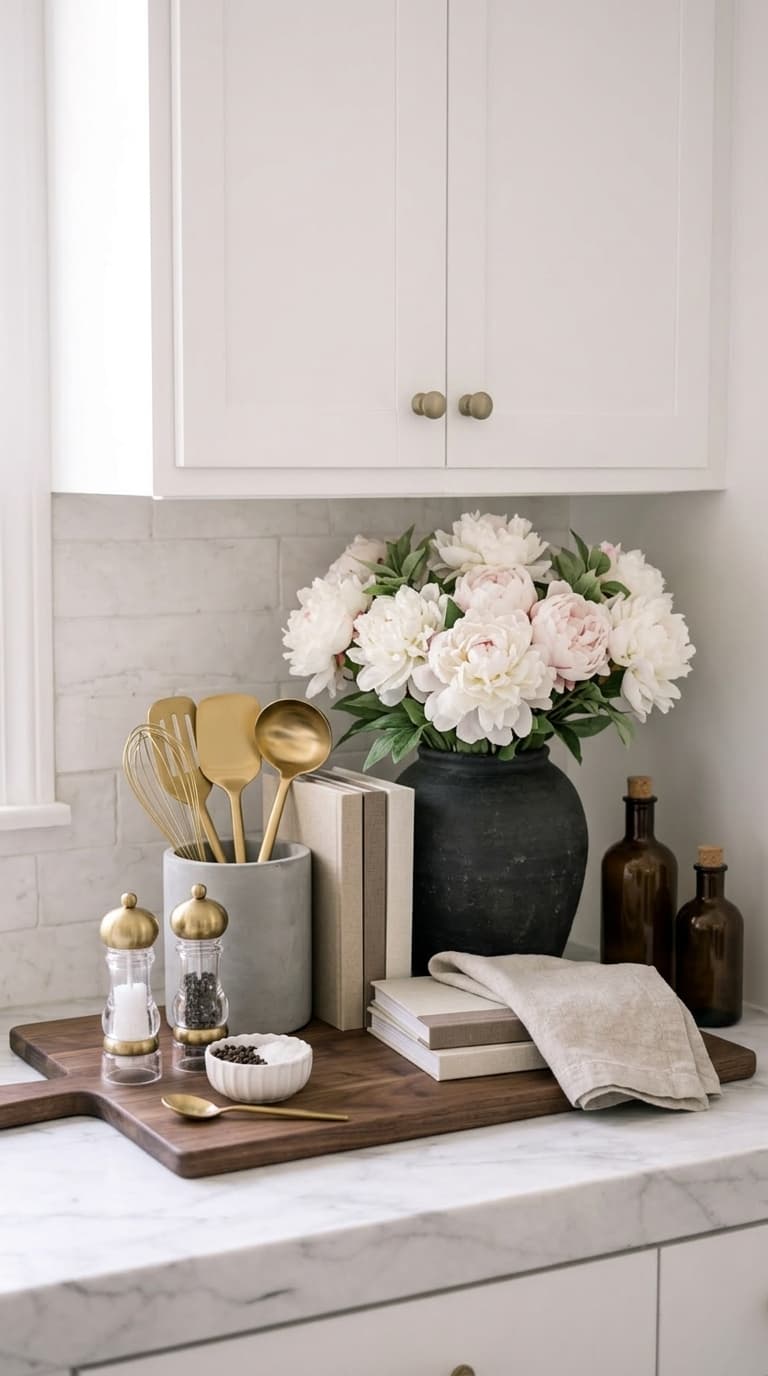
The image showcases a beautiful example of how a simple wooden cutting board, acting as a tray, can organize and beautify a kitchen counter. It groups essential items like salt and pepper grinders, a small dish of peppercorns, and a spoon, alongside decorative elements such as gold utensils in a concrete holder, a stack of neutral-toned books, a folded linen napkin, a dramatic vase of peonies, and a pair of amber glass bottles.
1. Choosing the Right Tray for Your Kitchen
The foundation of a well-styled countertop vignette is the tray itself. Consider the material, size, and shape that best complements your kitchen's existing decor. For a warm, natural feel, a wooden tray, like the cutting board shown, offers a rustic yet sophisticated base. If your kitchen leans more modern or industrial, a metal tray in a brushed nickel, matte black, or even a brass finish could be a striking choice.
Beyond material and size, the shape of your tray can also influence the overall composition. Rectangular trays are classic and versatile, fitting well along backsplashes or in corners. Round trays can soften a more angular kitchen design and work well as a central accent piece. Even trays with unique cutouts or handles can add an extra layer of visual interest. When selecting a tray, think about its intended purpose.
2. Curating Your Countertop Collection
Once you have your tray, it's time to select the items that will populate it. The key is to create a balanced composition that is both functional and aesthetically pleasing. Start by grouping items that share a common theme or purpose. In the example image, practical kitchen tools like a whisk, spatula, and ladle are gathered in a concrete holder, adding a touch of utilitarian chic. Consider including elements that add height, such as a vase with flowers or greenery, as seen.
Think about incorporating elements that tell a story or add a personal touch. A stack of well-chosen books, perhaps cookbooks or decorative volumes with appealing spines, can add a sophisticated layer. Small bowls can hold essentials like salt, pepper, or even decorative stones. The amber glass bottles in the image add a vintage charm and a pop of color. When arranging items, vary their heights and depths to create a dynamic display.
3. The Power of Color and Texture
Color and texture play a significant role in making your countertop display visually appealing. The image demonstrates a sophisticated palette of neutrals – whites, grays, blacks, and warm wood tones – accented by the soft pinks and whites of the peonies and the warm amber of the glass bottles. This restrained color scheme creates a sense of calm and elegance. When selecting items for your tray, consider how their colors will interact.
Texture adds depth and interest to your display. The smooth marble countertop contrasts beautifully with the rough texture of the black vase, the matte finish of the concrete utensil holder, and the natural grain of the wooden tray. The linen napkin introduces a soft, woven texture, while the metallic sheen of the gold utensils adds a touch of glamour. When curating your items, consciously mix different textures.
4. Balancing Form and Function
While aesthetics are important, a styled countertop display should also be practical. The items chosen should ideally serve a purpose, even if it's primarily decorative. The salt and pepper grinders, the small bowl of peppercorns, and the utensils are all functional items that are frequently used in the kitchen. By placing them on a tray, they are kept organized and readily accessible, preventing them from cluttering the main workspace.
Consider the workflow of your kitchen when arranging items on the tray. If the tray is placed near your cooking area, it makes sense to group cooking tools and seasonings. If it's closer to your coffee maker, perhaps a tray with mugs, sugar, and a small creamer would be more appropriate. The key is to make frequently used items easy to grab without having to search through drawers or cabinets.
5. Avoiding Common Styling Mistakes
One of the most common mistakes is overcrowding the tray. A cluttered tray defeats the purpose of creating an organized and aesthetically pleasing display. Ensure there is enough negative space between items to allow each one to stand out. Another mistake is failing to consider the scale of the items in relation to the tray and the countertop. Oversized items can make a tray look cramped, while too many small items can look insignificant.
Another pitfall is neglecting the practical aspect of styling. While decorative items are important, ensure that the functional items on your tray are easily accessible and that the tray itself doesn't impede your ability to use the countertop. For example, placing a large vase of flowers directly in front of your main prep area might be visually appealing but impractical. Also, be mindful of the materials you choose.
6. Maintaining Your Styled Countertop
Keeping your styled countertop looking its best requires a little regular maintenance. Dusting the tray and its contents should be part of your routine cleaning schedule. For items like flowers, ensure they are fresh or replaced as needed. If you use your tray to hold frequently used items, wipe it down periodically to remove any spills or smudges. The goal is to keep the display looking fresh and inviting, not neglected.
Consider the longevity of your display. If you're using fresh flowers, plan for their replacement. If you're using faux flowers, ensure they remain dust-free and look realistic. For books, keep their spines clean and upright. If you have a tray with a natural wood finish, you might need to occasionally reapply a food-safe oil to maintain its luster and protect it from moisture. By dedicating a few minutes each week to tidying and refreshing your styled tray, you can ensure it remains.
- Select a tray material and size that complements your kitchen's style and available counter space.
- Group items on the tray with a common theme or purpose, mixing heights and textures.
- Incorporate a mix of functional and decorative items for a balanced display.
- Ensure essential items are easily accessible and the arrangement doesn't hinder workflow.
- Avoid overcrowding the tray; allow for negative space between objects.
- Schedule regular dusting and tidying to maintain the appearance of your styled countertop.