Elevate Your Kitchen Countertops: Styling with Trays for Function and Flair
Kitchen countertops often become the central hub of activity, a place for meal prep, casual dining, and displaying everyday essentials. While functionality is key, the visual appeal of this high-traffic area significantly impacts the overall feel of your kitchen. Styling your countertops effectively can transform them from cluttered surfaces into curated displays that are both beautiful and practical. Using trays is a simple yet impactful strategy to achieve this.
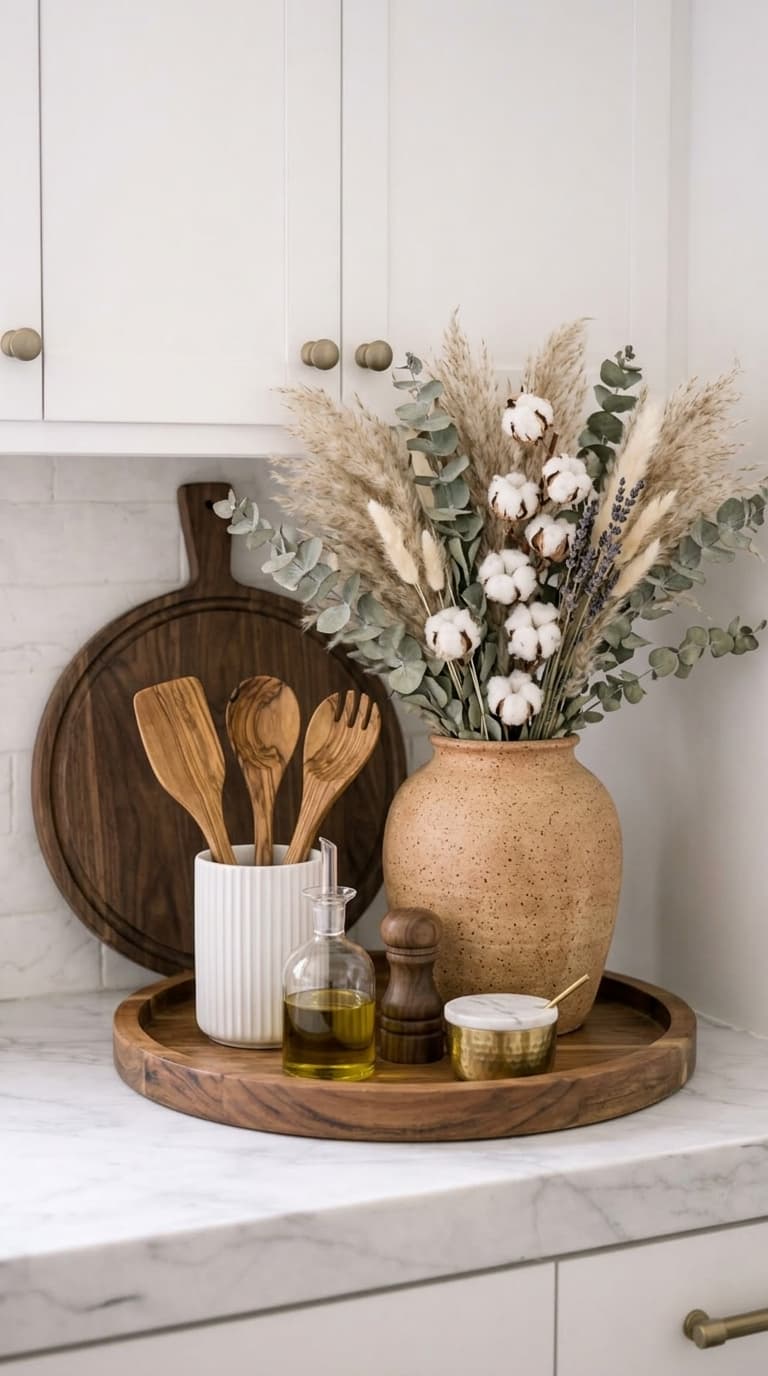
The image showcases a beautiful example of how a wooden tray can be used to organize and enhance a kitchen countertop. It groups together decorative elements like a textured vase filled with dried botanicals, a glass dispenser for olive oil, a small brass salt cellar, and a wooden salt and pepper grinder. Behind these items, a large, round wooden cutting board stands as a backdrop, adding height and a natural material element.
1. Choosing the Right Tray for Your Kitchen
The foundation of stylish countertop organization lies in selecting the appropriate tray. Consider the material, shape, and size that best complements your kitchen's existing decor and your specific needs. Wooden trays, like the one pictured, offer warmth and a natural aesthetic that pairs well with various styles, from modern farmhouse to minimalist. Metal trays, such as brass or brushed nickel, can add a touch of elegance or industrial chic.
Beyond aesthetics, think about the tray's functionality. If you plan to use it for serving, ensure it has sturdy handles and a non-slip surface. For decorative displays, the depth of the tray matters; a shallow tray is ideal for showcasing smaller items like spice jars or decorative objects, while a deeper tray can hold taller elements like vases or utensil crocks. The image shows a tray that is substantial enough to hold a variety of items without appearing crowded, suggesting that.
2. Curating Your Tray's Contents: Function Meets Form
Once you have your tray, the next step is to thoughtfully select the items you'll place on it. The goal is to combine practical kitchen essentials with decorative elements. In the example, the tray holds a functional olive oil dispenser, a salt cellar with a spoon, and a pepper grinder, all items used during cooking and dining. These are artfully arranged alongside a beautiful vase of dried botanicals, which adds texture, height, and a natural, calming element.
Avoid overcrowding the tray, as this defeats the purpose of organized styling. Aim for a balanced composition with varying heights and textures. The large cutting board in the background acts as a visual anchor and adds another layer of interest without taking up prime real estate on the tray itself. Consider the 'rule of three' for decorative items, grouping them in odd numbers for a more pleasing visual arrangement.
3. Strategic Placement for Maximum Impact
The placement of your styled tray is crucial for both aesthetics and usability. Consider the layout of your kitchen and where a decorative vignette would be most impactful. A common and effective location is on the countertop, perhaps on an island or a section of counter space near the stove or sink. The image shows the tray positioned on a marble countertop, creating a focal point.
Think about the visual flow of your kitchen. A tray can bridge the gap between different elements, like connecting cabinets to appliances or adding a decorative touch to an empty corner. If you have open shelving, a tray can also be used to style those surfaces, creating a cohesive look throughout your kitchen. Consider the height of the items on the tray in relation to your cabinets and backsplash.
4. Incorporating Natural Elements for Warmth
The inclusion of natural elements, such as the dried botanicals in the featured image, can significantly enhance the warmth and inviting feel of your kitchen decor. Pampas grass, eucalyptus, cotton stems, and dried lavender, as seen in the arrangement, bring texture, subtle color, and a sense of organic beauty. These elements can soften the hard surfaces often found in kitchens, like granite or stainless steel, and add a touch of the outdoors.
Beyond dried flowers, consider other natural materials to incorporate into your tray styling. Wooden utensils, as displayed in a ribbed holder, echo the natural tones of the tray and cutting board, creating a harmonious look. Small ceramic bowls, woven baskets, or even a simple bowl of fresh fruit can also introduce natural textures and colors. The key is to balance these elements with other materials in your kitchen, such as marble, tile, or metal, to create a visually interesting and well-rounded.
5. Balancing Practicality and Aesthetics
Achieving a balance between practicality and aesthetics is the ultimate goal when styling kitchen countertops with trays. The items on your tray should serve a purpose, whether it's for daily use or occasional entertaining. The olive oil dispenser and salt cellar are prime examples of functional items that are also visually appealing. When selecting items, ask yourself if they are used regularly and if they can be displayed attractively.
Consider the maintenance required for both the tray and its contents. A wooden tray might need occasional oiling, while dried botanicals are generally low-maintenance but can shed. If you opt for fresh flowers, be prepared for regular water changes and trimming. The salt cellar with a spoon, while charming, should be kept clean and dry to prevent clumping. The beauty of a styled tray is that it can be easily updated.
6. Avoiding Common Styling Pitfalls
One of the most common mistakes when styling kitchen countertops is over-accessorizing. A tray is meant to corral and organize, not to become a dumping ground for every small item you own. If your tray looks cluttered, it's a sign that you have too many items or the wrong size tray. Another pitfall is neglecting to consider the scale and proportion of items. A tiny vase on a large tray can look lost, just as a massive object on a small.
Another mistake is failing to consider the overall kitchen aesthetic. While a decorative tray can add personality, it should harmonize with your existing decor. A very modern, sleek tray might clash with a rustic farmhouse kitchen, and vice versa. Also, ensure that your styled items don't impede essential kitchen functions. For instance, a tray filled with decorative objects should not block access to frequently used drawers or appliances.
- Select a tray material (wood, metal, woven) that complements your kitchen's style.
- Measure your countertop space to choose a tray size that fits without overcrowding.
- Group 3-5 practical and decorative items on the tray, varying heights and textures.
- Place the tray in a functional location, such as near the stove or on an island, avoiding direct heat or water sources.
- Incorporate natural elements like dried botanicals or wooden accents for warmth.
- Regularly declutter and refresh the items on your tray to maintain a clean and intentional look.