Elevate Your Shelves: Styling Vases and Decorative Boxes for a Cohesive Look
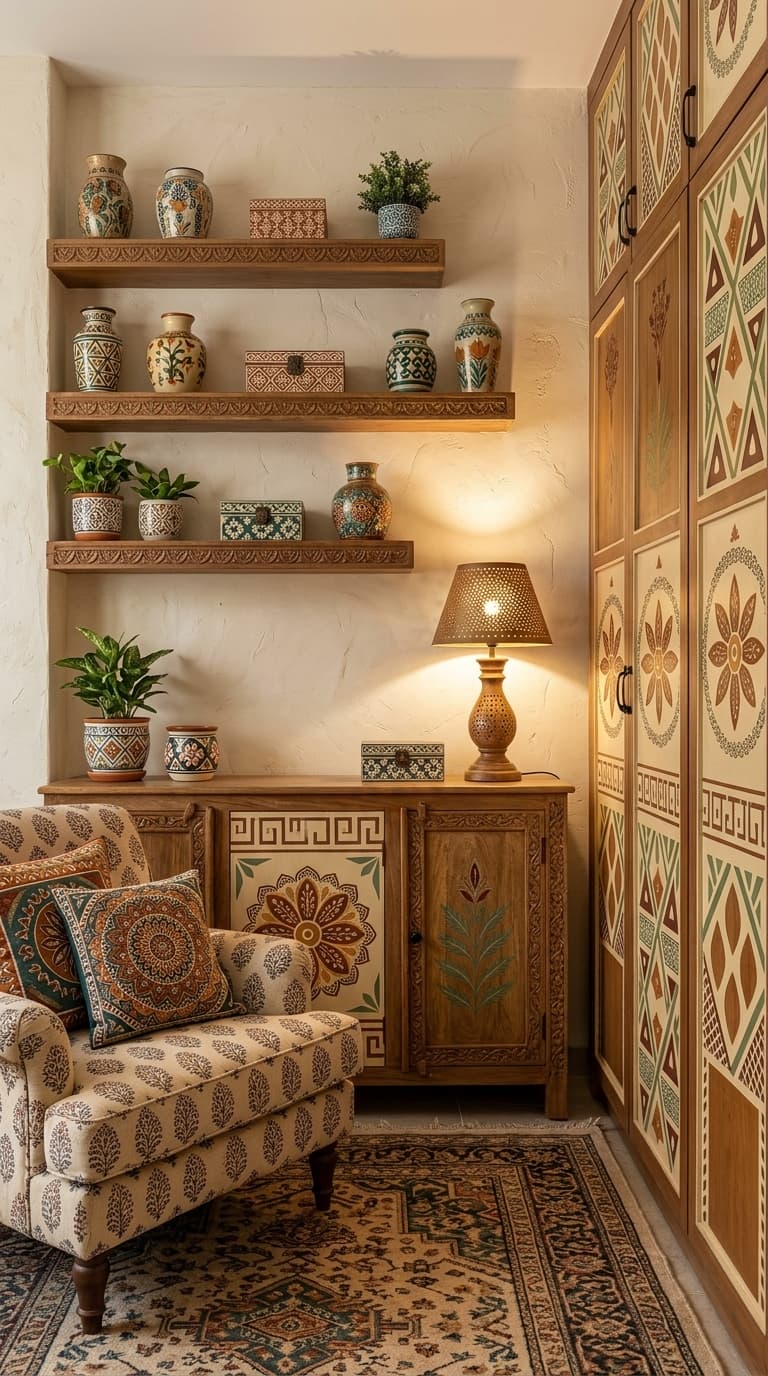
Styling shelves can transform a blank wall into a focal point, adding personality and visual interest to your living space. The key to successful shelf styling lies in thoughtful arrangement, balancing different shapes, sizes, and textures. In this particular vignette, we see a beautiful example of how to use decorative vases and boxes to create a layered and inviting display. The wooden shelves themselves feature a subtle carved edge, adding a touch of craftsmanship that complements the items placed upon them.
Achieving a well-styled shelf doesn't require a professional designer; it's about understanding a few core principles and applying them to your own collection. The image showcases a curated selection of ceramic vases in various patterns and colors, alongside intricately designed decorative boxes. These elements work together to create a cohesive aesthetic, hinting at a global or bohemian influence. When you're ready to tackle your own shelves, consider the overall style of your room and choose decorative items that echo that theme.
1. Selecting the Right Vases for Your Shelves
The vases displayed on these shelves are a crucial element in their decorative appeal. They vary in size, shape, and pattern, which prevents the display from becoming monotonous. Some are taller and more slender, while others are shorter and wider, creating a dynamic silhouette. The patterns range from intricate geometric designs to floral motifs, all rendered in earthy tones that harmonize with the wooden shelves and the surrounding decor.
Beyond aesthetics, think about the purpose of your vases. Are they purely decorative, or do you intend to place flowers in them? If you plan to use fresh flowers, ensure the vases are watertight and consider their opening size to accommodate different stem arrangements. For purely decorative purposes, as seen here, the focus can be entirely on the form and pattern of the vase. When arranging them, try placing taller vases towards the back or sides of the shelf to create.
2. Incorporating Decorative Boxes for Storage and Style
Decorative boxes serve a dual purpose: they add visual texture and pattern to shelves while also offering discreet storage for small items. The boxes in the image are varied in their designs, featuring intricate patterns that echo the motifs found on the vases and other decor elements in the room. Some have lids, suggesting they can conceal clutter like remotes, keys, or small trinkets, keeping the shelves looking tidy.
When choosing decorative boxes for your shelves, consider their size relative to the other items. A mix of box sizes can add visual interest, but ensure they don't overwhelm the other decorative pieces. Think about the materials and finishes; wood, metal, or fabric-covered boxes can all work, depending on your room's style. If you're using them for storage, ensure they are large enough to hold what you need to conceal.
3. Balancing Heights and Proportions
The visual appeal of these shelves is significantly enhanced by the careful balance of heights and proportions. Notice how the taller vases are strategically placed to create vertical interest, while the shorter vases and boxes fill in the lower areas, grounding the arrangement. This variation prevents the shelves from looking flat or one-dimensional. When styling your own shelves, imagine a visual triangle or a gentle curve as you move across the shelf.
Achieving good proportions also means considering the relationship between the objects and the shelf itself. The items here are not so large that they overwhelm the shelves, nor are they so small that they get lost. They occupy a good portion of the shelf space without feeling cramped. Before you start placing items, measure your shelves and consider the general size of the objects you have.
4. Creating Visual Flow and Grouping
The arrangement on these shelves demonstrates the power of grouping items to create visual flow. Instead of scattering individual pieces randomly, the items are clustered in thoughtful groupings. For instance, you might see two vases together, or a vase paired with a decorative box. This creates mini-vignettes on each shelf, guiding the viewer's eye from one cluster to the next. The repetition of similar patterns and colors across different items also helps to tie the groupings together, creating a sense of.
To replicate this visual flow, try arranging your items in odd-numbered groups, such as threes or fives. This is a classic design principle that tends to be more visually appealing than even-numbered groups. Consider the 'rule of three' where you place three objects of varying heights and textures together. You can also create a sense of movement by angling items slightly or by placing them at different depths on the shelf.
5. Incorporating Plants for Life and Color
The inclusion of potted plants on these shelves injects a much-needed element of life and natural color into the decor. Even small, low-maintenance plants can make a significant difference, softening the hard lines of the shelves and decorative objects. The plants here are in patterned pots that complement the overall aesthetic, further integrating them into the design. Placing plants at different levels, as seen with the plants on the top shelf and the larger plant on the lower shelf, adds depth.
When adding plants to your shelves, consider their light requirements and your ability to care for them. Faux plants are a great alternative if you don't have adequate light or a green thumb. Choose pots that either match your existing decor or provide a pleasing contrast. For a cohesive look, try to stick to a similar style or color palette for your plant pots. Think about the scale of the plants relative to the shelf space; a plant that's too large.
6. Avoiding Clutter and Maintaining Balance
A common pitfall when styling shelves is the tendency to overfill them, leading to a cluttered and chaotic appearance. The shelves in the image strike a beautiful balance by leaving ample negative space between items. This breathing room allows each object to be appreciated individually and prevents the shelves from feeling overwhelmed. The arrangement is curated, meaning not every available inch is filled. This thoughtful restraint is what elevates the display from a mere collection of objects to a well-designed decorative.
Maintaining balance is crucial for a visually pleasing shelf display. This involves distributing visual weight evenly across the shelf. For example, if you have a large, heavy-looking item on one side, balance it with a grouping of smaller items or another substantial piece on the opposite side. The use of varying heights and shapes also contributes to balance. The overall impression should be one of harmony, not of items leaning precariously or feeling crammed together.
- Assess your shelf space and the items you have available for styling.
- Group similar items like vases or boxes together to create visual anchors.
- Vary the heights and shapes of your decorative objects to create interest.
- Incorporate plants or greenery to add life and color.
- Ensure there is adequate negative space between items to avoid clutter.
- Step back and evaluate the overall balance and flow of your shelf arrangement.