Bring Your Bedroom to Life: Styling with Plants and Artwork
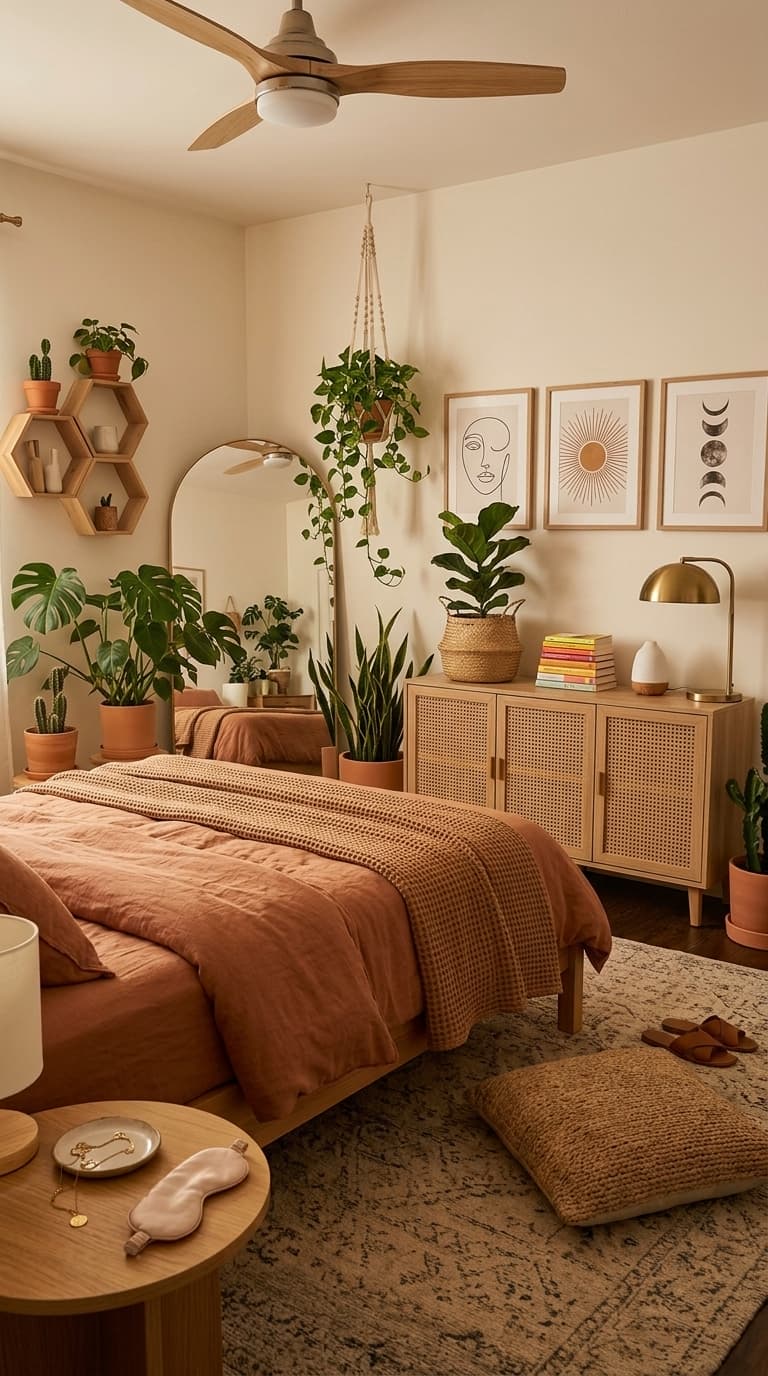
Creating a bedroom sanctuary that feels both personal and stylish is a common decorating goal. This room demonstrates how to achieve a calm, inviting atmosphere by thoughtfully incorporating natural elements and artistic touches. The strategic placement of plants, from floor-standing varieties to hanging specimens, injects life and color into the space, while the curated artwork adds personality and visual interest. The overall effect is one of serene comfort, proving that a few well-chosen decor pieces can transform a room into a peaceful retreat.
The key to a successful bedroom design lies in balancing aesthetics with functionality, ensuring the space promotes relaxation and personal expression. In this bedroom, the warm, earthy tones of the bedding and rug create a grounding foundation, while the abundance of greenery introduces a refreshing, organic feel. The minimalist art prints offer a touch of sophistication without overwhelming the senses. By understanding the principles behind this arrangement, you can learn to select pieces that resonate with your style and create a cohesive look.
1. Selecting the Right Plants for Your Bedroom
Choosing plants for your bedroom involves considering both their aesthetic appeal and their environmental needs. The image showcases a variety of plants, including a large Monstera deliciosa, snake plants, and smaller succulents, each contributing to the room's lush feel. When selecting plants, assess the natural light available in your bedroom. For areas with bright, indirect light, plants like the Monstera or Fiddle Leaf Fig thrive. If your room is dimmer, consider low-light tolerant options such as ZZ plants or Pothos.
Beyond light, consider the maintenance requirements of each plant. If you're new to plant care or have a busy schedule, choose hardy, low-maintenance varieties. Snake plants and ZZ plants are exceptionally forgiving and can tolerate infrequent watering. For a more dramatic effect, consider trailing plants like Pothos or String of Pearls, which can be placed on high shelves or in hanging planters to cascade down, adding vertical interest.
2. Arranging Plants for Maximum Impact
The placement of plants is crucial for creating a balanced and visually appealing bedroom. In this image, plants are used at various levels: a large Monstera sits on the floor near the bed, smaller plants occupy hexagonal shelves on the wall, and a hanging plant dangles from the ceiling. This multi-level approach adds depth and dimension to the room. Consider placing larger plants in corners or beside furniture to fill empty spaces and anchor the room.
When arranging your plants, think about how they interact with other decor elements. The hexagonal shelves provide a unique way to display smaller plants and decorative items, breaking up the wall space and adding architectural interest. Ensure that plants are not blocking pathways or essential furniture access. For a cohesive look, try to maintain a consistent color palette for your pots, or mix and match materials like terracotta, ceramic, and woven textures.
3. Choosing Artwork That Complements Your Style
Artwork can significantly influence the mood and style of a bedroom. The triptych of minimalist line art and celestial-themed prints above the cane cabinet in the image offers a sophisticated and calming focal point. When selecting art, consider the overall color scheme and style of your room. For a serene bedroom, opt for pieces with soft colors, abstract designs, or nature-inspired imagery. The line art in the photo adds a modern, artistic touch, while the sun and moon phases provide a subtle nod.
The frames and matting of your artwork also play a role in the final look. The simple, light-colored frames in the image keep the focus on the art itself and complement the room's neutral palette. Consider the material and finish of the frames – wood, metal, or painted finishes can all contribute to the room's aesthetic. If you have a lot of natural wood tones in your room, as seen with the furniture and ceiling fan, opting for wooden frames can create a.
4. Creating a Cohesive Gallery Wall
A gallery wall can be a fantastic way to express your personality and fill a larger wall space. The arrangement above the cabinet in the image, featuring three framed prints, is a great example of a balanced and visually appealing gallery. When planning a gallery wall, start by selecting a theme or color palette to ensure cohesion. This could be based on subject matter, artistic style, or a consistent color scheme.
The spacing between the artworks in a gallery wall is as important as the pieces themselves. Aim for consistent spacing, typically 2-4 inches between frames, to create a unified look. Use a level when hanging to ensure all pieces are straight. If you're mixing different frame styles, try to unify them with a consistent matting color or by choosing frames that share a common element, like a specific wood tone or metal finish.
5. Integrating Plants and Artwork Seamlessly
The true magic happens when plants and artwork are integrated thoughtfully, creating a layered and dynamic display. In this bedroom, the combination of greenery and art enhances the overall ambiance. Consider placing a plant on a shelf next to a framed picture, or using a hanging plant to soften the visual weight of a large artwork. The hexagonal shelves are a perfect example of this, displaying both plants and what appear to be decorative objects, creating a curated vignette.
When integrating these elements, avoid placing plants directly in front of artwork, as this can obscure the art. Instead, position plants to the side, below, or above the artwork, or use them to frame a piece. The large mirror in the room also plays a role, reflecting the plants and artwork, thereby amplifying their presence and adding depth to the space. Consider the light source for both your plants and your artwork.
6. Avoiding Clutter and Maintaining Balance
While plants and artwork add character, it's essential to avoid overwhelming the space and creating clutter. The key is intentionality in placement and selection. In this bedroom, the decor feels curated rather than haphazard. The cane cabinet provides ample closed storage, keeping everyday items out of sight. When displaying plants, group them strategically rather than scattering them randomly. Similarly, with artwork, choose pieces that resonate with you and arrange them thoughtfully.
Balance is crucial in any room, and especially in a bedroom where tranquility is paramount. Ensure that the visual weight of your plants and artwork is distributed evenly throughout the room. If you have a large plant on one side, balance it with a substantial piece of artwork or a grouping of smaller items on the opposite side. The large arched mirror also contributes to the sense of balance by reflecting light and space.
- Assess your bedroom's natural light to choose plants that will thrive.
- Select artwork that aligns with your personal style and the room's color palette.
- Plan your gallery wall layout on the floor before hanging.
- Group plants at varying heights and locations for visual interest.
- Ensure consistent spacing between framed artwork for a polished look.
- Regularly declutter surfaces and rotate decorative items to maintain balance.