Beyond Books: Styling Your Bookshelf for Maximum Impact and Style
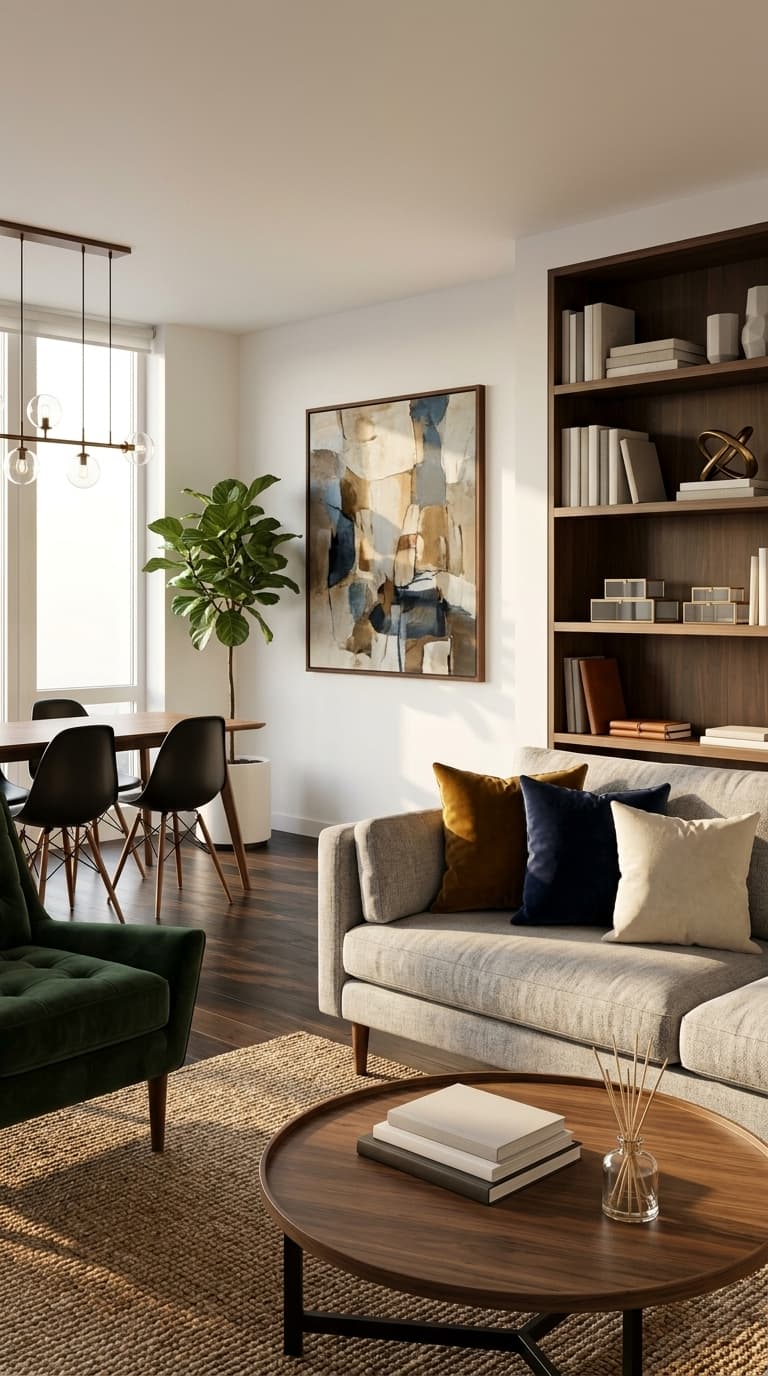
Bookshelves are often seen as purely functional spaces, designed to house our literary collections. However, they offer a prime opportunity to inject personality and style into any room. In this modern living space, the tall, dark wood bookshelf acts as a significant architectural element, anchoring the room and providing a backdrop for curated displays. Instead of simply filling shelves with books, consider them as vertical canvases.
Transforming your bookshelf into a visually appealing display requires thoughtful planning and a strategic approach to arrangement. It's about more than just stacking books; it's about creating vignettes that tell a story and reflect your interests. Think of each shelf as a mini-stage where you can arrange items to create balance and flow. The goal is to avoid a cluttered or monotonous look, instead opting for a dynamic composition that draws the eye and invites closer inspection.
1. Assessing Your Bookshelf Space and Contents
Before you begin styling, take a critical look at your bookshelf. What is its size and scale in relation to the room? Is it a built-in unit, a freestanding piece, or a modular system? Understanding these physical attributes will help you determine the best approach to styling. Consider the depth and height of the shelves, as this will influence the types of objects you can display.
The material and finish of your bookshelf also play a crucial role in its overall impact. In the image, the dark wood bookshelf provides a rich, grounding contrast to the lighter walls and furniture. If your bookshelf is a lighter wood, painted white, or made of metal, consider how its color and texture will interact with the surrounding decor. For example, a white bookshelf might feel more airy and modern, while a metal one could lean towards an industrial aesthetic.
2. The Art of Book Arrangement
Arranging books on a shelf is more than just placing them upright. Consider varying the orientation: stack some horizontally and place others vertically. This creates visual breaks and adds dimension. For a more cohesive look, you can group books by color, especially if you have a significant number of volumes with similar spines. Alternatively, arranging them by size can create a sense of order. Don't be afraid to mix and match; perhaps dedicate a few shelves entirely to books, while others.
When displaying books, consider the spine's condition and appearance. If you have a mix of old and new books, or those with varying spine designs, you might choose to turn some books around so their pages face outwards. This can create a softer, more neutral backdrop, especially if the pages have aged to a pleasing cream color. However, this should be done sparingly, as it can make it harder to identify the books.
3. Incorporating Decorative Objects
Decorative objects are essential for breaking up the visual rhythm of books and adding personality to your bookshelf. Think about variety in shape, size, and texture. A tall vase, a sculptural piece, a framed photograph, or a small plant can add significant visual interest. When placing these items, consider the rule of threes, grouping objects in odd numbers for a more dynamic and pleasing composition. Ensure that the scale of your decorative items is appropriate for the shelf space; avoid overwhelming.
Texture plays a vital role in making your bookshelf display feel rich and inviting. Mix smooth ceramic vases with rough-hewn wooden bowls, or combine metallic accents with soft textiles. In the image, the metallic sculpture on the top shelf adds a touch of shine and geometric contrast to the surrounding books. Consider incorporating natural elements like small potted plants, driftwood, or stones to bring an organic feel to the arrangement.
4. Achieving Balance and Flow
Balance is key to a visually appealing bookshelf. This doesn't mean everything has to be perfectly symmetrical, but rather that the visual weight is distributed evenly. If you have a large, heavy object on one side of a shelf, balance it with a cluster of smaller items or a taller, lighter object on the opposite side. Consider the vertical lines created by books and the horizontal lines of stacked books or objects.
Flow can also be achieved by creating a visual path or rhythm. This might involve repeating a certain color, shape, or type of object across different shelves. For example, if you have a blue vase on the second shelf, consider incorporating a smaller blue accent elsewhere on the bookshelf, perhaps in a framed picture or the binding of a book. The arrangement in the image shows a good sense of flow, with the artwork on the wall echoing some of the.
5. Lighting and Placement Considerations
Proper lighting can dramatically enhance your bookshelf display, making it a focal point rather than a dark corner. If your bookshelf is built-in, consider integrating subtle lighting, such as LED strip lights along the edges of the shelves or small spotlights directed at key items. For freestanding bookshelves, portable options like battery-operated puck lights or small desk lamps placed strategically can work wonders. Natural light is also important; position your bookshelf in a location where it receives adequate natural light, but.
The placement of the bookshelf within the room is as important as its styling. In the image, the bookshelf is positioned adjacent to the seating area, making it a natural extension of the living space and a conversation starter. Consider how the bookshelf will be viewed from different vantage points in the room. Will it be seen from the sofa, from the entryway, or from across the room?
6. Avoiding Common Mistakes
One of the most common mistakes is overcrowding the shelves. Too many items, books, and knick-knacks can make a bookshelf look messy and overwhelming, diminishing the impact of individual pieces. Resist the urge to fill every single space. Negative space is crucial for allowing each item to breathe and be appreciated. Another mistake is a lack of variety; a shelf filled only with books of the same size and color can be monotonous.
Another pitfall is neglecting the scale and proportion of items. Placing very small objects on large, deep shelves can make them disappear, while oversized items on small shelves can look cramped and out of place. Always consider the size of the shelf itself when selecting decorative pieces. Furthermore, a lack of cohesion can make a bookshelf feel disjointed. If you're mixing many different styles or colors, ensure there's an underlying theme or a repeating element that ties everything together.
- Declutter your bookshelf and remove any items that don't serve a purpose or bring you joy.
- Assess the scale and depth of each shelf to determine appropriate item sizes.
- Experiment with stacking books horizontally and vertically for visual interest.
- Select a few key decorative objects that complement your books and room's style.
- Create balanced vignettes by grouping items in odd numbers and varying textures.
- Step back and evaluate the overall flow and balance of your bookshelf from different angles.