Styling Built-In Shelving: Maximize Storage and Enhance Your Home's Charm
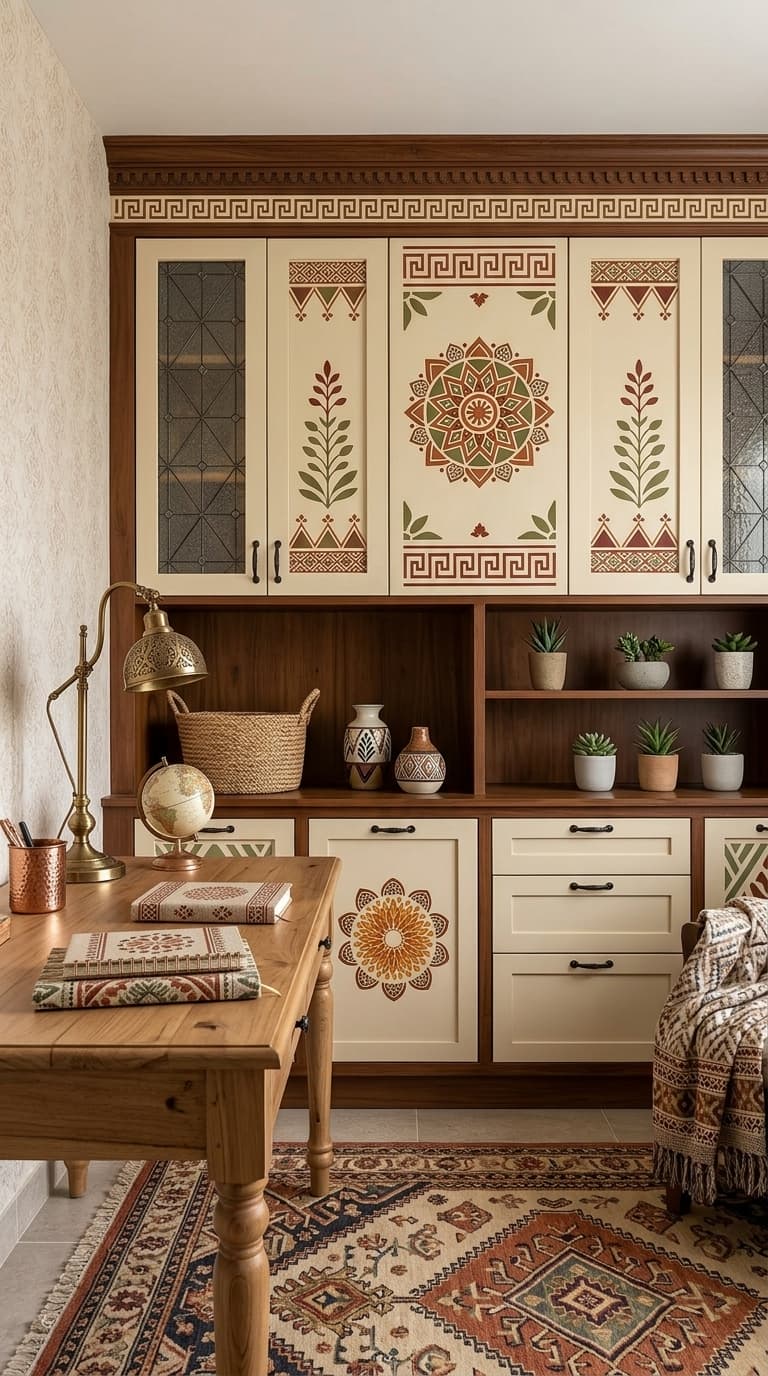
Built-in shelving units offer a fantastic opportunity to blend functionality with style, providing ample storage while becoming a focal point of your room. The unit pictured showcases a thoughtful approach to integrating decorative elements with practical needs. Its warm wood tones and cream-colored doors, adorned with intricate stenciled patterns, suggest a desire for a curated and inviting atmosphere. The arrangement of items on the shelves, from the woven basket to the small potted succulents and decorative vases, demonstrates how to balance open.
Achieving a well-styled built-in shelving unit involves more than just placing items on shelves; it's about creating a cohesive look that reflects your personal taste while serving its intended purpose. The key lies in understanding the balance between form and function, ensuring that the unit is both beautiful to look at and highly usable. Consider the scale and proportion of the items you display, the interplay of textures and colors, and how the shelving integrates with the overall design of the room.
1. Assessing Your Built-In Shelving Needs
Before diving into styling, take stock of what you need to store. The unit in the image features a mix of open shelves, drawers, and cabinet doors, suggesting a need for both display and concealed storage. For items you want to keep out of sight, like office supplies or less aesthetically pleasing necessities, drawers and cabinets are essential. Measure the depth and height of these compartments to ensure they can accommodate your items.
When planning your storage, think about accessibility. Items used frequently should be placed on shelves or in drawers that are easy to reach. Less frequently used items can be stored on higher shelves or in the back of cabinets. The image shows a desk positioned in front of the shelving, implying that items needed for work or study, such as books and writing utensils, are kept within easy reach.
2. Creating Visual Interest with Decorative Elements
The built-in unit in the image is enhanced by decorative stenciled patterns on the cabinet doors and a Greek key border along the top. These details add a unique character and prevent the unit from appearing too plain. When styling your own shelving, consider incorporating decorative accents that complement your room's overall theme. This could include stencils, decorative hardware, or even unique paint finishes. For open shelves, the items themselves become the decor.
The patterned rug beneath the desk and shelving unit ties the entire area together, introducing color and texture that echoes the decorative motifs on the cabinetry. When styling your shelving, think about how it relates to the surrounding elements in the room. The rug, for instance, grounds the space and adds a layer of warmth. Similarly, consider the wall color, the flooring, and any other furniture nearby.
3. Balancing Open Display and Concealed Storage
A successful shelving unit masterfully combines open display areas with hidden storage. The image demonstrates this well, with decorative items on open shelves and what appear to be drawers and cabinets for less sightly items. For open shelves, curate your displays carefully. Mix books with decorative objects, ensuring a pleasing arrangement. Use baskets or decorative boxes on open shelves to corral smaller items, maintaining a tidy appearance while adding texture.
For the concealed storage areas, like the drawers and cabinets, organization is key. Use drawer dividers and shelf organizers to keep things tidy within. This ensures that when you open a cabinet or drawer, everything is easily accessible and neatly arranged. Even though these areas are hidden, a sense of order within them contributes to the overall calm and functionality of the space. Consider labeling drawers or bins if you have many small items, making it easier to find what you need.
4. Incorporating Greenery and Natural Elements
The inclusion of small potted plants on the shelves adds a touch of life and freshness to the display. Succulents, as seen in the image, are low-maintenance and come in various shapes and sizes, making them ideal for shelf styling. They introduce a natural element that softens the overall look and provides a pleasing contrast to the wood and cream tones of the cabinetry. When selecting plants, consider the light conditions of your space and choose varieties that will thrive.
Beyond potted plants, consider other natural elements to enhance your shelving. Small decorative stones, pieces of driftwood, or even a bowl of decorative pinecones can add texture and visual interest. The woven basket itself is a natural element that adds warmth and organic texture. Think about incorporating materials like wood, rattan, or ceramic into your decorative objects. These natural textures can create a more grounded and inviting feel, complementing the overall design and adding depth to your display.
5. Lighting Your Built-In Shelving Effectively
The brass desk lamp positioned on the desk in front of the shelving unit provides task lighting for the workspace and also casts a warm glow that highlights the items on the lower shelves. Consider incorporating lighting solutions for your built-in shelving to enhance its visual appeal and functionality. This could involve small, discreet LED strip lights installed under shelves to illuminate displayed items, or a decorative table lamp placed on a shelf or desk nearby.
When choosing lighting, think about the type of light and its effect. Warm-toned lights, like those from the brass lamp, tend to create a cozy and inviting atmosphere, perfect for living areas or reading nooks. Cooler-toned lights might be more suitable for a home office where focus is paramount. If your shelving unit has glass-fronted cabinets, consider placing small lights inside to showcase the contents without creating glare.
6. Avoiding Common Styling Mistakes
One common mistake is overcrowding shelves, which can make a space feel cluttered and overwhelming. The image shows a deliberate arrangement with ample negative space, allowing each item to be appreciated. Resist the urge to fill every inch; instead, focus on a curated selection of items that have meaning or visual appeal. Another pitfall is a lack of variety. Ensure you have a mix of heights, shapes, and textures to keep the display interesting.
Another mistake to avoid is neglecting the practical aspect of storage. While aesthetics are important, the shelving unit must also serve its purpose. Ensure that items you need regularly are easily accessible and that there's enough concealed storage for necessities. If your shelving is in a home office, for example, ensure there's space for files, stationery, and electronics without them becoming eyesores. Finally, don't be afraid to experiment and rearrange.
- Assess what items need to be stored and categorize them into display-worthy and concealed.
- Measure your shelves and storage compartments to ensure items fit comfortably.
- Select decorative items that complement your room's style, focusing on varied heights, textures, and shapes.
- Incorporate at least one natural element, such as a plant or a wooden accent.
- Consider adding subtle lighting to highlight displays and enhance ambiance.
- Regularly declutter and rearrange your shelves to maintain a fresh and functional look.