Elevate Your Living Room: Styling a Gallery Wall with Plants for a Lush, Personal Touch
Creating a gallery wall is a fantastic way to inject personality and visual interest into your living room. It's a chance to showcase your favorite art, photographs, and mementos, transforming a blank wall into a captivating focal point. However, a common pitfall is creating a display that feels static or disconnected. The secret to a truly dynamic and inviting gallery wall lies in layering elements, and one of the most effective ways to achieve this is by incorporating live plants.
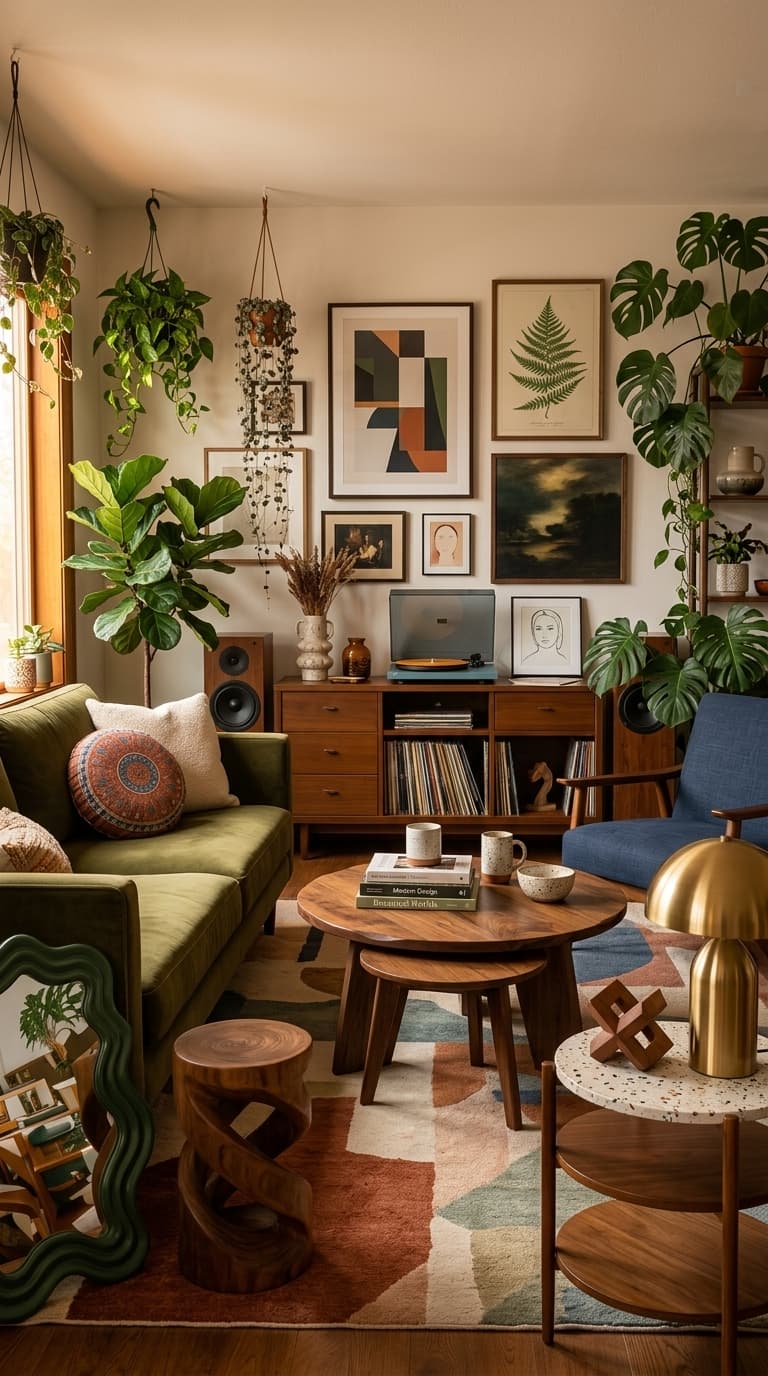
The image showcases a beautifully styled gallery wall that masterfully blends various art pieces with an abundance of greenery. Notice how the hanging plants cascade down, softening the vertical lines of the artwork and adding a sense of depth. The large monstera plant on the right, with its dramatic leaves, acts as a natural anchor, balancing the visual weight of the collection. This thoughtful integration of plants not only enhances the aesthetic appeal but also contributes to a more serene.
1. Choosing the Right Art for Your Botanical Gallery Wall
When curating art for a gallery wall that incorporates plants, consider pieces that either complement or contrast with natural elements. Botanical prints, like the fern shown in the image, are an obvious and effective choice, directly referencing the plant theme. Abstract art with organic shapes or earthy color palettes can also create a cohesive look, echoing the forms and hues found in nature. Think about the overall mood you want to evoke; landscapes can bring a sense of the outdoors.
The key to a successful gallery wall is balance and flow. Avoid clustering all your largest pieces together or placing all the framed items too close to one another. Instead, imagine your wall as a canvas and arrange your art with intention, leaving space for plants to breathe and for the eye to rest. Consider the color scheme of your room and select artwork that either harmonizes with it or provides a striking contrast.
2. Selecting and Placing Your Greenery
The selection of plants for your gallery wall is as important as the art itself. Consider the light conditions in the area where you plan to hang your display. Plants that thrive in bright, indirect light, such as a fiddle-leaf fig or a monstera, are excellent choices for well-lit living rooms. For shadier spots, consider snake plants or ZZ plants, which are more tolerant of lower light.
Placement is critical to making plants feel like an integrated part of your gallery wall, rather than an afterthought. Hanging plants, as seen in the image, are ideal for filling vertical space and adding a dynamic, flowing element. Use ceiling hooks or sturdy wall brackets to suspend them at varying heights. For plants that sit on shelves or furniture near the gallery wall, consider their size and shape.
3. Balancing Art and Nature for Visual Harmony
Achieving visual harmony between your artwork and plants requires a thoughtful approach to balance. The goal is to create a composition where neither element overpowers the other, but rather they enhance each other. In the provided image, the organic shapes and earthy tones of the rug and coffee table complement the natural forms of the plants and the textures within the artwork. Consider the scale of your plants relative to your art.
The arrangement should feel intentional, not accidental. This means considering the overall composition and how each piece contributes to the whole. If your artwork is very geometric and linear, introducing plants with softer, more rounded leaves can create a beautiful contrast. Conversely, if your art is very organic and flowing, plants with more structured forms might provide a grounding effect. Think about the color palette.
4. Practical Considerations for Plant Care and Display
Integrating plants into your gallery wall setup requires practical planning for their care and display. Ensure that any hanging plants are securely fastened to the ceiling or wall, using appropriate hardware that can support the weight of the plant and its pot, especially when watered. Consider the watering needs of each plant and how you will access them for care without disturbing the artwork. Drip trays or saucers are essential to protect your walls and floors from water damage, especially.
When choosing pots and planters, select options that complement your decor style and the aesthetic of your gallery wall. Terracotta pots offer a natural, earthy feel, while ceramic planters can add a pop of color or a touch of elegance. Consider the size of the pot in relation to the plant and the space available. A plant that is too large for its pot can look cramped and unhealthy, while a pot that is too large can overwhelm a small.
5. Avoiding Common Gallery Wall Mistakes
One of the most common mistakes when creating a gallery wall is a lack of planning, leading to a haphazard and unbalanced arrangement. This often results in pieces being hung too high, too low, or too close together, making the wall feel cluttered rather than curated. Another pitfall is using only one size or shape of frame, which can create a monotonous and uninspired display.
To avoid these common errors, start by measuring your wall space and planning your layout before you begin drilling holes. Use painter's tape to mark out the dimensions of your frames on the wall to visualize the arrangement. Vary the sizes, shapes, and orientations of your artwork to create visual interest and depth. Ensure there is consistent spacing between pieces, typically around 2-4 inches, but adjust based on the overall size of your collection.
6. Styling Your Space Beyond the Wall
Extending the gallery wall's aesthetic into the rest of your living room creates a cohesive and immersive environment. The image shows how the color palette and textures of the rug, coffee table, and side tables echo the elements found in the gallery wall and the plants. Consider incorporating natural materials like wood, rattan, or stone in your furniture and accessories to tie in with the organic feel of the greenery.
The styling of surfaces near your gallery wall is an opportunity to reinforce the theme and add functional beauty. The coffee table in the image holds books with nature-inspired titles, mugs, and a decorative bowl, all contributing to a lived-in, inviting atmosphere. Consider placing a small plant on a nearby shelf or side table to create a visual bridge between the wall display and the rest of the room.
- Measure your wall space and plan your gallery wall layout on paper or using painter's tape.
- Select a mix of art sizes, shapes, and orientations to create visual interest.
- Choose plants that suit the light conditions of your chosen wall space.
- Determine secure hanging methods for plants and ensure they are accessible for care.
- Incorporate natural materials and colors from your artwork into nearby furniture and decor.
- Arrange decorative items on surfaces near the gallery wall to create cohesive vignettes.