Elevate Your Living Room: Styling with Plants and Art for a Cozy Vibe
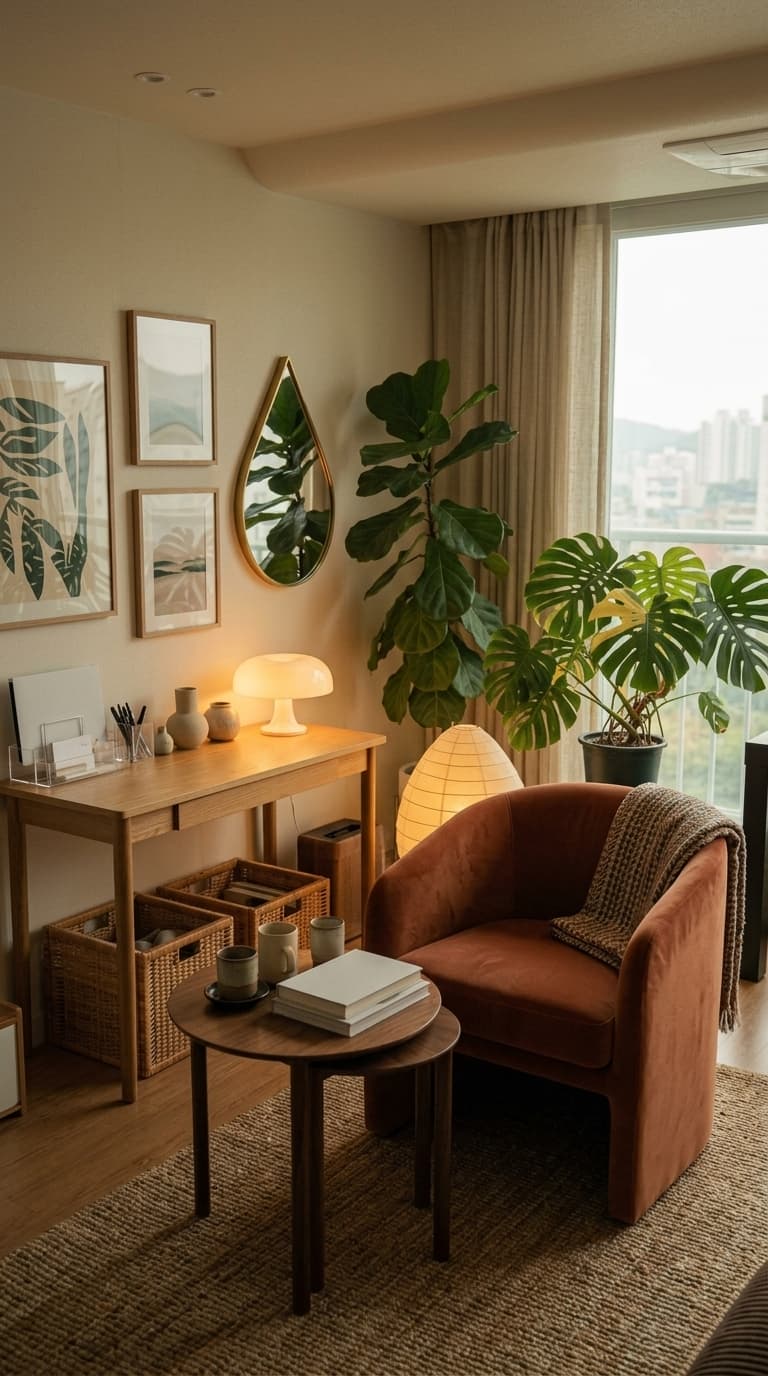
Creating a living room that feels both stylish and welcoming is a common decorating goal, and the image showcases a beautiful example of how to achieve this through thoughtful placement of plants and art. The warm, earthy tones of the armchair and rug, combined with the natural elements of greenery and framed artwork, create an inviting atmosphere. This approach focuses on layering textures and visual interest without overwhelming the space.
The key to a successful living room design often lies in the details, and the interplay between natural elements and curated art pieces is a powerful way to add personality and warmth. In the featured space, the large fiddle-leaf fig and monstera plants bring life and organic shape, while the framed botanical prints and abstract landscapes add depth and color to the walls. This combination not only enhances the aesthetic appeal but also contributes to a sense of well-being.
1. Curating Your Wall Art Collection
Selecting wall art is a personal journey, but for a cohesive living room, consider a theme or color palette that ties your pieces together. The image displays a collection of framed prints, including botanical illustrations and landscape scenes, arranged in a gallery wall style. Notice how the frames, mostly in natural wood tones, complement the wooden desk and furniture, creating a unified look. When building your own collection, think about the scale of the artwork in relation to the wall.
To avoid a cluttered appearance, consider the negative space around your art. The arrangement in the image is balanced, with enough breathing room between each piece and the surrounding furniture. If you're unsure about placement, use painter's tape to outline potential arrangements on your wall before committing to hanging. This allows you to visualize the spacing and scale. Another tip is to mix and match frame styles and sizes for a more dynamic display, but ensure there's a common thread.
2. The Impact of Indoor Plants
Indoor plants are more than just decor; they bring life, color, and texture into a living space, significantly improving its ambiance. The image features a striking fiddle-leaf fig and a lush monstera, strategically placed to fill empty corners and add vertical interest. When choosing plants, consider the light conditions in your room. For areas with ample natural light, like the space near the window in the image, larger plants with broad leaves thrive.
Beyond aesthetics, plants can also influence the perceived size and flow of a room. Tall plants, like the fiddle-leaf fig, can draw the eye upward, making a room feel larger and more open. Placing plants near furniture, such as the armchair in the image, can soften hard edges and create a cozy, inviting nook. When incorporating plants, think about their watering needs and potential for growth to avoid future clutter or maintenance issues.
3. Layering Textures for Warmth
Texture plays a crucial role in creating a cozy and inviting living room, and the image demonstrates this effectively through its use of natural materials. The woven rug underfoot provides a foundation of organic texture, grounding the seating area. The plush, velvet-like finish of the rust-colored armchair adds a layer of softness and warmth, inviting you to relax. Even the throw blanket draped over the armchair contributes to this tactile experience, suggesting comfort and ease.
Consider incorporating a variety of textures through different elements in your living room. This could include a jute rug, a boucle or velvet sofa, linen curtains, and wooden furniture. The woven baskets on the desk in the image are another excellent example of adding texture while also providing practical storage. When selecting items, feel them if possible to gauge their texture. A common pitfall is using too many similar textures, which can lead to a monotonous feel.
4. Functional Furniture Choices
Choosing furniture that serves a purpose beyond mere aesthetics is key to a practical and stylish living room. The wooden desk in the image is a prime example, offering a surface for work or display, while its integrated baskets provide discreet storage. This dual functionality is essential, especially in smaller living spaces, where every piece needs to earn its keep. The nesting side tables next to the armchair are another smart choice, offering flexible surface area that can be adapted.
When evaluating furniture, think about its scale and proportion relative to the room. The armchair in the image is generously sized, creating a comfortable reading or lounging spot, but it doesn't overwhelm the corner. If you have a smaller living room, opt for pieces with a lighter visual weight, such as those with exposed legs, which can make the space feel more open. Built-in storage, like the baskets under the desk, is invaluable for keeping clutter at bay.
5. The Role of Lighting
Lighting is a critical element in setting the mood and functionality of a living room, and the image showcases a thoughtful approach to ambient and task lighting. The mushroom-shaped table lamp on the desk emits a warm, diffused glow, perfect for creating a cozy atmosphere or providing light for reading or writing. This type of lamp is excellent for adding a soft, inviting light source without harsh shadows.
When planning your living room lighting, consider a combination of overhead, task, and accent lighting. The table lamp serves as a task light, while the floor lamp provides ambient light. For accent lighting, you might consider picture lights to highlight artwork or small lamps on shelves. Dimmers are an invaluable tool for controlling the intensity of light, allowing you to transition from bright, functional light for daytime activities to a softer, more subdued glow for evenings.
6. Creating a Cozy Reading Nook
The arrangement in the image effectively creates a cozy reading nook, a dedicated space for relaxation and quiet enjoyment. The plush armchair, paired with a small side table, provides the essential elements for comfort and convenience. The throw blanket draped over the chair adds an extra layer of coziness, inviting you to settle in with a good book. The proximity of the desk, with its soft lamp, suggests that this area can also serve as a functional spot for journaling.
To establish your own reading nook, identify a quiet corner or area in your living room that can be dedicated to this purpose. Select a comfortable chair that suits the space – it could be an armchair, a chaise lounge, or even a floor cushion. Ensure there's adequate lighting, either from a nearby window or a dedicated reading lamp, to prevent eye strain. A small side table is useful for holding essentials like a drink, a book, or reading glasses.
- Assess your living room's natural light to choose appropriate plants.
- Measure your wall space to determine the ideal size and number of art pieces.
- Gather a variety of textures, such as rugs, throws, and baskets, to add depth.
- Evaluate your furniture for comfort, scale, and multi-functionality.
- Plan your lighting scheme with ambient, task, and accent sources.
- Designate a specific corner or area for a comfortable reading nook.