Create Your Own Vertical Garden Balcony Oasis for Serene Outdoor Living
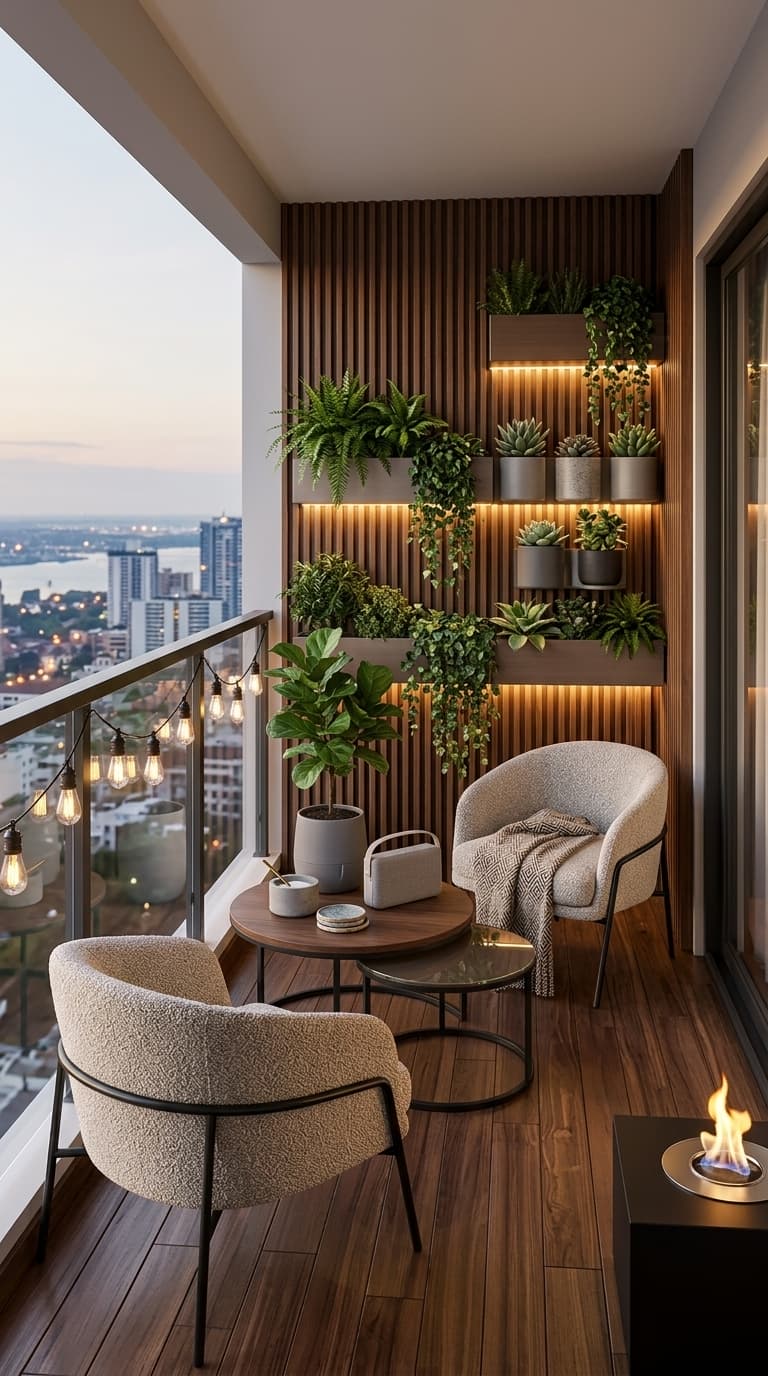
Elevating your outdoor living space doesn't require a sprawling backyard. This balcony showcases how to maximize a compact area, turning it into a serene oasis with a stunning vertical garden. The strategic use of vertical space is key, allowing for abundant greenery without sacrificing precious floor area. Integrated lighting enhances the ambiance, making it a perfect spot for relaxation or intimate gatherings, even after sunset. The combination of natural elements and thoughtful design creates a tranquil escape from the urban bustle, proving that.
Achieving a similar effect involves careful planning and selection of elements that complement each other. The visual appeal of this balcony lies in its layered approach to decor, from the rich wood-slatted wall to the varied textures of the plants and seating. The warm glow of the string lights and the subtle illumination behind the plants create an inviting atmosphere, while the comfortable chairs and small tables offer practical functionality.
1. Designing Your Vertical Garden
The centerpiece of this balcony is its impressive vertical garden, a smart solution for bringing nature into tight spaces. The design features multiple tiers of planters mounted on a slatted wooden wall, creating a lush, living tapestry. When planning your own, consider the types of plants that will thrive in your balcony's specific conditions, such as sunlight exposure and wind. Opt for a mix of trailing plants, like the ivy seen here, and upright varieties to create visual interest and depth.
When selecting a vertical garden system, think about its scalability and ease of installation. Modular systems offer flexibility, allowing you to expand or reconfigure your garden over time. For a similar aesthetic, look for systems that can be mounted directly onto a wall or fence, or consider freestanding units if wall mounting isn't an option. Ensure the system has adequate drainage to prevent root rot, a common issue with potted plants.
2. Selecting the Right Seating
Comfortable seating is crucial for enjoying your balcony oasis. The image features two plush, textured armchairs that invite relaxation. Their neutral color and soft upholstery create a cozy feel, complemented by a throw blanket draped over one chair, suggesting warmth and comfort. When choosing seating for a balcony, consider the scale of your space. Compact armchairs or a small loveseat can provide ample seating without overwhelming the area.
The arrangement of the seating is also important for fostering conversation and maximizing views. Here, the chairs are positioned to face each other and the view, creating an intimate seating arrangement. A small side table between them offers a convenient spot for drinks or a book. When selecting furniture, measure your balcony space carefully to ensure a comfortable flow. Avoid bulky items that might impede movement. Consider multi-functional pieces, such as ottomans with storage, if you need to maximize utility.
3. Layering Ambient Lighting
The lighting in this balcony design plays a significant role in creating its magical evening ambiance. Warm string lights are draped along the railing, casting a soft, inviting glow that extends the usability of the space into the evening hours. Behind the vertical garden, subtle uplighting highlights the plants and the textured wall, adding depth and drama. This layered lighting approach prevents the space from feeling dark or uninviting after sunset.
When planning your balcony lighting, think about the mood you want to create. For a relaxing retreat, opt for warm, diffused light. If you plan to entertain, you might want brighter, more focused lighting in certain areas. Consider the power source for your lights; many string lights are plug-in, but battery-operated or solar-powered options are available for areas without easy access to an outlet. Ensure any outdoor lighting is rated for exterior use to withstand weather conditions.
4. Incorporating Functional Surfaces
Even small balconies need practical surfaces for everyday use. This design includes two round coffee tables, one slightly larger than the other, placed between the seating. These tables provide convenient spots for placing drinks, snacks, or decorative items. The dark wood finish of the larger table complements the slatted wall, while the glass-topped smaller table adds a lighter, more airy feel. When selecting tables for your balcony, consider their size and shape in relation to your seating and the overall space.
Think about the materials and durability of your chosen tables. For outdoor use, materials like metal, treated wood, or weather-resistant composites are ideal. The height of the tables should also be considered; they should be at a comfortable height to reach from the seating. If space is extremely limited, consider nesting tables that can be tucked away when not in use, or wall-mounted fold-down tables. The small decorative items on the table, like the bowl and coasters, add a touch of personality without.
5. Adding Decorative Accents
Beyond the plants and furniture, decorative accents tie the space together and enhance its personality. The throw blanket on the chair adds a layer of texture and comfort, making the seating area more inviting. Small decorative items on the coffee table, such as a minimalist bowl and coasters, add subtle touches of style. When choosing accents for your balcony, consider items that are weather-resistant and proportionate to the space.
The overall color palette of this balcony is neutral and earthy, allowing the vibrant green of the plants to stand out. The warm wood tones, beige upholstery, and black metal accents create a cohesive and sophisticated look. When selecting decorative items, consider how they will complement your existing color scheme and materials. A small portable fire pit on a side table adds a touch of warmth and visual interest, especially during cooler evenings.
6. Maintaining Your Balcony Garden
A beautiful balcony garden requires ongoing care. Regular watering is essential, especially for plants in containers, which can dry out quickly. Check the soil moisture by inserting your finger into the soil; if it feels dry an inch or two down, it's time to water. Fertilize your plants periodically according to their specific needs to ensure healthy growth. Pruning is also important to maintain the shape of your plants and encourage bushier growth.
Pest control is another aspect of garden maintenance. Regularly inspect your plants for any signs of pests, such as aphids or spider mites. Early detection makes treatment easier. Many natural remedies, like insecticidal soap or neem oil, can be effective. Keep the balcony floor clean by sweeping away fallen leaves and debris. If you have a vertical garden system, ensure the drainage channels are clear to prevent waterlogging. For plants that may not tolerate harsh weather, consider bringing them indoors during extreme conditions.
- Assess your balcony's sunlight and wind conditions to choose appropriate plants.
- Measure your balcony space accurately before purchasing furniture.
- Select weather-resistant materials for all outdoor furniture and decor.
- Plan your lighting scheme, considering both ambiance and functionality.
- Choose a vertical garden system that suits your space and maintenance preferences.
- Establish a regular watering and care schedule for your plants.